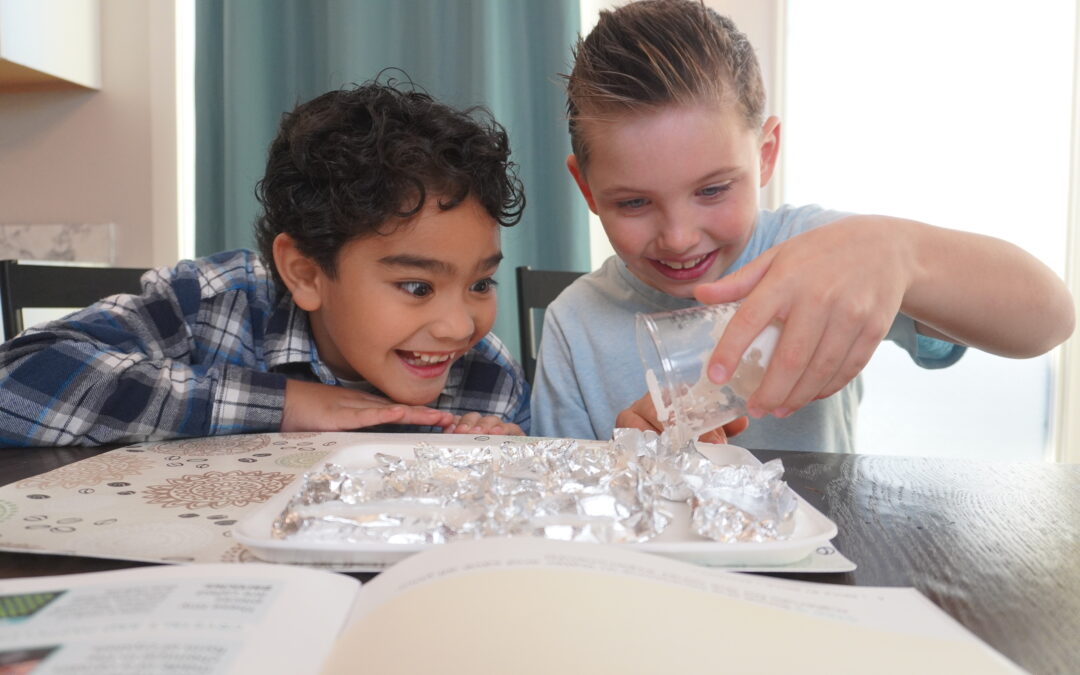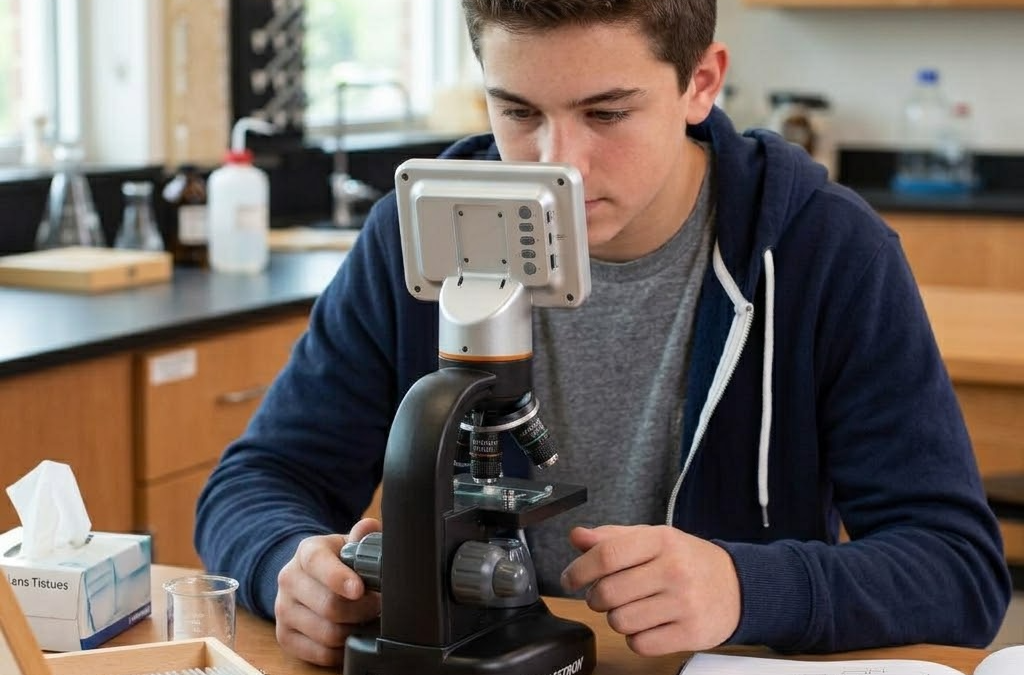
The Alka-Seltzer pop rocket experiment is one of those hands-on science activities that immediately draw attention. With a small canister, water, and part of a tablet, you get to watch a mini rocket launch into the air.
This experiment comes from Blast Off: Ready, Set, Rocket!, a Wonder-level kit within Science Unlocked®. That matters because this activity is not just a fun “pop and launch” moment. Instead, it is one part of a full-year science curriculum that helps students build understanding step by step, with lessons, materials, instructions, and guided questions already included.
Instead of piecing together a force and motion lesson on your own, Science Unlocked gives you a complete path to follow, so you can guide the experience without having to master the science first.
What You’ll Need
- Film canister with lid
- Water
- Alka-Seltzer tablet
- Safety glasses
- Outdoor space or washable surface
Instructions
- Put on safety glasses and choose a clear testing area. This experiment launches quickly, so outdoor space is best.
- Then, fill the film canister about one-third full with water.
- Break an Alka-Seltzer tablet into pieces. Start with a small piece first.
- Drop the tablet piece into the water.
- Quickly snap the lid onto the canister.
- Then, turn the canister upside down, place it lid-side down, and step back.
- Watch what happens. The canister should pop upward like a small rocket.
- Repeat the experiment with different tablet sizes or water amounts. Observe whether the rocket launches faster, higher, or with more force.
Inside the Pop Rocket Experiment
As the Alka-Seltzer tablet dissolves in water, it releases carbon dioxide gas. That gas builds up inside the sealed canister.
Once enough pressure builds, the lid pops off. The gas pushes downward, and the canister moves upward. This gives students a visible example of how force can cause motion.
Why This Experiment Works So Well
The Alka-Seltzer pop rocket experiment works because students can see the result of something they cannot see directly.
They notice the pause before launch, the sudden pop, and the upward motion. That sequence gives them something to question, observe, and explain. That is where the real learning happens.
Where Science Unlocked Changes the Experience
In this kit, students explore force, motion, pushes, pulls, and rocket behavior through connected activities. As they move through each one, they begin to connect what they see with the science behind it.
Science Unlocked provides the materials, clear instructions, and built-in questions that guide understanding. So instead of wondering how to teach force and motion, you can focus on helping your student observe what happened and think through why.
You don’t have to be a science expert to guide a meaningful science experience—just a clear path, the right materials, and a student ready to ask, “Why did that happen?”