Teaching Resources & Guides > DIY Thermometer Experiment: How Temperature Changes Matter  

DIY Thermometer Experiment: How Temperature Changes Matter 

With this fun, hands-on DIY thermometer experiment, students move beyond experiencing temperature every day to understanding how temperature actually works. With this experiment from Science Unlocked®, students build tools that let them see temperature change in real time. 

This DIY thermometer experiment comes from the Hot and Cold Kit, where students explore how temperature affects matter through hands-on investigation. 

What You’ll Need

From the kit:

  • Bottle
  • Clay
  • Food coloring
  • Isopropyl alcohol
  • Pipet
  • Straw 

Other items:

  • Water 
  • Paper towel 

Instructions

  1. Unscrew the cap of the bottle and remove the dropper top. Set those pieces aside.
  2. Then, use the pipet to add about 10 mL of water to the bottle. 
  3. Add a few drops of food coloring to the isopropyl alcohol. Close it and shake gently to mix. 
  4. Pour the colored alcohol into the bottle until it is about halfway full. 
  5. Make sure the outside of the bottle is completely dry. 
  6. Soften the clay by warming it in your hands. Then, place the straw into the bottle. 
  7. Shape the clay around the straw at the top of the bottle, sealing the opening while allowing the straw to extend upward. Be careful not to squeeze the bottle. 
  8. Then, adjust the straw so it sits in the liquid but does not touch the bottom. Seal the clay tightly so the straw stays in place. 
  9. Smooth the clay to make sure there are no gaps or openings. 
  10. Use the pipet to add colored alcohol into the straw until the liquid level sits slightly above the clay. 
  11. Finally, seal the top of the straw with a small piece of clay to prevent evaporation. 

                        What’s Happening?

                        As the temperature around the bottle changes, the liquid inside responds. When the liquid warms, it expands and rises in the straw. When it cools, it contracts and moves back down. 

                        This allows students to see temperature changes instead of just feeling them. The straw acts as a simple indicator, showing how the liquid responds to different conditions. 

                        Testing Your Thermometer

                        Once the thermometer is built, students can then explore how it reacts in different environments. 

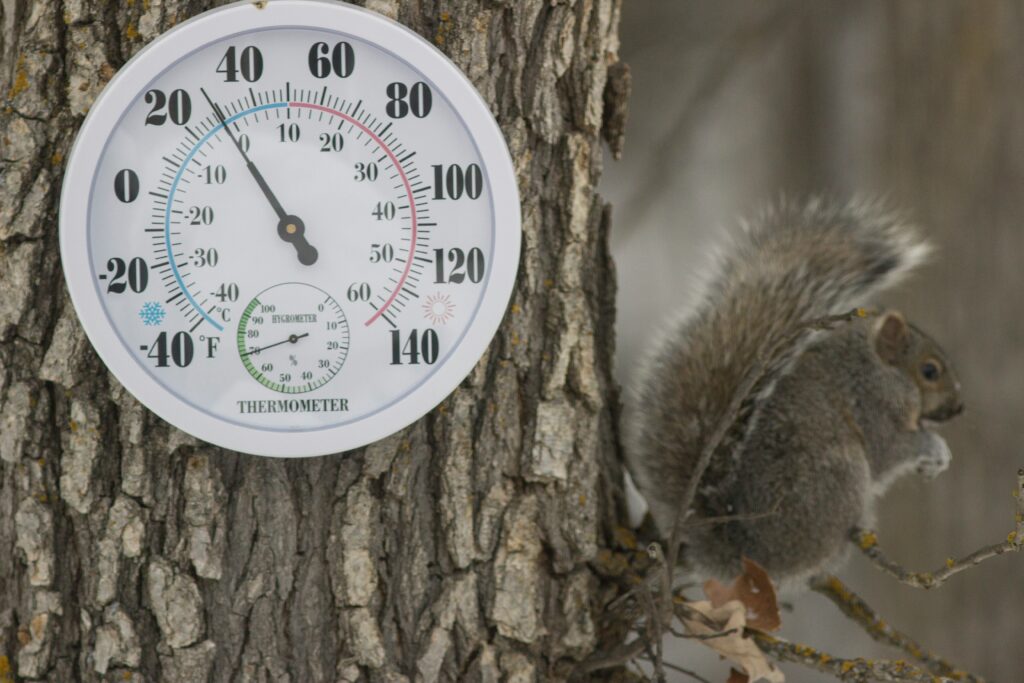
                        Place it in a freezer, in ice water, in warm water, in sunlight, or even between your hands. In each setting, watch how the liquid level changes. These shifts help students connect temperature with movement in a clear, visible way. 
                        DIY thermometer experiment

                        How The DYI Thermometer Experiment Builds Knowledge

                        This experiment takes an abstract idea—temperature—and makes it observable. 

                        Students aren’t just told that heat causes expansion. Even better, they watch the liquid rise and fall, then begin to connect those changes to what’s happening around them. 

                        Within Science Unlocked, it’s one step in a sequence that helps students connect what they build to what they’re learning. The pieces are already in place, so you can focus on guiding the experience as they figure it out. 
                        Teaching Homeschool

                        Welcome! After you finish this article, we invite you to read other articles to assist you in teaching science at home on the Resource Center, which consists of hundreds of free science articles!

                        Shop for Science Supplies!

                        Home Science Tools offers a wide variety of science products and kits. Find affordable beakers, dissection supplies, chemicals, microscopes, and everything else you need to teach science for all ages!

                        Related Articles

                        Squishy Science: Creating a Stress Ball

                        Squishy Science: Creating a Stress Ball

                        The stress ball science experiment is a hands-on, fun yet educational way for students to explore physical properties through real design and testing. This activity is one example of how Science Unlocked® turns everyday materials into meaningful science learning. ...

                        Meteorology for Kids: A Hands-On Air Pressure Experiment 

                        Meteorology for Kids: A Hands-On Air Pressure Experiment 

                        Meteorology for kids becomes much more meaningful when students can see and test how the weather works for themselves. After all, understanding the weather isn’t just about checking an app. It's about recognizing patterns and observing changes. That’s exactly what...

                        Pop Rocket Experiment: See Force and Motion in Action 

                        Pop Rocket Experiment: See Force and Motion in Action 

                        The Alka-Seltzer pop rocket experiment is one of those hands-on science activities that immediately draw attention. With a small canister, water, and part of a tablet, you get to watch a mini rocket launch into the air. This experiment comes from Blast Off: Ready,...

                        Outdoor Toys For Kids That Inspire Hands-On Science Learning

                        Outdoor Toys For Kids That Inspire Hands-On Science Learning

                        Outdoor play creates space for curiosity, movement, and observation. Science becomes more tangible when children interact with the natural world. Here at Home Science Tools, our outdoor toys for kids introduce scientific ideas through direct experience....

                        Science Kits That Turn Curiosity Into Real Discovery

                        Science Kits That Turn Curiosity Into Real Discovery

                        Curiosity grows stronger when it meets action. Here at Home Science Tools, every product is created for learners of all ages. Science kits bring lessons to life through hands-on activities that invite exploration, testing, and discovery. Each box opens the...

                        should I learn computer coding