The stress ball science experiment is a hands-on, fun yet educational way for students to explore physical properties through real design and testing. This activity is one example of how Science Unlocked® turns everyday materials into meaningful science learning.
Part of a Bigger Science Learning Experience
This stress ball design challenge comes from the Squishy Science Kit within Science Unlocked. It’s one part of a complete, thoughtfully structured program that guides students through a full year of science learning. Each activity builds on the next, helping students:
- Develop real scientific thinking skills
- Connect concepts across biology, chemistry, physics, and more
- Stay engaged through hands-on discovery
Instead of piecing lessons together yourself, the program provides a clear path forward.
What This Stress Ball Science Experiment Teaches
This is a fun, engaging design challenge grounded in science. As students create their stress ball, they learn to:
- Observe and compare physical properties of materials
- Test which textures perform best
- Make decisions based on evidence
- Improve their design through iteration
Design a Better Stress Ball
Students are given a clear goal: create a stress ball that is soft, squishy, and durable.
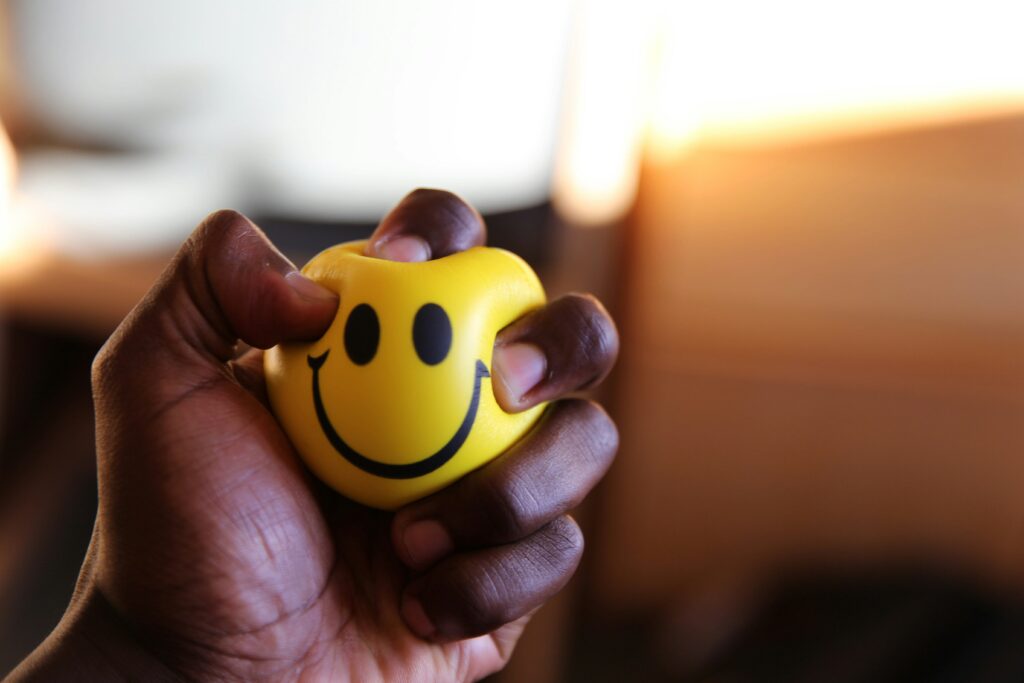
To do that, they must evaluate different materials and decide which works best. Some materials stretch easily. Whereas others resist pressure. Some feel smooth, while others are thick and resistant.
What You’ll Need
- Balloon
- Funnel
- Slime (multiple types, if available)
- Stirring rod (or your finger)
Instructions
- Place the funnel inside the balloon. This helps guide the material into the balloon without making a mess.
- Then, pour your chosen slime into the funnel. Encourage students to pick a material based on how they think it will perform.
- Push the slime into the balloon. Then, using a stirring rod or your finger, gently move the material through the funnel. (Tip: thicker materials may take more patience.)
- Then, tie the balloon closed. Make sure it’s sealed tightly so it can be squeezed without leaking.
- At this point, you can repeat with different materials. Try multiple types of slime to compare how each one feels and performs.
Turn It into a Real Science Investigation
Once the stress balls are made, students begin testing and comparing their designs. Ask students to test each one:
- Which feels the softest?
- Which holds its shape best?
- Which is the easiest or most satisfying to squeeze?
These comparisons help them see how different materials affect performance.
Built for Learning That Lasts
Science Unlocked doesn’t leave students to figure out science on their own. Each activity includes structured reflection, guiding them to think through why they chose a material, how it performed, and what they would change.