What is a STEM Activity?
Science, technology, engineering, and mathematics (STEM) activities are part of project-based, hands-on interdisciplinary curriculums. Real-world activities are designed to give students a holistic understanding of the four academic areas.
STEM education can be integrated into preschool with STEM toys for four-year-olds and progress through elementary, middle, and high school programs with more advanced lessons. It is the foundation of many homeschool and classroom curriculums because it helps students gain skills that can be leveraged in many industries–from farming and healthcare to aviation.
STEM activities help students connect the world around them with lessons taught in school or by a home instructor. Open discussions, problem-solving, and collaboration are integral parts of STEM activities. These soft skills are critical for becoming productive members of today’s society.
STEM Activities Are for All Ages
Introducing preschool children to simple STEM activities is an effective way to engage young students. Fun, project-based STEM activities boost a sense of curiosity that help students become creative thinkers and lifelong learners. They also provide the foundation for future lessons!
Home Science Tools has been providing STEM resources for almost thirty years. Our curriculum makes it easy for parents and other home instructors to create exceptional STEM learning activities, regardless of their knowledge of STEM topics.
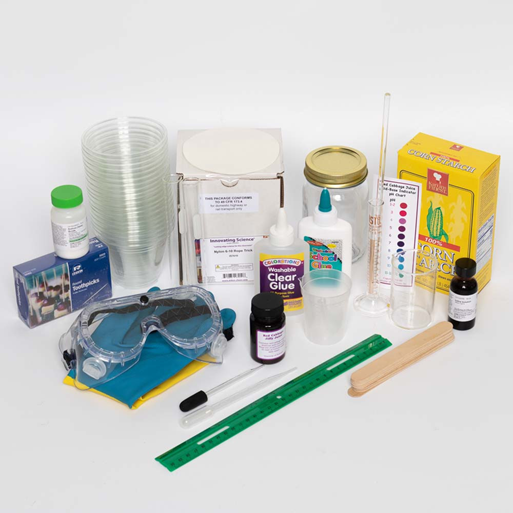
For example, one of our best-selling offerings is the Bacteria Growing Kit. With this kit, learners can explore their surroundings and collect samples from the air, common surfaces, skin, and other sources. Bacteria are grown in a petri dish large enough to see without a microscope, which minimizes the amount of specialty equipment needed.
The kit offers additional project ideas that can be pursued as part of the bacteria-growing project, and kit materials can be used for different lessons or projects. When students reach the sixth-grade level, they can use our Science Buddies Bacteria Discovery kit to build on what they learned and gain a deeper understanding of bacteria.
Why STEM is So Beneficial
When logically organized by age and ability, STEM activities help students develop a mindset open to new ideas and exploration.
Programs should start with the basics and quick STEM activities with preschool children. They can grow in complexity as students progress through primary, middle, and high school.
Younger students may get excited about nature through observation, such as through a seed germination and plant growth project. Middle schoolers may be ready for model-making and simple electrical experiments. High school STEM activities can dive more deeply into a student’s areas of interest or involve internship-level training.
STEM activities can be done by working alone or via team-building STEM activities that encourage collaboration. Working in teams improves communication, cooperation, and collective problem-solving skills. Logically scaffolding lessons on previous learnings helps build knowledge and capabilities.
Building Foundations
Engineers are some of the most sought-after skilled professionals, yet fewer and fewer children are entering this field. Thankfully, home engineering STEM kits are available for multiple engineering disciplines.
Building simple bridges between tables with snap-together kits is a fun way to demonstrate physics and material strengths in the real world. Those wanting to take it to the next level can electrify their experience by creating simple circuits and programmable LED lighting.
Not Everything Needs to Happen Fast
STEM activities are easy to define: it’s any activity involving science, technology, engineering, or math. If a child doesn’t take to a certain area of STEM right away, try others.
For every mechanical engineer, there are ten people who’d rather be digging up rocks and vice versa. An interest in a STEM field can’t be forced, but it can be fostered by focusing on the activities your child enjoys.
Here at Home Science Tools, we provide kits to families and children of all ages to teach STEM concepts. With luck, your child will find one that ignites a new passion.