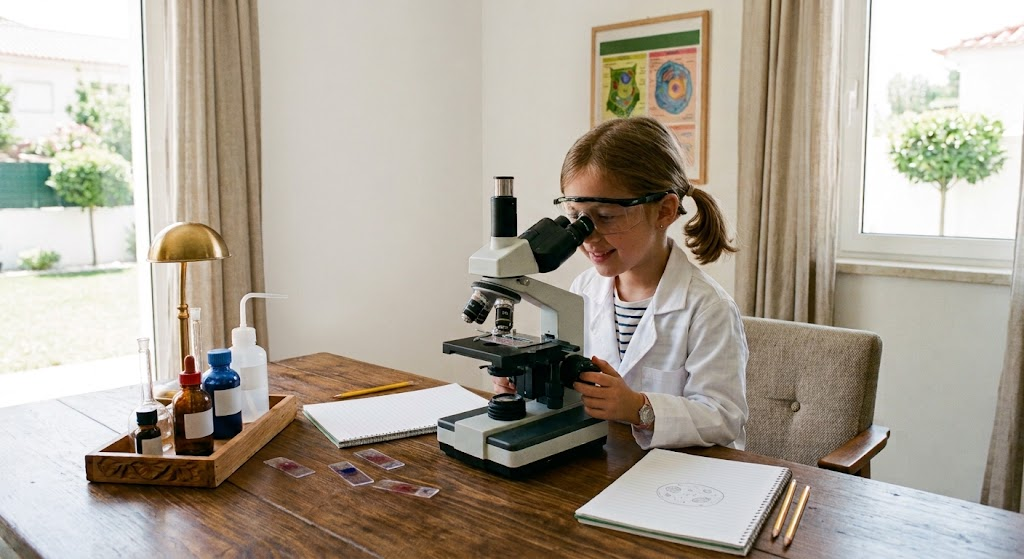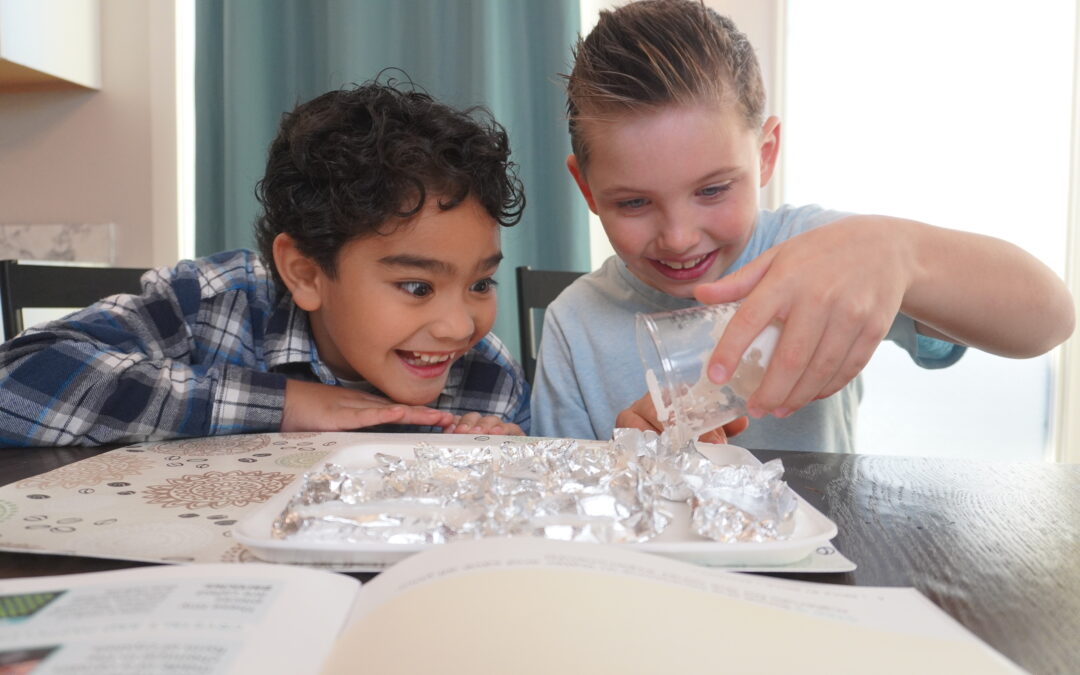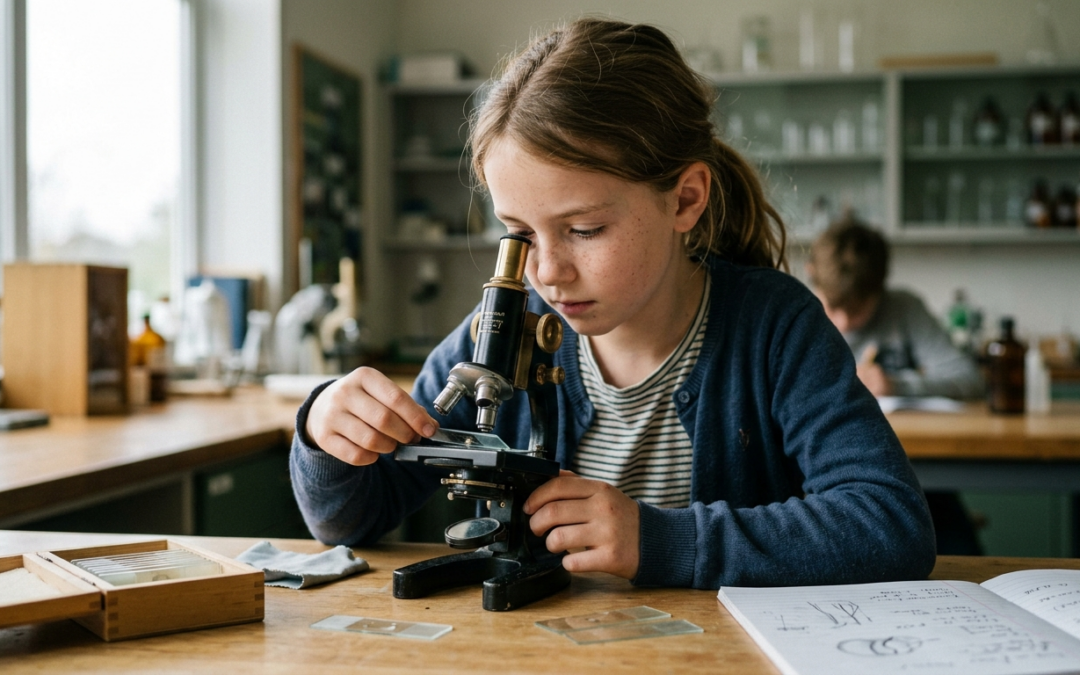
Students between five to eight years old are naturally curious with an inclination to explore using all their senses. This poses some unique opportunities and challenges to teachers of young ones. The opportunities for teaching early elementary students are clear: They love to learn new things, explore with their hands, and possess a lot of energy and excitement about science experiments. The challenges may include a short attention span and limited ability to think abstractly.
Below you will find helpful tips for teachers to incorporate into most lessons so early elementary students can learn science in a memorable and effective way.
- Give visual examples whenever possible. Don’t just tell students that the earth rotates and revolves around the sun; instead act it out or show it with objects. Have a student sit on the floor to be the sun and another student spin in circles (slowly) while walking around the student on the floor. Or, use objects, such as an orange and a beach ball, to demonstrate the earth and sun.
- Do experiments that allow students to taste, smell, and touch. Early elementary learners will remember a lesson more clearly if they used all their senses to explore the subject matter. When learning about seeds, give students a variety of seeds that they can feel, smell, or even taste (Note: Never give anything but products sold specifically as food to students to taste.)
- Explain science vocabulary. Students may be confused by many long words, but they would love to learn one or two new words. Provide a short clear definition for each new vocabulary word. Help the students to memorize the word and the definition. If the word is long or complicated, have children repeat it three times. Try saying the word with the students very slowly, at regular speed, and very fast. Or try saying the word in a whisper, in a normal voice, and in a loud voice.
- Move from concrete to abstract concepts. Abstract ideas are hard for little ones to grasp. Examples of abstract ideas or concepts are the speed of light, the distance of the earth from the sun, and why a leaf changes color in the fall. Show concrete examples or relate the abstract concept to something the students already know. For example, say that the speed of light is faster than an arrow shooting through the sky. Show or tell the distance of the earth from the sun if the earth was the size of a penny. Show many examples of fall leaves and ask students to name the colors they see. Build on this concrete knowledge by introducing new concepts or vocabulary terms.
- Encourage students to use a science notebook. Using a science notebook allows young students to show what they know about a science concept, which not only helps with evaluation but also reinforces the writing and reading concepts that are so important at this age. For non-writers, encourage drawing what they saw in the experiment or nature walk. Encourage details of color, shape, and size to be a part of each student’s drawing.
- Engage students by asking questions. Good questioning can lead to better understanding of a concept. Questioning also allows the teacher to assess what the student knows, so the teacher can review or reteach as necessary. Some simple questions to ask include: What is happening? What did you see? Why do you think that happened? Have you seen that type of thing before? Does this remind you of another experiment you have done?
- Let students lead a hands-on exploration. Let students discover for themselves what will happen when you add vinegar to baking soda, or when you add carbon dioxide to a candle flame. Whenever it is safe to do so, let the students be the ones to add each material to the experiment. By doing and not just observing, lessons come alive for students.
- Allow students to form their own conclusions. Early elementary students can use the scientific method to perform experiments, gather data, and form conclusions. Give students the materials they need to make a volcano erupt or to observe an insect with a magnifying glass. Don’t tell them what happened or what they are seeing, but guide their learning by asking questions. How many legs does that insect have? Do all insects have six legs? What happened when we added baking soda to vinegar? Do you think that would happen again if we added more vinegar?
- Tell students they are scientists. Just because they are young doesn’t mean early elementary students cannot do “real” science. If you are studying birds, explain that a scientist who studies birds is called an ornithologist. Today they will be ornithologists. Allowing young students to feel like scientists is important in promoting a lifelong interest in science. It also opens the door to the possibility of pursuing a career in a scientific field.