QUESTION FOR KIDS: What kind of life exists in a drop of water?
Explore the miniature universe of microscopic animals that live in ponds, puddles, lakes, rivers, and oceans. These organisms may be single-celled protozoa or larger, multi-celled animals like water fleas and brine shrimp. A microscope is your passport to the tiny world that exists in a drop of water.

Materials for this activity:

- Pocket Microscope
- Protozoa Culture Kit
- Microscope Slide Set
- Microscope data sheet (PDF download)
- Pencil or pen
- Notebook
- Natural or Spring bottled water (for culture kit)
Follow this easy, step-by-step activity:
In this activity, kids will use a microscope to observe and identify different kinds of tiny animals, note how they move around, and which environments they prefer.
1. Important: At least four days in advance, use the Protozoa Culture Kit and instructions to easily grow a variety of tiny, living organisms in a cup.
2. Now you’re ready! Get a slide and coverslip out of the box. These slides are pre-cleaned and ready to use.
3. Use the pipet included in kit to collect a drop of water from the cup, place it on the slide, and gently cover it with the coverslip.
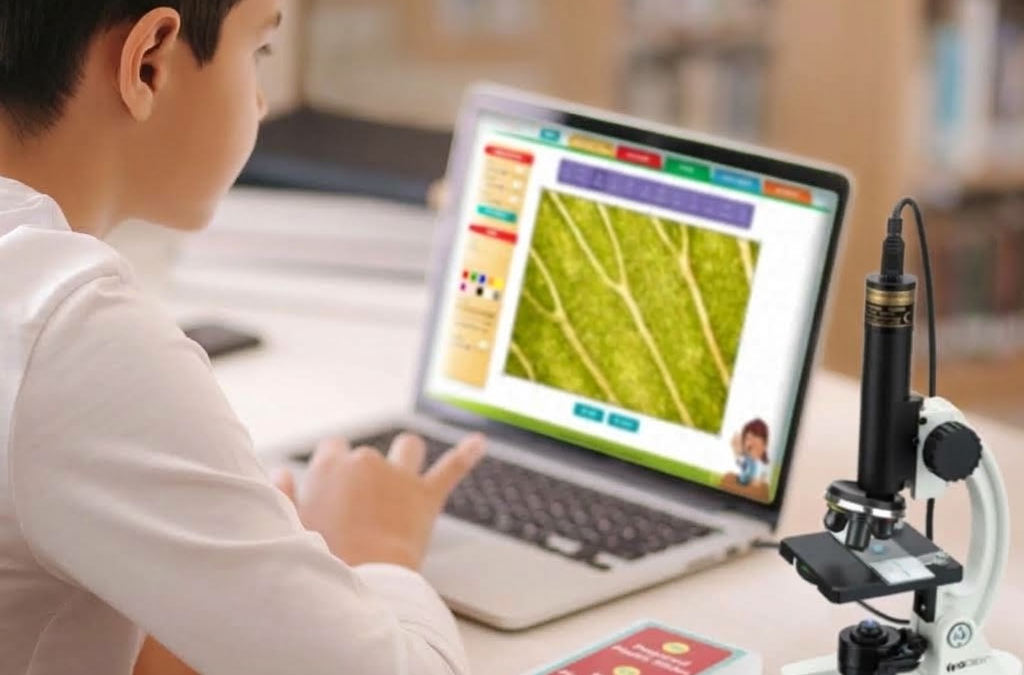
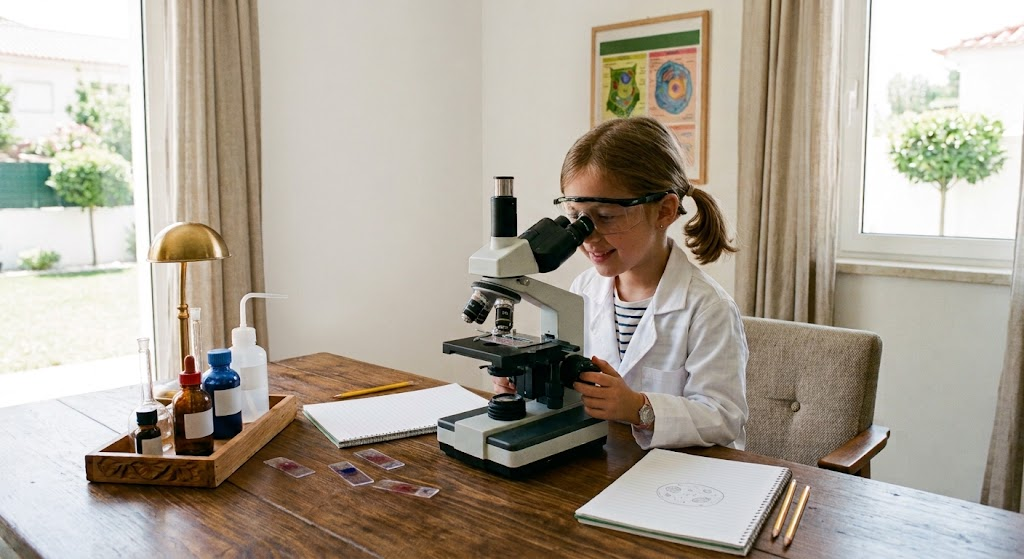
4. Place the slide under the lens of the microscope. Look through the lens while slowly moving the slide until you see something moving.
5. Focus the microscope on the tiny, moving organisms! Use the included identification key to see what type of organisms are on your slide. Draw them in your notebook along with notes about what they’re doing.

A few tips to help you out:
- If you live near a pond, you have a built-in source of protozoa! Collect water samples there for interesting studies.
- Use the microscope’s lowest light and lowest magnification settings. Most protists have little color and are very difficult to see in bright light.
- If no animals are visible, try again each following day. You may have late bloomers!
- Initially, you’ll see very tiny dots moving around on the slide. Once you see them, turn the microscope magnification up to 100x, or even 400x, to see them better.
- If the protists are really moving, add a few cotton ball fibers to your slide to slow them down for better viewing.
- In the notebook, record what you see, the date, and any changes in quantity or types of organisms from day to day.
- Your kids will find more and different varieties of protozoa in the culture as days pass. Smaller species appear first, then larger ones, as well as
different forms of algae. - Take water samples from the top and the bottom of the cup and see differences in the species from the two areas.
Go Beyond the Activity
- Further your child’s interests with prepared slide sets for Elementary kids, or their special interests with sets on Anatomy, Zoology, or Botany.
- Supply your young scientist with our microscope data sheet to officially record what they see.
- See what you need to know to choose the best microscope for your family.
Download
Download the activity sheet for a formatted and ready-to-print version of this page.