Team-Building STEM Activities
Relationships built through team-based learning activities and STEM toys for teens can inspire a strong sense of community, foster lasting friendships, and nurture a love of learning. When you include creative, team-building activities in your science, technology, engineering, and math (STEM) curriculum, you can also encourage cooperative and collaboration skills that will be useful for life.
Cooperative Learning is More Than Group Work
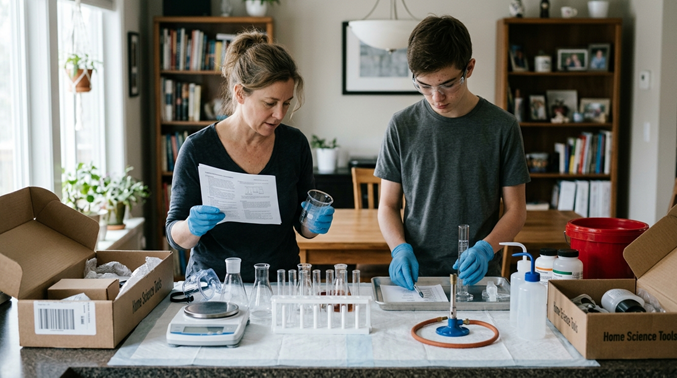
So that they can work together effectively, give your groups an outline of the roles the team will likely need to complete their STEM activity. Members should interact and decide on what the STEM activity is and who is playing each role throughout the project. This approach (rather than taking turns) helps ensure everyone contributes.
As the activity progresses, team members will share their ideas and thoughts. They may be responsible for just one component of the activity but will be actively engaged by encouraging and contributing to the conversation about what the other members are doing.
Using STEM Resources from Home Science Tools
There are times when more can be gained by using resources from a quality STEM education provider. For example, the Chemistry of Food Experiment Kit from Home Science Tools is a great way for high school students to learn about food and nutrition. Students can evaluate what they eat and predict how the items impact their body.
Have the teenagers work in pairs or small groups to modify meals to make them healthier. Host a cook-off with taste testing and peer evaluations of the modified recipes. With our Game of Survival Kit, students can customize games and experiments to learn about natural selection, species survival adaptations, and how environments impact animal life.
Another STEM-related activity that supports collaborative learning and uses materials and ingredients commonly found around a house is tower building with cups, blocks, uncooked spaghetti, marshmallows, and toothpicks. If you have more than one group working on this activity, have each present their creation to the others. Ask them to explain their process and how each person contributed.
You can even take the building project one step further. Designate one person as the instructor. They’ll view a design from our Structural Engineering Bridges and Skyscrapers kit. Using only their memory of the building, the instructor will tell others how to build it without looking back at the kit.
Each person takes a turn as the instructor and learns firsthand to be a teacher. The instructor must communicate clearly and ensure everyone is listening and performing their assigned tasks.
For older students who excel in STEM, there are STEM activities for adults that may provide the challenge they need to stay engaged.
Collaboration is a Valuable Life Skill
Team-building activities help build trust and cooperation among learners. Quality hands-on STEM activities are a fun way to create enthusiasm and enhance the development of students.
For nearly thirty years, Home Science Tools has provided homeschooling instructors with the tools they need to bring STEM to life. Our innovative STEM kits and other products have been used by 1.7 million students, 500,000 families, and 100,000 families. With our kits, students will be immersed in the learning experience while building valuable life skills.