Create a snowstorm in a flask with this fun science experiment! This awesome twist on the classic lava lamp activity is the perfect way to bring science and wonder to any winter day. So, are you ready to make your own snowstorm? Simply click here for easy, printable instructions!
What You’ll Need for Your Snowstorm in a Flask:
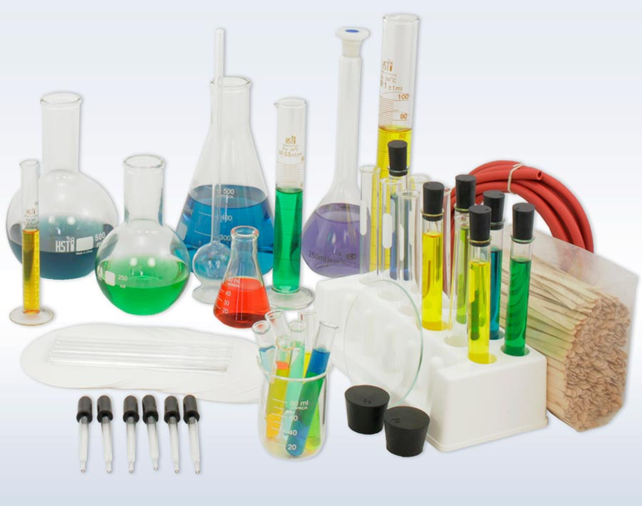
- Boiling (or Florence) Flask or any clear glassware
- Baby oil
- Water
- White paint
- Glitter (white or blue)
- Alka-Seltzer
How to Make Your Snowstorm in a Flask:
- Prepare the water mixture: Mix 1 teaspoon of white paint with 100 ml of water.
- Add glitter: Stir a generous amount of glitter to the water mixture.
- Fill the flask: Pour the glittered water into the Boiling Flask (or any clear glassware), filling your glassware about one-fifth full.
- Add baby oil: Fill the rest of the glassware with baby oil. The clear baby oil is less dense than the water mixture, so it will stay on top.
- Break up the Alka-Seltzer: Break an Alka-Seltzer tablet into a few small pieces.
- Create the snowstorm: Next, drop the Alka-Selzer pieces in the flask, one at a time, and watch the snowstorm come to life!
Keep the Snowstorm Going:
As the reaction slows down, simply add more Alka-Seltzer to keep the snowstorm swirling!
What’s Happening:
This snowstorm works because of two important scientific principles: density and polarity.
- Density is a measurement of how compact a substance is, or how much mass fits in a certain volume of space. The scientific formula for density is mass/volume. When you compare equal amounts of water and oil, you’ll notice that water is heavier than oil. This is because the molecules in water are packed more tightly together, giving water more mass than the same amount of oil. Water is denser than oil, so when you place both in the same container, the water will sink while the less dense oil floats on top. Density is affected by temperature—the hotter a liquid gets, the less dense it becomes.
- Polarity explains how molecules bond. Water molecules are “polar” because they have an uneven electrical charge. One end of the water molecule, where the two hydrogen atoms are located, is positively charged, while the other end, where the oxygen atom is, is negatively charged. This creates a “lopsided” molecule, much like a magnet, where opposite charges attract. As a result, the positive end of the water molecule is attracted to the negative end of the other molecules. Oil molecules, however, are non-polar, meaning they don’t have a positive or negative charge. So, they do not attract water molecules, which is why oil and water don’t mix. Instead, the two substances separate when combined!
Why It Works:
In our homemade snowstorm, we used Alka-Seltzer to react with the water to produce carbon dioxide gas bubbles. These bubbles then stick to the water droplets. And since the water/gas combo is less dense than the oil, they rise to the top of the flask. Then, at the top, the gas bubbles pop and escape into the air, allowing the dense water to sink to the bottom again.

For more density-related science projects, check out these free project ideas: