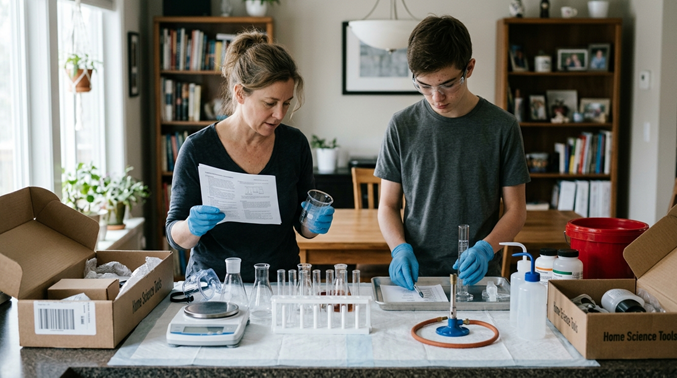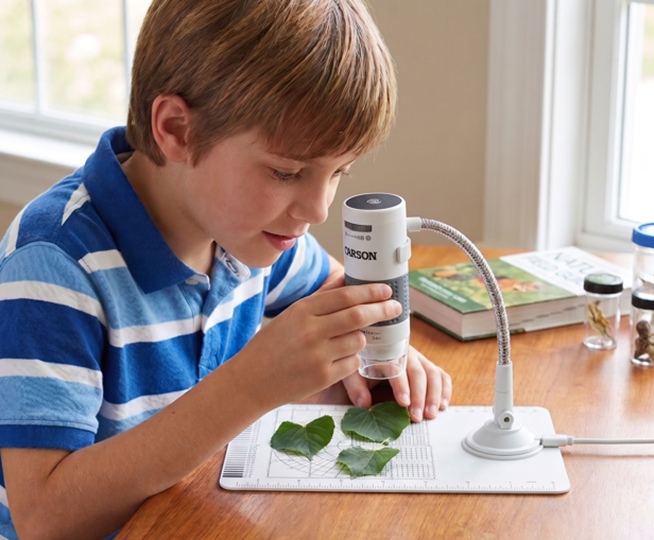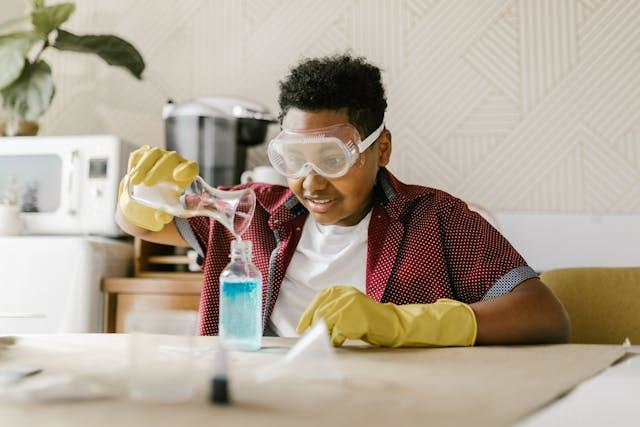
Science history isn’t just something to read about in a textbook; it’s something that should be experienced firsthand.
At Home Science Tools, we believe some of the most powerful learning happens when students do science, not just study it. Many of the world’s most famous scientific discoveries began with simple questions, careful observation, and basic tools, the same kinds of tools you can use at home.
In this guide, we’ll explore how to safely and effectively recreate famous science experiments in a homeschool setting. These hands-on activities are inspired by historic breakthroughs in physics, chemistry, biology, and earth science and adapted for modern students, using accessible materials and proper lab practices.
Whether you’re building a homeschool science curriculum or looking for enrichment activities, these experiments bring history to life while strengthening scientific thinking skills.
Why Recreate Famous Experiments at Home?
When students replicate classic scientific experiments, they gain:
- A deeper understanding of core scientific principles
- Insight into how discoveries were made
- Experience in forming hypotheses and collecting data
- Confidence using real scientific tools
- Stronger critical thinking skills
More importantly, they begin to see themselves as scientists.
Physics Experiments You Can Recreate at Home
Newton’s Prism Experiment: Discovering the Spectrum of Light
In the 1600s, Isaac Newton demonstrated that white light is made up of multiple colors. By passing sunlight through a glass prism, he revealed the visible spectrum.
How to Recreate It at Home
Place a glass prism in direct sunlight and project the refracted light onto a white surface. You’ll see a rainbow spectrum appear.
If natural sunlight isn’t available, a strong white light source can also work.
Concepts Learned
- Refraction
- Wavelengths
- The visible light spectrum
This experiment pairs beautifully with lessons on optics and wave behavior.
Galileo’s Falling Objects: Understanding Gravity
Galileo challenged the idea that heavier objects fall faster than lighter ones.
How to Recreate It at Home
Drop two objects of different weights but similar shape from the same height. Observe whether they hit the ground at the same time.
For more precision, record the drop with slow-motion video.
Concepts Learned
- Gravity
- Acceleration
- Air resistance
Students quickly grasp how scientific assumptions can be tested and revised.
Archimedes and Buoyancy: Why Objects Float or Sink
Archimedes discovered that objects displace an amount of water equal to their volume, laying the foundation for density calculations.
How to Recreate It at Home
Fill a container to the brim with water. Submerge an object and collect the displaced water to measure its volume.
Compare different materials to observe which float and which sink.
Concepts Learned
- Density
- Volume
- Buoyant force
This experiment connects math and science in a tangible way.
Explore our physics kits for more ideas and experiments you can try at home.
Chemistry Experiments Inspired by Scientific Breakthroughs
Elephant Toothpaste: Exploring Catalysts
While not a historical “single discovery” experiment, this dramatic reaction demonstrates principles central to chemical decomposition studies.
How to Recreate It at Home
Mix hydrogen peroxide, dish soap, and yeast to create a rapid foaming reaction.
Always use proper eye protection and adult supervision.
Concepts Learned
- Catalysts
- Exothermic reactions
- Oxygen gas production
Students observe chemistry in action, literally bubbling over!
Boyle’s Law: Air Pressure and Gas Volume
Robert Boyle established the relationship between pressure and volume in gases.
How to Recreate It at Home
Try the classic balloon-in-a-bottle experiment. Insert a balloon into a bottle and attempt to inflate it. Without a vent hole, it won’t expand easily due to air pressure.
Concepts Learned
- Gas laws
- Pressure vs. volume
- Scientific variables
It’s a simple but powerful demonstration of invisible forces at work.
Combustion and Oxygen: Understanding Chemical Reactions
Antoine Lavoisier helped define the role of oxygen in combustion.
How to Recreate It at Home
Place a lit candle in a shallow dish of water. Cover it with a glass jar and observe as the flame extinguishes and water rises inside the jar.
Concepts Learned
- Oxygen consumption
- Combustion
- Gas behavior
This activity reinforces careful observation and lab safety.
Our chemistry kits are a great place to start if you’re looking for more ways to experiment at home.
Biology Experiments That Changed Our Understanding of Life
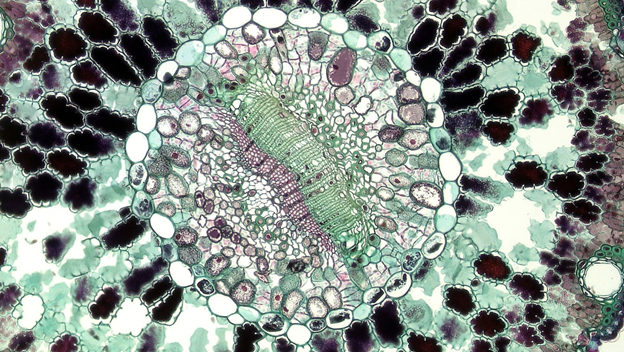
Microscopy: Seeing the Invisible World
Antonie van Leeuwenhoek was among the first to observe microorganisms.
How to Recreate It at Home
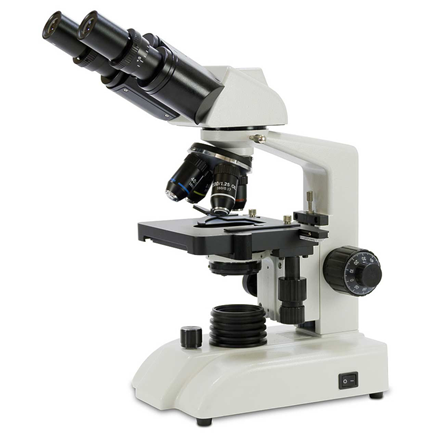
Using a quality student microscope, observe:
- Onion skin cells
- Pond water samples
- Cheek cells (with proper preparation)
Concepts Learned
- Cell structure
- Microorganisms
- Scientific observation
Microscopy opens an entirely new world for students and builds foundational skills in biology.
Mendel’s Pea Plants: Discovering Genetics
Gregor Mendel’s pea plant experiments revealed how traits are inherited.
How to Recreate It at Home
Grow pea plants and track observable characteristics like height or flower color across generations.
Students can chart data and look for patterns.
Concepts Learned
- Dominant and recessive traits
- Data collection
- Genetic probability
This long-term experiment strengthens analytical thinking.
Germ Theory: Observing Microbial Growth
Louis Pasteur’s work helped establish germ theory.
How to Recreate It at Home
Place slices of bread in different conditions:
- Open air
- Sealed bag
- Refrigerated
- Handled with unwashed hands
Observe mold growth over time.
Concepts Learned
- Microbial growth
- Controlled variables
- The importance of sanitation
Students see real-world science connected to everyday life.
Can’t get enough? Take a look at our biology kits and curricula to explore further.
Earth and Environmental Science Experiments
Measuring the Earth with Shadows
Eratosthenes calculated Earth’s circumference using shadow measurements.
How to Recreate It at Home
Measure the shadow of a vertical stick at noon and calculate the angle of the sun. Compare results with those from another location, if possible.
Concepts Learned
- Geometry
- Earth science
- Solar angles
This activity integrates math and astronomy.
Bernoulli’s Principle: Air Pressure in Motion
Daniel Bernoulli described how fluid speed affects pressure.
How to Recreate It at Home
Hold a strip of paper under your lower lip and blow across the top of it. The paper lifts upward due to changes in air pressure.
Concepts Learned
- Aerodynamics
- Pressure differentials
- Fluid dynamics
It’s a simple demonstration with real-world applications in flight.
Visit our Earth Science Kit section for more ideas and information.
Tips for Safely Recreating Science Experiments at Home
At Home Science Tools, safety is always our priority. When conducting science experiments for kids:
- Use proper science safety equipment
- Follow age-appropriate instructions
- Supervise younger students
- Work in well-ventilated areas
- Use appropriate lab-grade equipment
Having reliable tools makes a significant difference in both safety and learning outcomes.
Taking It Further: Building a Complete Homeschool Science Experience
Recreating famous experiments is more than a fun activity; it can anchor an entire homeschool science curriculum.
You can expand each experiment by:
- Writing lab reports
- Researching the original scientist
- Exploring modern applications
- Designing follow-up experiments
- Connecting lessons across disciplines
These activities reinforce scientific literacy and inspire long-term curiosity.
Bringing Science History to Life
The greatest scientists in history began with curiosity and simple tools. By recreating famous science experiments at home, your student can walk in their footsteps, ask questions, test ideas, and discover how the world works.
At Home Science Tools, we’re committed to equipping families with the resources, equipment, and curriculum support needed to make meaningful, hands-on science possible at home.
When students experience science firsthand, the learning experience becomes more than just memorization of facts. And that’s where real learning begins.