Back-to-School Science Projects That Make Learning Fun
Back-to-school science projects are a perfect way to set the tone for hands-on learning as a new school year begins. Whether you’re homeschooling, teaching in a classroom, or just looking to get your kids excited about science, these easy activities are a great way to dive in. They’re fun, low-prep, and packed with science lessons—perfect for easing back into routines while keeping things fresh and engaging.
Why Back-to-School Science Projects Are a Must for Every Learner
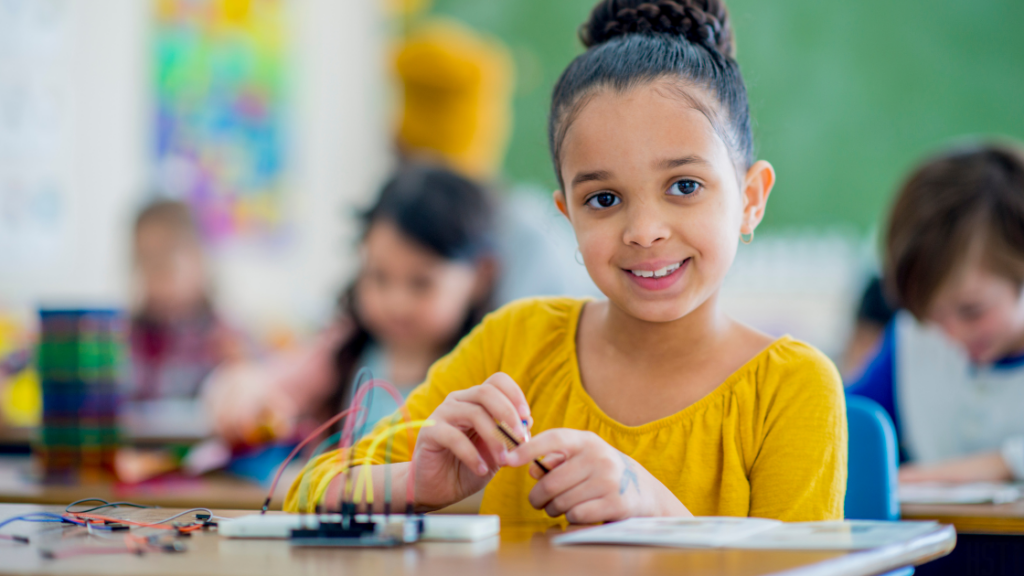
Starting the school year with hands-on science projects sparks curiosity and encourages critical thinking. Back-to-school science projects help kids build a strong foundation in science while making learning fun and interactive. Plus, they’re perfect for all settings—whether at home or in the classroom.
Let’s jump in!
3 Easy Back-to-School Science Projects
Rainbow Walking Water
This experiment demonstrates capillary action—the same process plants use to draw water from their roots to their leaves. In this case, the paper towel acts like a straw, pulling water upward and across. It’s a colorful and clear way to show how water moves through fibers. In time, the water will “walk” up the paper towel and into the empty glass, mixing colors as it goes and creating a rainbow effect. This one’s a favorite because the results are as pretty as they are fascinating.
What You Need:
- 6 clear glasses or jars
- Paper towels
- Food coloring (red, blue, yellow work best)
- Water
Instructions:
- Fill three glasses with water and add a different color of food coloring to each. Leave the other three glasses empty.
- Then, arrange them in a circle, alternating between full and empty.
- Fold paper towels into strips and place one end in a colored glass and the other end in an empty glass next to it.
Balloon Rocket
Ready for a little rocket science? Well, this is a perfect demonstration of Newton’s Third Law of Motion: For every action, there’s an equal and opposite reaction. Specifically, as air rushes out of the balloon, it pushes the balloon forward in the opposite direction. In other words, it’s physics in action—and it’s a blast!
What You Need:
- A balloon
- A straw
- String (about 6–10 feet)
- Tape
Instructions:
- Thread the string through the straw.
- Then, tie each end of the string to two solid points (like chairs or doorknobs) to make a tight line.
- Finally, blow up the balloon (don’t tie it), tape it to the straw, and let it go!
Dancing Raisins
This quick experiment explores density and buoyancy. Raisins are denser than soda, so they sink. But the bubbles in the soda attach to the raisins, lifting them up. When the bubbles pop at the surface, the raisins lose their lift and sink again. It’s a fun, visual way to understand how gas can change the density of an object. The raisins will sink, then rise, then sink again—over and over. It’s like a tiny raisin dance party.
What You Need:
- A clear glass
- A can of clear carbonated soda
- A handful of raisins
Instructions:
- Pour soda into the glass and drop in some raisins.
- Then, simply watch as the raisins dance!
Wrap-Up: Easy Science Projects That Spark Real Learning
These experiments are simple, low-mess, and full of wow-factor. More importantly, they teach core scientific concepts in a way kids will actually remember. Whether you’re adding them to a homeschool lesson or just looking for a weekend activity, these easy science experiments for kids offer real learning in a hands-on way.