Walk through any science fair, and you’ll spot several perfect poster boards, flawless data tables, and very few signs of actual science fair project ownership. When a deadline approaches, and you want your child to succeed, it’s tempting to step in. That help can quickly turn into taking over.
With years of experience working with homeschool families, we’ve learned that the projects that matter most aren’t perfect. Perhaps the hypotheses have spelling errors, or the presentation is a bit messy. But those are the projects kids remember because they truly belong to them.
The purpose of a science fair is to help your child experience real scientific discovery, not achieve perfection.
Letting Kids Lead the Learning
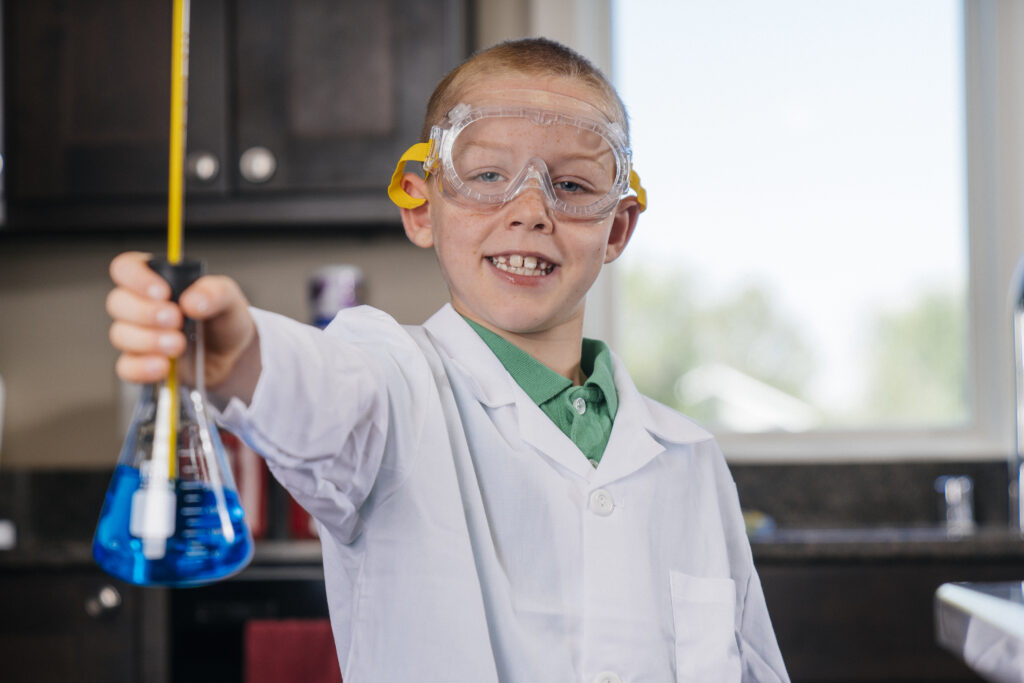
When kids take ownership of their science fair projects, they stop following instructions and start asking questions. They notice patterns, too. They also want to test one more variable, just to see what happens.
That’s the beauty of science!
Science is all about wondering how the world works and learning how to investigate it. So, when adults take over a project, even with good intentions, children lose the chance to build confidence as thinkers and problem-solvers.
This approach takes more patience at first, because it’s natural to want to lead your child, but keep this in mind: when children explore questions they care about, motivation grows, and curiosity takes over.
Practical Ways to Foster Science Fair Project Ownership
Start with curiosity
Instead of searching for “good science fair projects,” pay attention to what already fascinates your child. Maybe that’s bugs, plants, machines, or weather. Whatever their interests might be, a natural interest will fuel persistence when experiments get tricky. A science kit can be a great starting point, but personal curiosity is what carries a project forward.
Ask questions
When something doesn’t work, resist fixing it. Ask guiding questions instead. This helps children develop critical thinking and shows them they’re capable of solving problems on their own.
Let mistakes become lessons
If plants don’t grow or results don’t make sense, lead your child to understand that this is actually part of data! Scientists troubleshoot, revise, and try again all the time. Learning to adapt is part of the scientific process.
Celebrate your child’s science fair project ownership
Notice thoughtful observations, creative problem-solving, and persistence. Encourage the discovery of science, not just the final display.
What Science Fair Project Ownership Looks Like at Different Ages
Ages 5–8
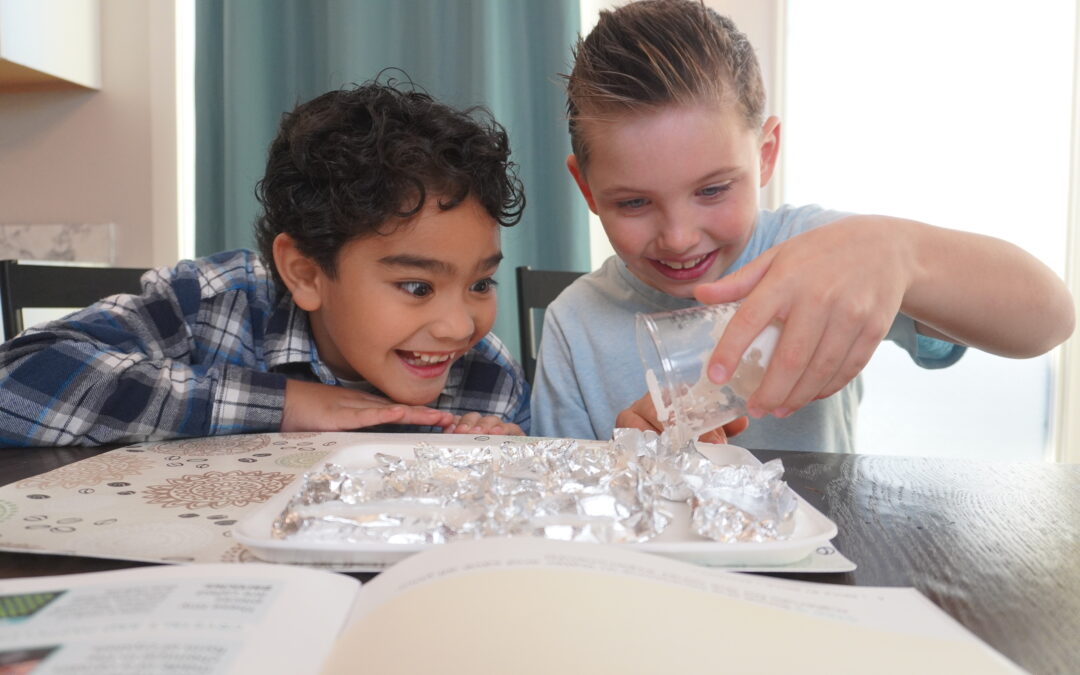
Ownership means hands-on exploration. Children choose the question, set up the experiment, and record observations in their own way. Your role is gentle guidance, asking “What do you notice?” and “What should we try next?”
Ages 9–11
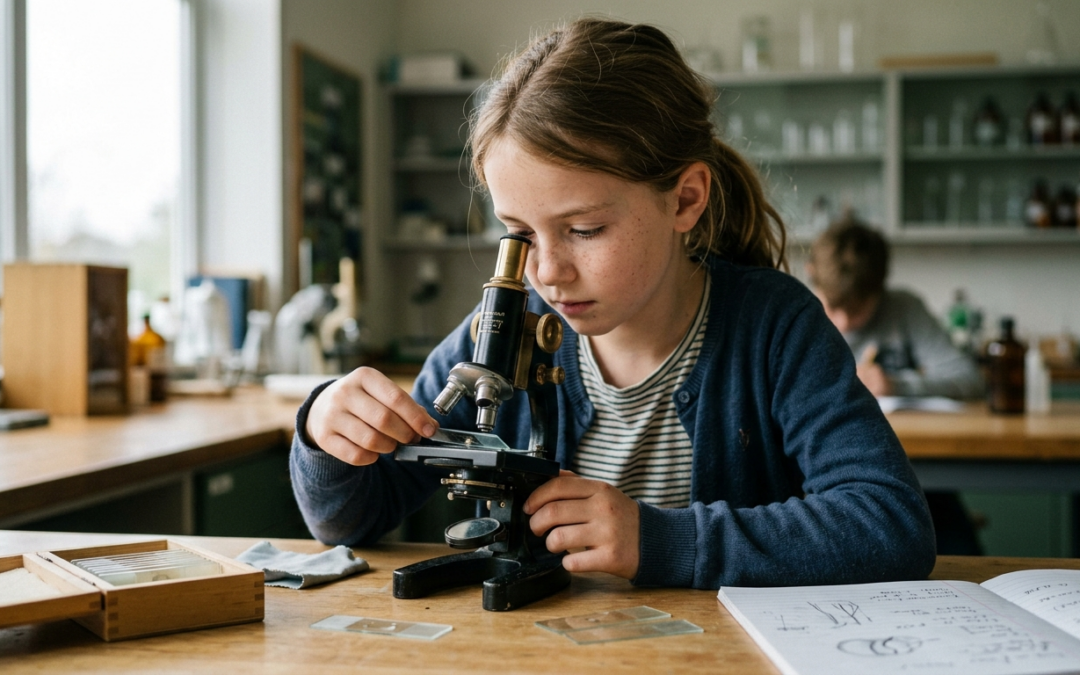
Students can plan experiments, think about variables, and refine ideas. You become a consultant, helping them think through fairness and design while letting their ideas lead.
Ages 12–14
Middle schoolers can manage multi-step experiments and analyze results. Offer resources and support but let them wrestle with their own questions and discoveries.
Ages 15+
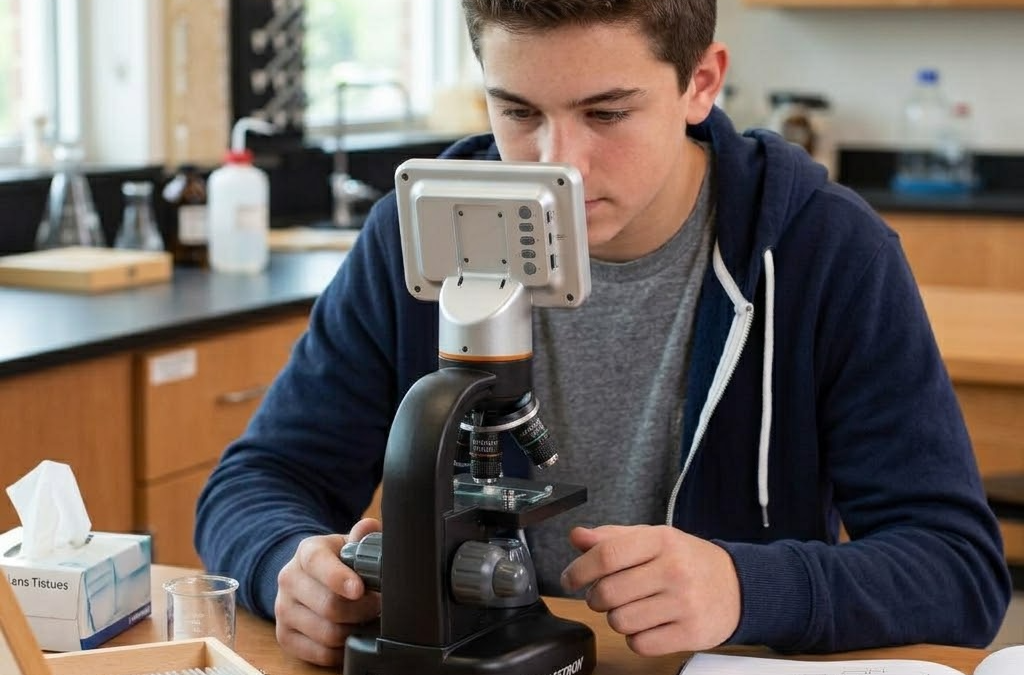
High school students should work mostly independently. When they ask for help, respond with reflective questions that strengthen problem-solving skills.
Your Role in the Science Fair
Your role is to make space for the work to happen—providing materials, time, and encouragement. You’ll ask questions when your child feels stuck and step in when safety or accountability is needed. But the thinking, testing, and discovering belong to your child. They are the scientist.

Long-Term Payoff of Science Fair Project Ownership
When children own their science fair projects, they learn science and perseverance. They also learn how to ask questions and seek answers. Those skills last far longer than a ribbon or a score. They shape how children approach learning (and life)! A messy poster board is a small price to pay for a confident, curious young scientist.