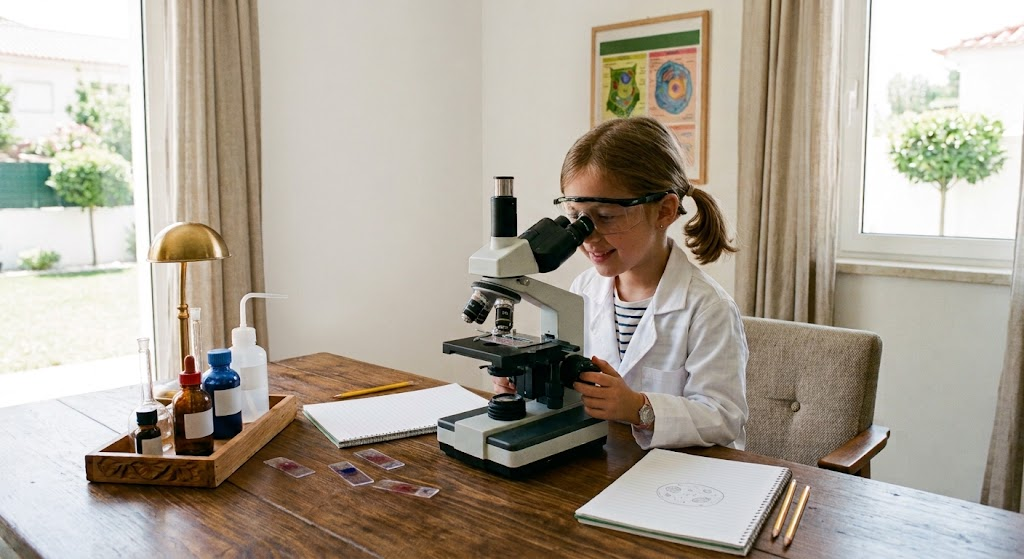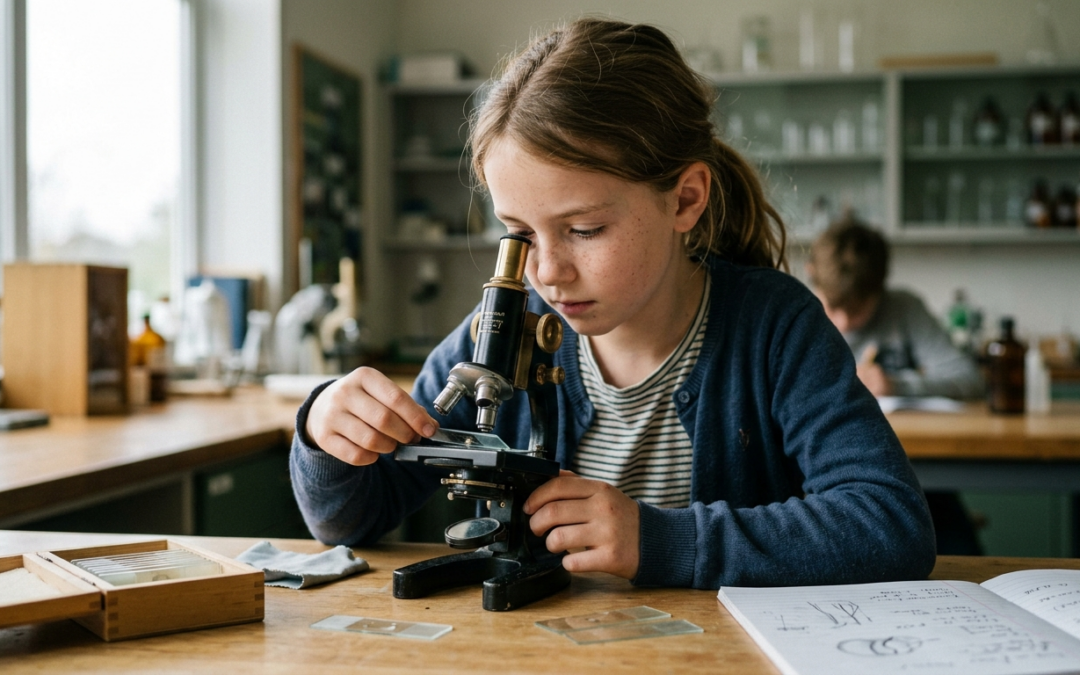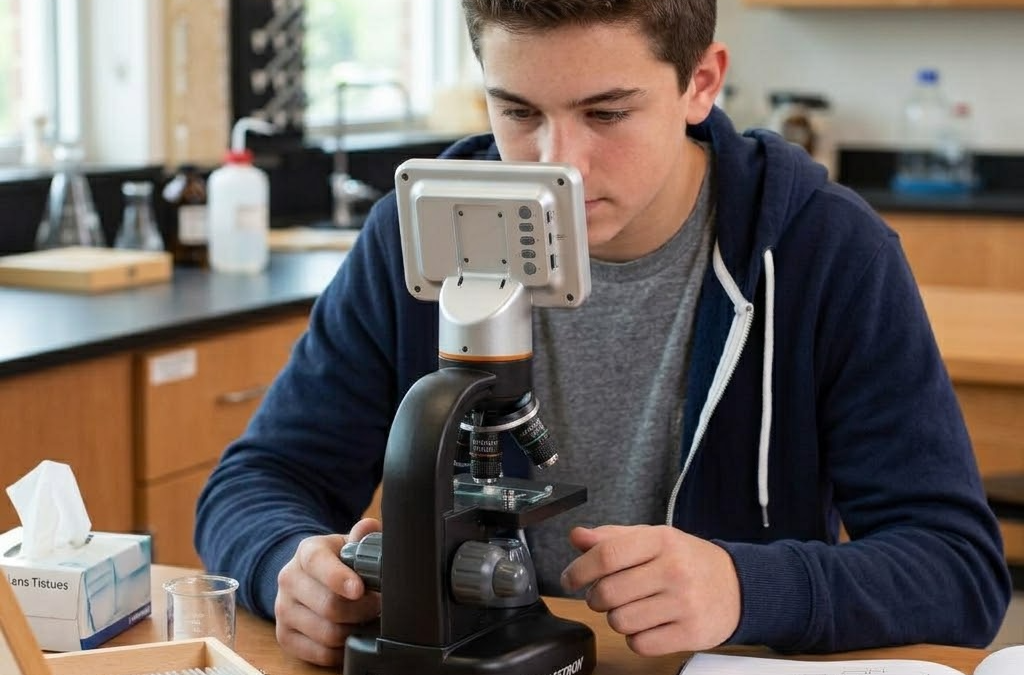
When it comes to art supplies we tend to have a bit of a stash in our home to do lots of different things: crayons, glue, paint, brushes, and other things too. But what about when we teach science? What comes to mind when you think of tools to have on hand to help teach science? If you are a bit stumped, keep on reading for some great suggestions!

Basic Supplies To Help You Teach Science
Here are some great tools to help educators teach science that you’ll want to keep in your stash for that impromptu time of science fun! They will not only help you with lesson plans or help students get geared up for the lesson, but are also the basics of items you could need for any experiment.
- Cloud Chart Poster
- Balloons
- Corn Starch
- Baking Soda
- Alcohol
- Star and Planet Locator
- Peroxide
- Toothpicks
- Photographic Periodic Table
- Tweezers
- Gloves — disposable or you can get reusable ones too.
- Goggles for kids and for adults
- Aprons
- Disposable shower caps
- Notebooks
- Pencils
- Colored Pencils
- Petri Dishes
- Calculator
- Beakers
- Food Coloring
- Magnets
- Dropper
Classic Science Kits To Have On Hand To Teach Science
Science kits are LOVED by many. Not only do they make great additions to teaching science lessons but many of these make for wonderful gifts too for those creative student minds and for science teachers alike! It’s an easy-open-and-dive-in kinda thing. You have all you need in one place. Often, these come with extras so you can repeat the experiment more than once for a whole lot of active learning. Here are some that are sure to be a hit with your learners!
- Frog Dissection Kit
- This is a totally complete kit for all you need to dissect a frog!
- Complete Introduction to Chemistry Kit
- This kit comes with loads of neat stuff to help your student explore chemistry! You’ll be able to enjoy twenty-seven really neat and engaging experiments with this kit.
- Chemistry Equipment Set
- This is a supplies kit — totally setting you up with the basic lab equipment you’ll need for experiments and projects!
- Erupting Volcano Cross- Section Model
- Volcano Kits are so much fun!
Other Science Kits To Have On Hand To Teach Science
Aside from the classics, it’s great to have other kits on hand to switch things up your science curriculum every now and then. These high-quality kits will be engaging students, not to mention fun, and you’ll be learning science right alongside your student!
- Spherification Kit
- What is spherification? It’s the transformation of liquids and semi-solid foods into gel-like, small spheres. Think caviar. It’s kinda cool and this kit combines flavor, fun, and chemistry all in one!
- Rock Study Kit, 15 specimens
- Rocks are just super cool, aren’t they? It’s like holding a story, yet to unfold, in your hands. This kit offers hands-on testing and observation in specimens of ingenious, sedimentary, and metamorphic rock.
- Weather Experiment Kit
- Weather experiments can be SO much fun! You can totally geek out and really awaken that excitement and curiosity in your student with this kit. It even comes with a complete unit study, weather guide, mini weather station, and more!
- Bacteria Hand Washing Experiment Kit
- This is pretty neat and pretty eye-opening when it comes to learning how we are really doing at washing our hands.
Check out some other fun Earth & Science kits and other kits too like Nature Kits, Engineering Kits, Physics Kits, and more!
Sometimes The Best Things Are Free
Going outside is not only GOOD for you but also a great opportunity for LEARNING! Nature studying is one of the most fun things people of all ages can enjoy throughout the school year. Take a notebook with you with a handy-dandy pencil to take notes and draw all the discoveries.
Know The Basics Of The Scientific Method
The Scientific Method is such a cool thing to know! It’s a great way to train the mind to answer a question in a logical and orderly manner.
The process:
- Question
- Example: Why is the sky blue?
- Research
- Google + Library!
- Hypothesis
- This is basically your guess as to what the outcome (the answer to your question) will be.
- Analyze and record observations and your results
- Make lots of notes of your discoveries!
- Conclusion
- With all the information you have, you should now be able to conclude and answer your original question.
This isn’t just for science fairs and big experiments. You can apply this to any project or even when you’re out doing a nature study with your field notebook and pencil!
Keep A Mini Library Of Fun Experiments
Keeping a mini stash of potential experiments is such a great way to have ideas and guidance available at all times! Check out some of these popular science projects! You’ll learn how to make slime, build a solar car, build a balloon rocket car, build a saltwater circuit, and more!