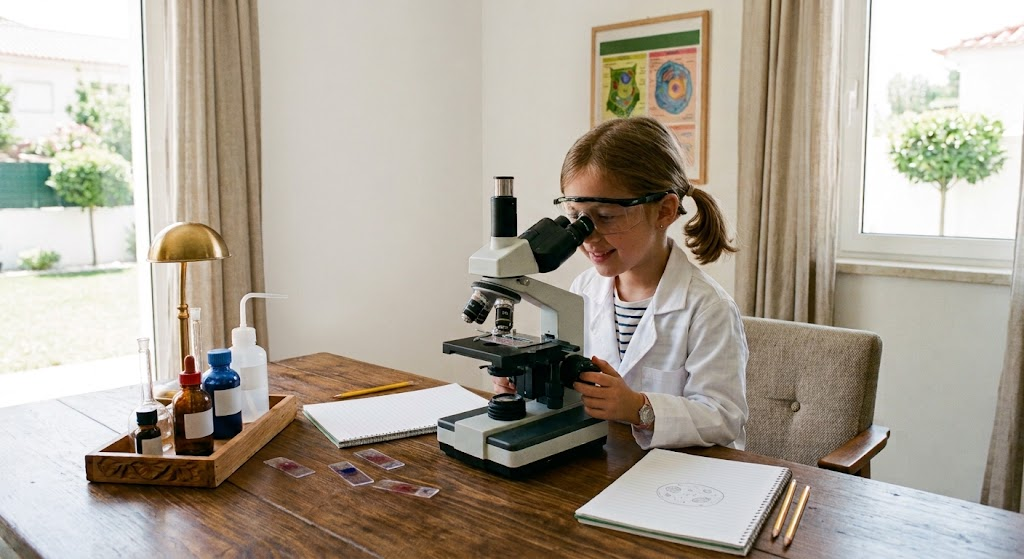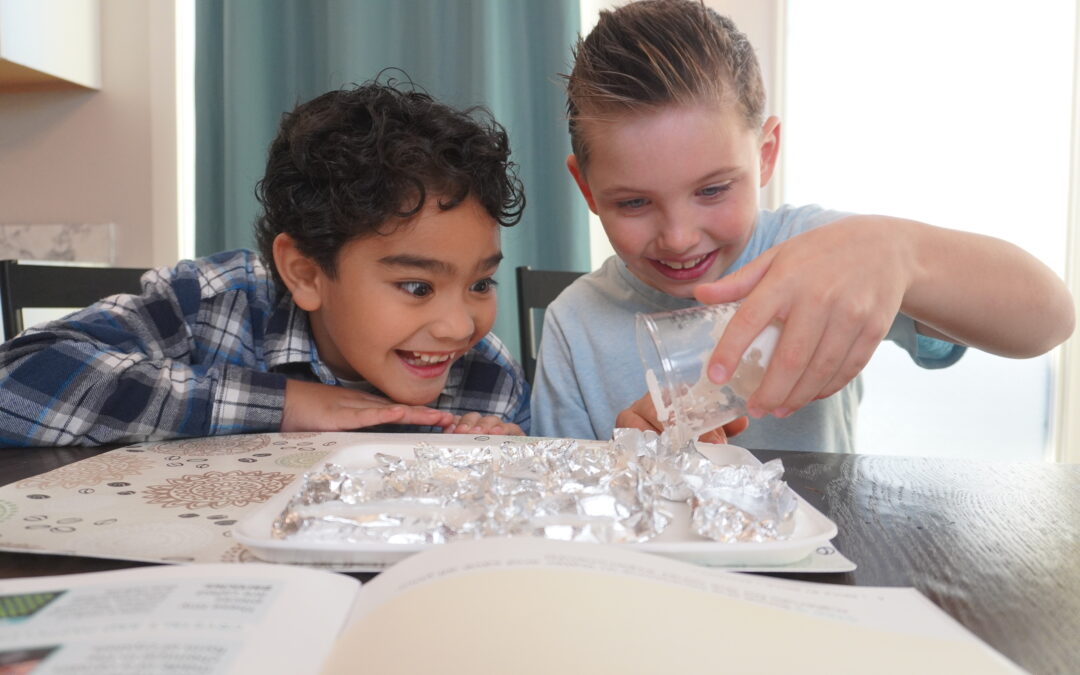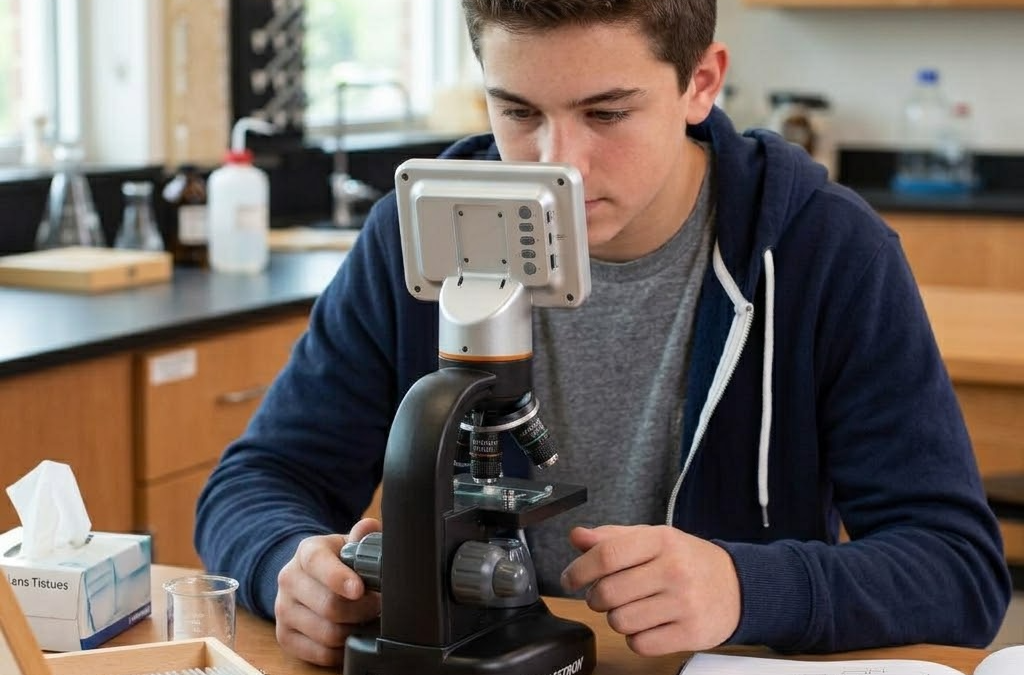
Hands-on learning gives students the opportunity to connect scientific ideas with real observations. Science kits designed for middle school help create structured laboratory experiences that encourage curiosity, careful thinking, and practical skill development. At Home Science Tools, we believe meaningful science education grows through experimentation, making it easier for students in grades 5–8 to explore chemistry and physics with confidence.
Well-designed laboratory materials support classroom lessons while reducing preparation time. Carefully selected supplies also help families and educators spend less time searching for specialty items and more time focusing on discovery.
Why Hands-On Science Matters in Middle School
Middle school introduces students to scientific concepts that become the foundation for future STEM studies. Reading about force, chemical reactions, or electricity builds knowledge, but laboratory activities strengthen comprehension through direct observation.
Experiments encourage students to:
- Record measurable results
- Ask meaningful scientific questions
- Compare predictions with outcomes
- Practice analytical thinking
- Develop confidence using laboratory equipment
These experiences transform abstract concepts into evidence-supported lessons, making science more engaging and memorable.
Chemistry Experiments Made More Accessible
Chemistry introduces students to reactions, atoms, acids, bases, and the properties of matter. Successful laboratory activities depend on having reliable materials available when each lesson begins.
The Focus On Middle School Chemistry Lab Kit from Home Science Tools contains more than twenty specialty items selected specifically for the Real Science 4 Kids Focus On Middle School Chemistry curriculum, 3rd edition. The collection supports all twelve laboratory experiments included in the workbook while reducing the need to locate difficult materials independently.
Specialty Materials That Simplify Preparation
Several components help streamline each experiment, including:
- Complete Red Cabbage Juice indicator kit
- Nylon Synthesis kit for enrichment activities
- Carefully selected laboratory materials
- Fewer specialty items required from outside shopping lists
The included Red Cabbage Juice indicator kit allows pH-testing experiments to begin immediately without preparing homemade indicators, helping students focus on scientific observation instead of lengthy setup.
The additional Nylon Synthesis kit also supports the workbook’s optional laboratory activity, giving students another opportunity to investigate chemistry through direct experimentation.
Physics Activities That Encourage Exploration
Physics helps explain how the physical world works. Concepts such as motion, energy, heat, sound, and electricity become easier to understand when students observe them through guided experiments.
The Focus On Middle School Physics Lab Kit supports the twelve laboratory activities found in the Real Science 4 Kids Focus On Middle School Physics curriculum, 3rd edition.
Students investigate topics including:
- Force and friction
- Energy transfer
- Potential and kinetic energy
- Electrical charge
- Voltaic batteries
- Newton’s First Law of Motion
- Heat
- Light
- Sound
- Motion and work
Each experiment builds practical experience while reinforcing scientific vocabulary and mathematical reasoning.
Laboratory Supplies Selected for Repeated Use
The Physics Lab Kit includes specialty equipment chosen specifically for the curriculum, including batteries, a reusable scale, and additional experiment materials that appear repeatedly across multiple activities.
These selections reduce preparation time and help maintain consistency from one lesson to the next.
Supporting Year-Round Science Learning
Middle school science progresses through multiple topics over an academic year. Organized laboratory materials help educators maintain steady momentum as new concepts are introduced.
Reliable experiment supplies allow lessons to move naturally from chemistry into physics while reinforcing core scientific practices such as measurement, observation, documentation, and evidence-based conclusions.
Instead of interrupting instruction to search for uncommon materials, educators can focus attention on the experiments themselves.
Helpful Features of Curriculum-Based Laboratory Kits
Curriculum-aligned kits provide several practical advantages:
- Materials selected for specific lessons
- Reduced shopping lists
- Consistent experiment quality
- Easier lesson planning
- Better organization for laboratory activities
- Supplies appropriate for grades 5–8
These features create a smoother instructional experience while helping students remain engaged during laboratory work.
Encouraging Scientific Thinking Beyond Individual Experiments
Laboratory activities teach more than scientific facts. Students learn to develop hypotheses, collect observations, evaluate evidence, and communicate findings using clear scientific language.
Repeated exposure to structured experiments also builds familiarity with laboratory procedures, helping students become comfortable handling equipment responsibly and recording accurate results.
As scientific confidence grows, students become better prepared for more advanced coursework in high school and beyond.
Choosing Science Kits That Match the Curriculum
Selecting laboratory materials designed for a specific curriculum simplifies preparation while supporting consistent learning objectives. Curriculum-based kits include the specialty supplies required for scheduled activities, making it easier to complete every experiment without unnecessary substitutions.
At Home Science Tools, our Focus On Middle School Chemistry Lab Kit and Focus On Middle School Physics Lab Kit were assembled to support the Real Science 4 Kids Focus On Middle School curriculum. Each collection contains carefully selected materials that help educators and families create engaging laboratory experiences with fewer preparation challenges.
Whether introducing chemical reactions or exploring the laws of motion, thoughtfully designed science kits help students build practical laboratory skills while developing a stronger understanding of scientific concepts. Explore our middle school laboratory collections at Home Science Tools to find curriculum-aligned resources that support engaging experiments from the first lesson to the final lab.