Teaching science to children at different grade levels can feel challenging, especially when each student needs age-appropriate instruction. Structured Homeschool Chemistry Curriculum helps families organize lessons while keeping every learner engaged. With structured activities, guided experiments, and flexible teaching resources, chemistry becomes an enjoyable subject for elementary, middle, and high school students alike.
At Home Science Tools, our chemistry programs support hands-on learning with complete lesson plans and lab materials, making planning easier for homeschooling families.
Why Multi-Level Science Instruction Works
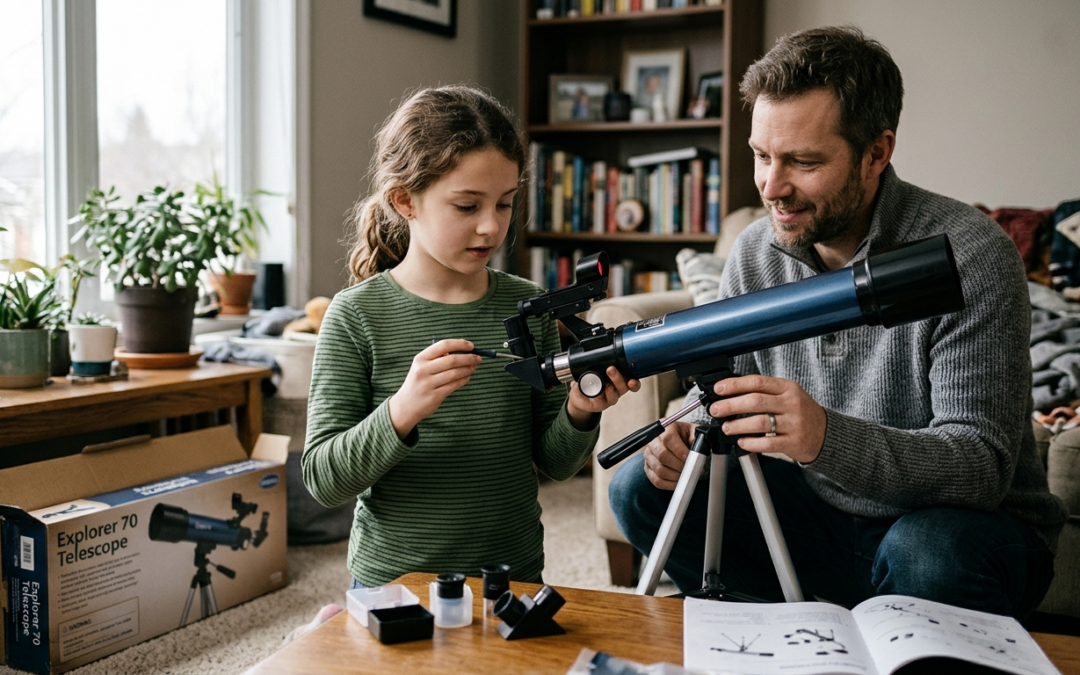
Children learn science in different ways, even when they explore the same topic together. A shared lesson creates opportunities for discussion while allowing each student to complete assignments suited to their experience.
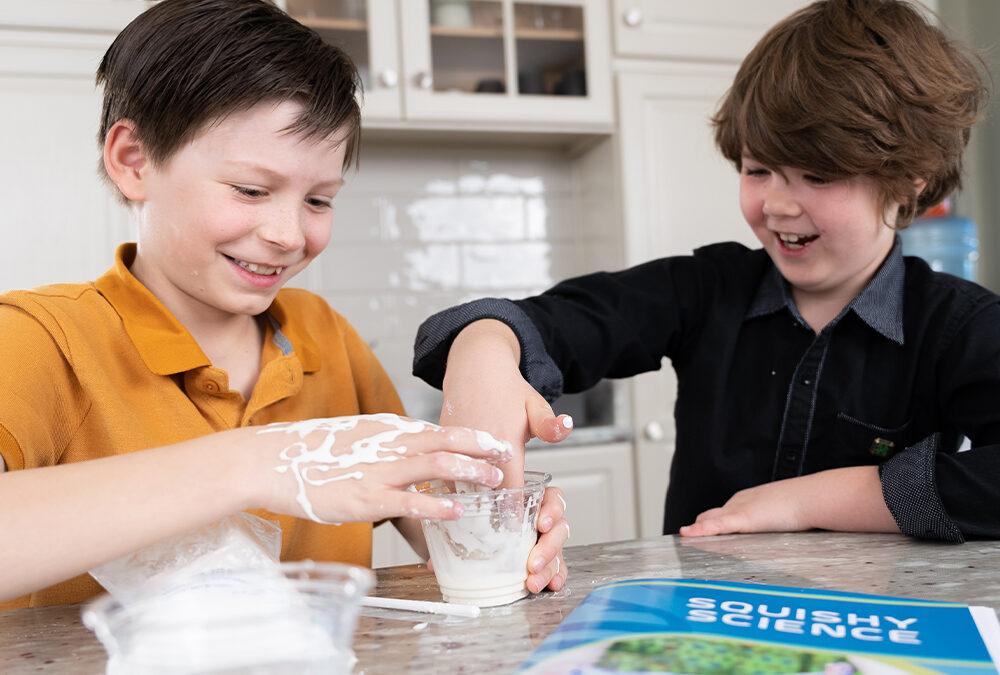
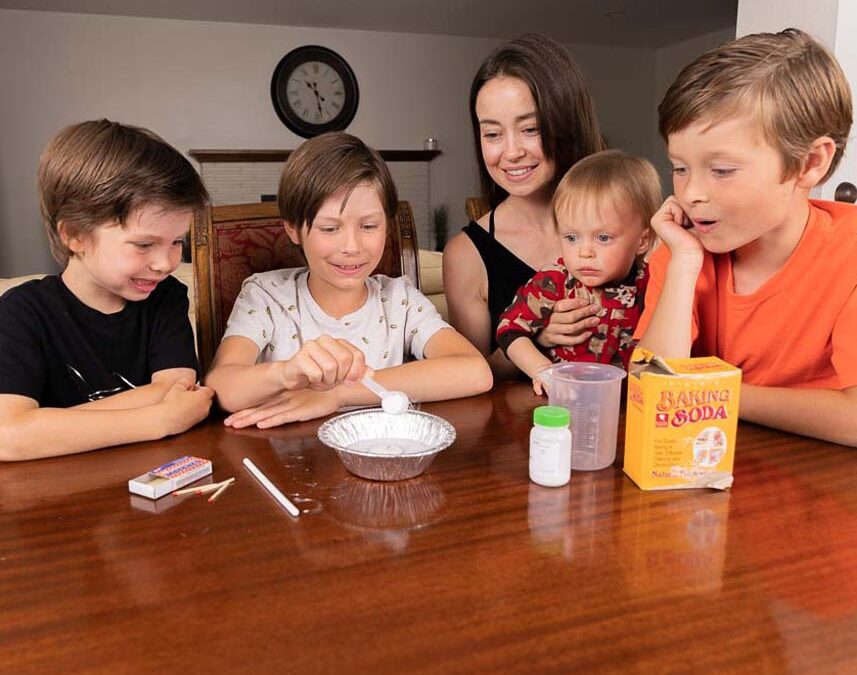
Chemistry aligns well with this concept as many ideas are derived from simple observations that evolve into more complex scientific explanations. Younger students may describe the changes they observe during an experiment, while older students analyze reactions, perform measurements, and explain molecular behavior.
This teaching style encourages collaboration without requiring separate science lessons for every child.
Building Lessons Around Shared Topics
Instead of teaching separate chemistry units, families can organize instruction around common themes. Each student investigates the same scientific idea using activities that match individual skill levels.
Examples include:
- Physical and chemical changes
- Energy transfer
- States of matter
- Molecular structure
- Acids and bases
- Chemical reactions
Each learner participates in experiments and completes assignments aligned with current academic goals.
Adapting Activities for Different Ages
A single experiment can generate learning opportunities across several grade levels.
Younger students may:
- Record observations
- Draw the experimental results
- Identify colors, textures, or temperature changes
Older students can:
- Measure variables
- Calculate reaction rates
- Write laboratory reports
- Explain chemical processes with scientific vocabulary
This approach creates meaningful participation for every student while keeping preparation manageable.
Chemistry Accelerate (Grades 3–7)
Families teaching elementary and middle school students benefit from the Chemistry Accelerate (Grades 3–7) Science Unlocked bundle available at Home Science Tools.
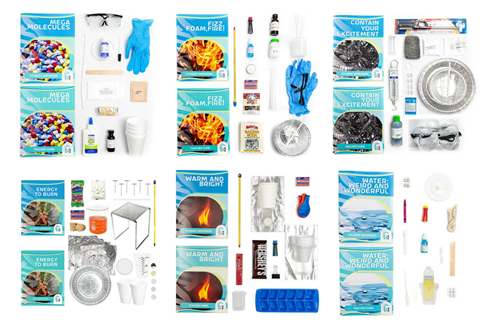
This full-year curriculum includes six chemistry kits that introduce foundational concepts through active investigation. Every bundle contains:
- Full-color student workbook
- Student assessments
- Experiment supplies and equipment
- Teacher guide
- Lesson planning timeline
- Real-world applications
Teachers and parents receive detailed guidance, including background information, answers to student questions, experiment instructions, and suggestions for adapting activities to different ages and learning abilities.
Students explore chemistry through engaging units such as:
Unit 1: Energy Types and Transfers
Exploring Thermal Energy introduces particle motion while students explode balloons and build a drink insulator to investigate heat transfer.
Energy to Burn examines chemical and thermal energy. Students construct a calorimeter and compare the energy stored in different foods.
Unit 2: Chemical Structures and Reactions
The remaining four kits expand knowledge of chemistry through memorable investigations.
Students discover:
- Chemical reactions in Fizz, Foam, and Fire
- Conservation of mass in Contain Your Excitement
- Molecular properties in Water: Weird and Wonderful
- Biological polymers in Mega Molecules
Each activity strengthens observation skills while helping students connect chemistry concepts with everyday experiences.
Supporting Older Students with Advanced Chemistry
As students enter high school, chemistry instruction shifts toward quantitative reasoning, atomic theory, and laboratory analysis. Home Science Tools offers a complete program that supports these advanced learning goals.
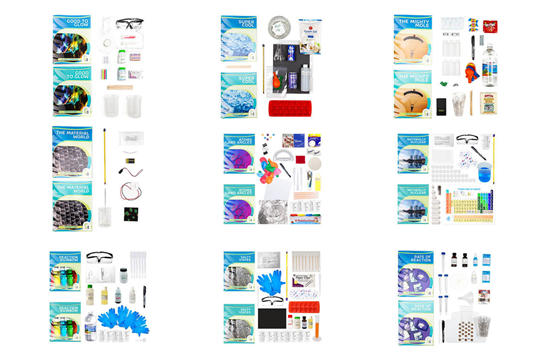
The High School Chemistry Full-Year Curriculum includes nine Science Unlocked Launch-level kits covering an entire academic year.
Each curriculum provides:
- Full-color student workbook
- Assessments
- Laboratory supplies
- Teacher guide
- Step-by-step experiment instructions
- Structured lesson schedule
The program aligns with all twelve NGSS High School Physical Science standards while addressing additional Home Science Tools learning goals.
Unit 1: Chemical Reactions
Students investigate reaction speed, energy release, and acids and bases through:
- Rate of Reaction
- Naturally Nuclear
- Reaction Rainbow
Experiments encourage analytical thinking while reinforcing chemistry principles with direct observation.
Unit 2: Properties Based on Particles
Students explore matter at the molecular level using:
- Super Cool
- The Material World
- Salty States
These investigations connect particle interactions with physical properties and phase changes.
Unit 3: Structures of Atoms and Molecules
Advanced topics include:
- Atomic structure in Good to Glow
- Mole Calculations in The Mighty Mole
- Molecular Geometry in Atoms and Angles
Each lesson develops scientific reasoning through guided laboratory experiences.
Organizing Multi-Age Chemistry Lessons
A consistent routine helps families manage several students during science instruction.
Helpful strategies include:
- Begin with a shared lesson introducing the day’s concept.
- Complete experiments together whenever possible.
- Assign age-specific worksheets after the investigation.
- Encourage older students to explain observations using scientific terminology.
- Review results together before moving to the next lesson.
This structure keeps instruction organized while giving every learner meaningful participation.
Encouraging Scientific Confidence
Hands-on chemistry allows students to ask questions, collect evidence, and develop problem-solving skills through direct experience. Practical experiments create memorable learning moments that strengthen understanding and curiosity.
At Home Science Tools, our complete chemistry curriculum and lab kits provide organized instruction, engaging experiments, and reliable teaching resources for families educating students across multiple grade levels. Whether beginning with Chemistry Accelerate (Grades 3–7) or advancing into our High School Chemistry Full-Year Curriculum, every lesson supports meaningful scientific discovery with materials designed for successful homeschool learning.