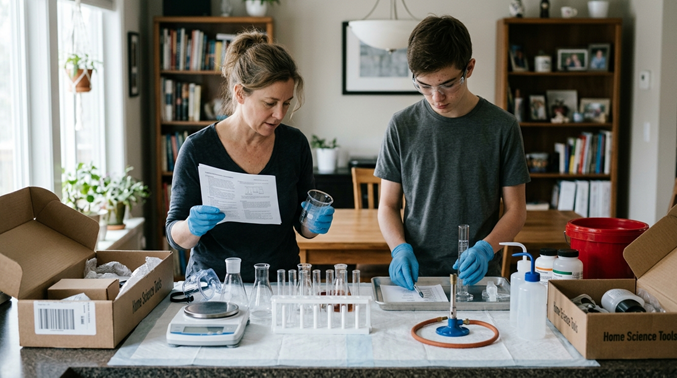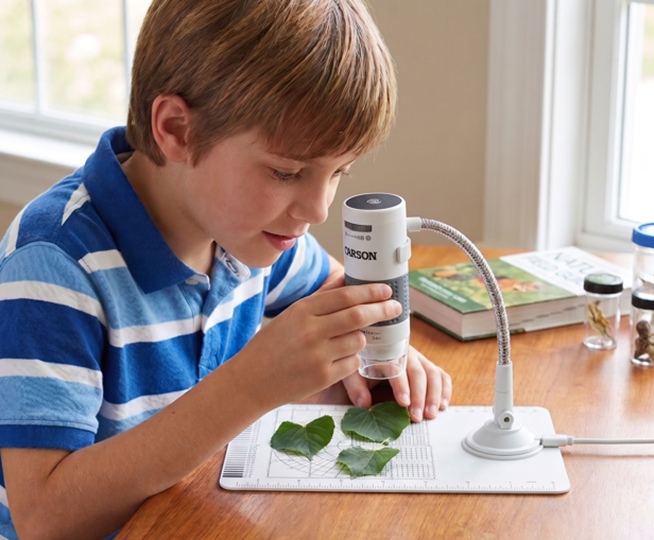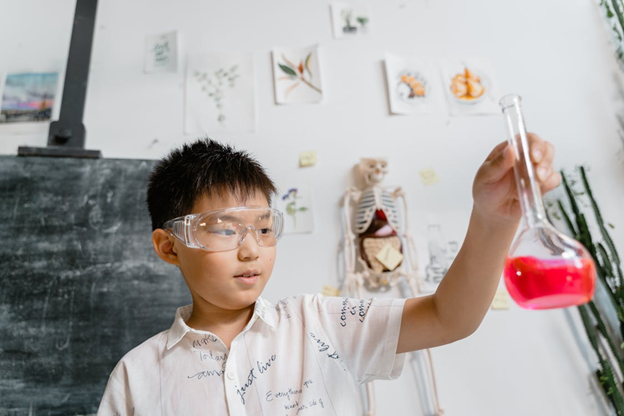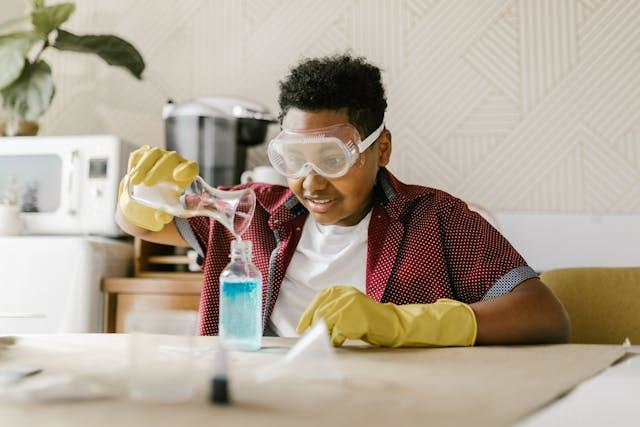
When you do a chemistry experiment, having the right tools nearby is important. A beaker holds your solution, a balance measures its mass, and a thermometer checks temperature changes. Each tool has its own job, and together they make hands-on chemistry possible at home or in the classroom.
At Home Science Tools, we offer lab equipment and chemistry supplies for homeschool lessons, classrooms, co-ops, and other learning environments. Our collection includes glassware, measurement tools, heat sources, stands, clamps, and other essentials for chemistry experiments.
Glassware for Everyday Chemistry Experiments
Glassware is used in many experiments in both beginner and advanced chemistry classes. Different shapes and sizes help you perform and observe specific tasks more easily.
Beakers work well for mixing liquids, dissolving substances, and heating solutions. Their wide openings also make it easy to add materials or transfer liquids.
Erlenmeyer flasks have a narrow neck that helps limit splashing when you swirl a solution. They are especially useful for titrations and reactions that demand regular mixing.
Test tubes are convenient containers for small-scale reactions. Test tube holders and clamps keep them secure during experiments, including activities involving heat.
Volumetric flasks serve a specific purpose. The marked volume lets students prepare solutions with exact concentrations, supporting lessons on molarity and quantitative chemistry.
Here at Home Science Tools, we offer many glassware options made from borosilicate glass. This material resists thermal shock during experiments that involve temperature changes.
Measuring Mass, Volume, and Temperature
Good measurements give students reliable data to record and compare. Chemistry experiments may involve measuring a solid’s mass, determining a liquid’s volume, or tracking temperature during a reaction.
Different tools are suited to each task:
- Digital balances measure mass for stoichiometry and other quantitative experiments.
- Triple beam balances are a traditional way to measure solid samples.
- Burettes dispense controlled amounts of liquid during titrations.
- Laboratory thermometers monitor temperature during heating and chemical reactions.
- Graduated cylinders are more accurate than standard beakers for measuring volume.
- Pipettes transfer a measured amount of liquid from one container to another.
These tools also give students practice with laboratory techniques. Carefully reading scales, recording numbers, and keeping units consistent all matter when recording experimental results.
Heating and Supporting Laboratory Setups
Some chemistry experiments require controlled heating. A stable setup keeps glassware in place while you heat a substance or run a reaction.
Ring stands offer a strong base for supporting laboratory equipment. Iron rings and utility clamps attach to the stand and hold containers at the desired height.
Wire gauze sits between a heat source and supported glassware. It spreads heat across the bottom of a container. Clay triangles support crucibles during high-temperature experiments, while crucible tongs let you handle hot equipment.
At Home Science Tools, we offer various heat sources, including burners, alcohol lamps, and electric hot plates. Electric hot plates suit experiments that require elevated temperatures without an open flame.
These tools are useful for activities involving evaporation, phase changes, heat transfer, and chemical reaction rates.
Equipment for Separation and Preparation
Some chemistry activities focus on separating substances or preparing materials for another experiment. A few basic tools make these procedures much easier to manage.
Filter paper separates solids from liquids. Desiccators provide a controlled environment for materials that need protection from moisture. Corks and rubber stoppers close containers during reactions and storage.
Other small tools have specific jobs in the lab. Spatulas and scoopulas transfer solid materials, while wash bottles rinse glassware or add small amounts of water. Tongs provide a secure way to handle equipment that may be hot or difficult to grip.
Building a Chemistry Lab Around the Curriculum
A home or classroom chemistry lab does not need every type of laboratory instrument. The right setup depends on the experiments included in the course.
An introductory chemistry program may rely on beakers, test tubes, thermometers, balances, and basic support equipment. More advanced lessons may require burettes, volumetric flasks, digital balances, ring stands, and specialized heating tools.
At Home Science Tools, our chemistry collection supports students of various levels of science education. Equipment can supplement programs such as Apologia, Novare, and Berean Builders, as well as classroom and co-op instruction.
The right tools open the door to experiments involving acid-base reactions, titrations, filtration, thermodynamics, reaction rates, and introductory organic chemistry. Molecular model kits and DNA structure sets add hands-on elements to lessons about atoms, molecules, and structures.
Selecting Tools for Hands-On Chemistry
Laboratory equipment works best when each piece has a clear purpose in the planned experiments. Glassware holds and mixes substances. Measurement tools provide data. Stands, clamps, and heating equipment support the physical setup.
At Home Science Tools, we bring these essentials together for home and classroom labs. Individual tools let you replace or add specific items, while equipment sets offer convenient collections for planned coursework.
Explore lab equipment at Home Science Tools to prepare a chemistry lab for hands-on experiments, accurate measurements, and memorable science lessons.