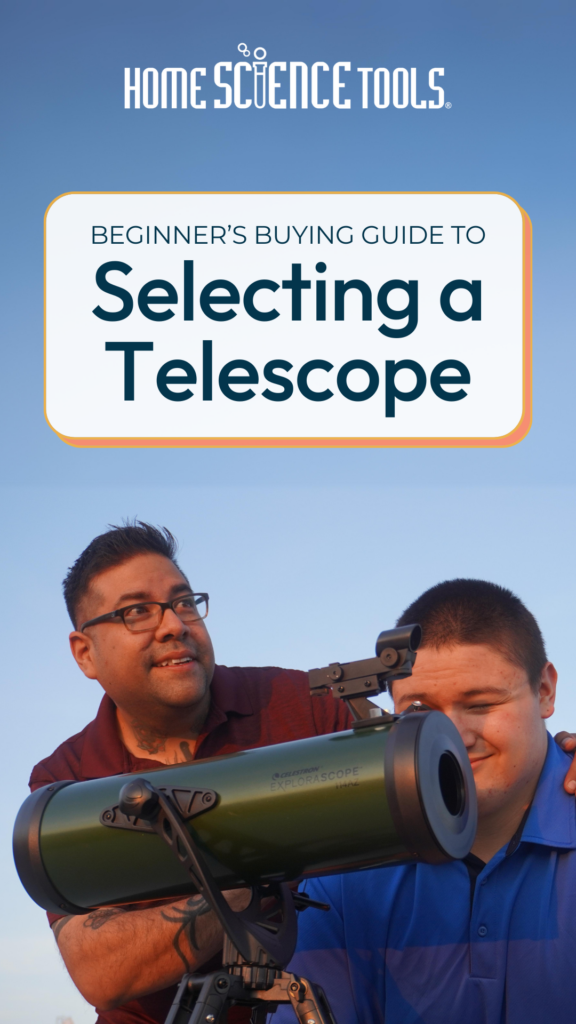
Best Beginner Telescopes Buying Guide: How to Choose the Right One
If you’re new to stargazing and unsure where to start, we have the best beginner telescopes buying guide to help you choose the right telescope for your needs. Whether you’re looking for something portable, powerful, or perfect for family use, we’ve broken down the options so you can start exploring the night sky with confidence.
By the way… are you looking for brilliant gift ideas this holiday season? Explore our Science Gift Guide! It’s packed with wonder, discovery, and brainy fun for curious minds of all ages.
Before choosing a telescope, it’s important to understand the difference between a reflector and a refractor telescope:
In most cases, what we imagine when we think of a telescope – a long tube mounted on a tripod – is a refractor telescope. It utilizes an optical tube design with lenses that produce sharp images but typically has a limited magnification power.
A Newtonian reflector telescope, on the other hand, uses mirrors to reflect more light to the eyepiece, providing more powerful viewing without a huge price tag. (Large mirrors are cheaper to make than large glass lenses!) However, you do end up with a bulkier design than with a refractor. There are also Dobsonian reflectors, which are designed with mirrors but have an easier-to-use stand.
Best Beginner Telescopes Buying Guide: What to Know About Mounts and Magnification
Another key factor to consider is the type of mount, which affects how easy a telescope is to use:
Altazimuth
- The most-commonly bought type of telescope for home use by casual astronomers.
- Altazimuth mounts are a traditional swivel mount where you can point your telescope up and down to find an object in the night sky.
Dobsonian
- A type of altazimuth mount that swivels on a round spinner, like a lazy Susan.
Equatorial
- More expensive and can be difficult to use but allows setting the telescope to track stars across the night sky. Not recommended for beginners (and unavailable here), but helpful for serious astro-photographers.
What’s the deal with magnification?
Telescopes all magnify – but some work better than others. To explain further, telescope magnification is calculated using the aperture size (where light comes through) and the eyepiece focal length. To get a clear image, you’ll usually want to look for magnification that is no more than 2.4x the aperture diameter in mm. In other words, a telescope with a 100mm aperture can usually only magnify clearly up to 240x.
Does it matter which eyepiece I get?
You’ll want at least an 1.25”-diameter eyepiece and one with multiple lenses to provides a good field of view with little distortion, like Kellner (K) and Modified Achromat (MA) eyepieces. Taking it a step further, Plössl (P) eyepieces feature four lenses that provide the greatest optical clarity!
Top Picks from Our Best Beginner Telescopes Buying Guide
Best All-Around Telescope for Beginners
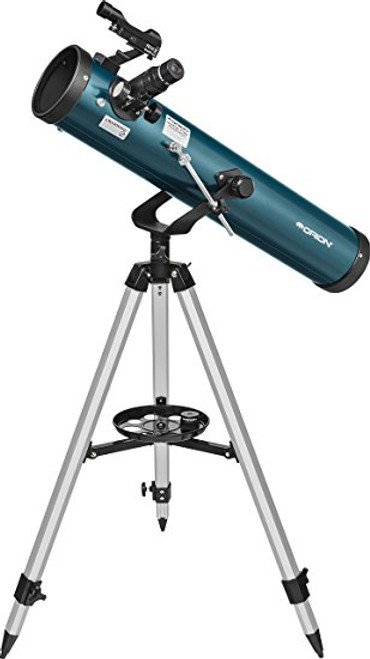
Orion SpaceProbe II 76mm Altazimuth Reflector Telescope
- Eyepieces provide up to 70x magnification
- Altazimuth mount & adjustable tripod
- View planets (see Saturn’s rings!), the moon, star clusters, and even some deeper space objects.
Best Take-Along Telescope for Stargazers
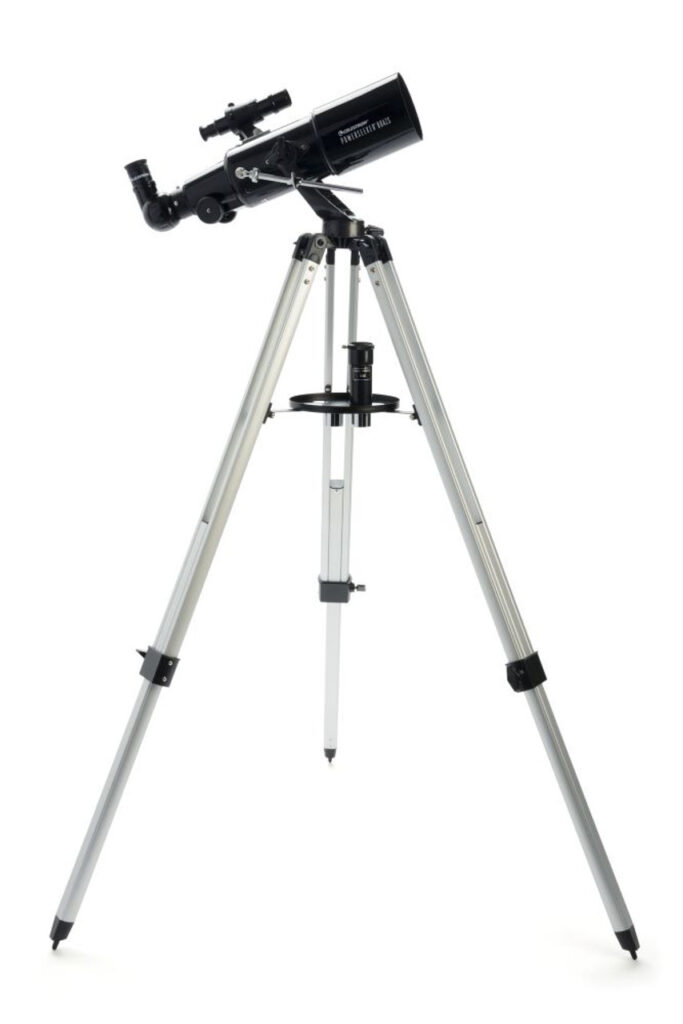
Celestron PowerSeeker 80AZS Refractor Telescope
- 189x top usable magnification; 80mm aperture
- Altazimuth mount & adjustable tripod
- View planets, the moon, star clusters, and even some deeper space objects like the Orion nebula & Andromeda galaxy
- Bonus: it also works as a daytime spotting scope.
- (You can also get a similar 80AZ telescope that connects to your smartphone!)
Best Reflector Telescope for Kids & Families
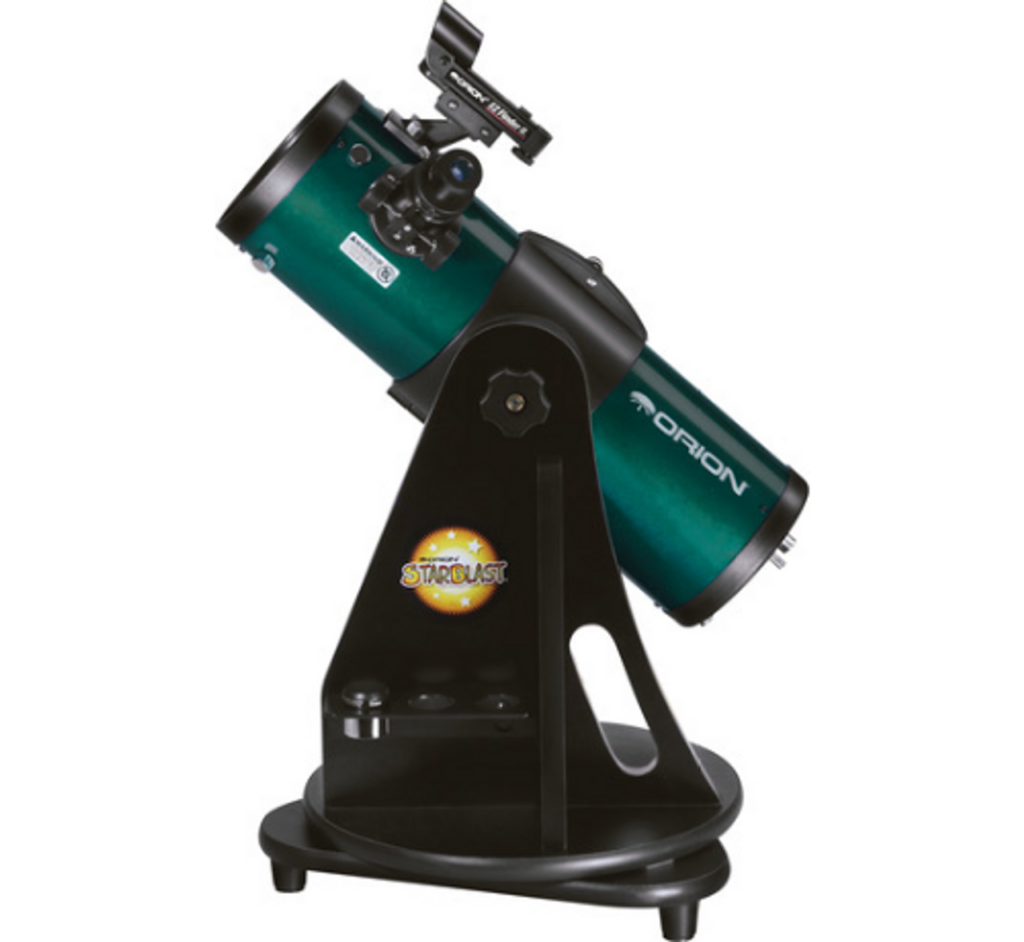
Orion StarBlast 4.5 Astro Reflector Telescope
- Dobsonian-style mount for easy adjusting
- Up to 250x magnification power and with 4.5” aperture for greater light-gathering, which means you have a wide, clear field of view and can gaze at nebulas and star clusters
- At only 13 pounds, it’s easy to carry. Set on a tabletop, etc.
- Comes with a finder scope to help with accurate star locating.
Best Deluxe Telescopes for Viewing the Night Sky
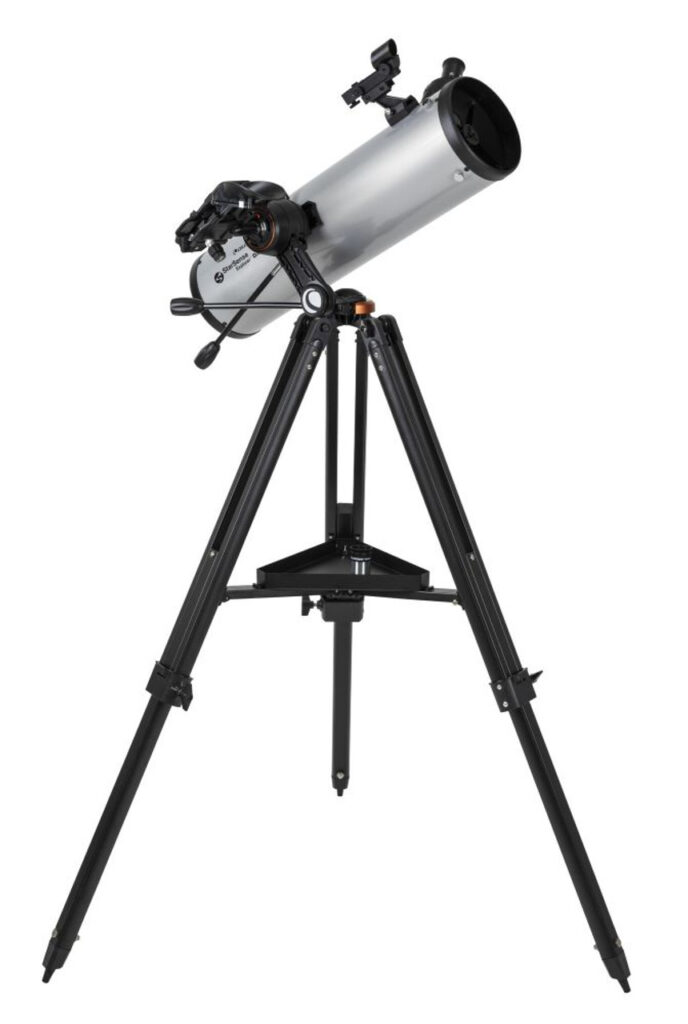
Celestron StarSense Explorer DX 130AZ Newtonian Reflector Telescope
- Connects to your smartphone with the StarSense Explorer app
- Use the app and the Altazimuth mount to easily locate stars
- With up to 307x magnification and a large 130mm (5”) aperture, you’ll be able to see details like the Great Red Spot on Jupiter, the rings of Saturn, the Pleaides star cluster, and more.
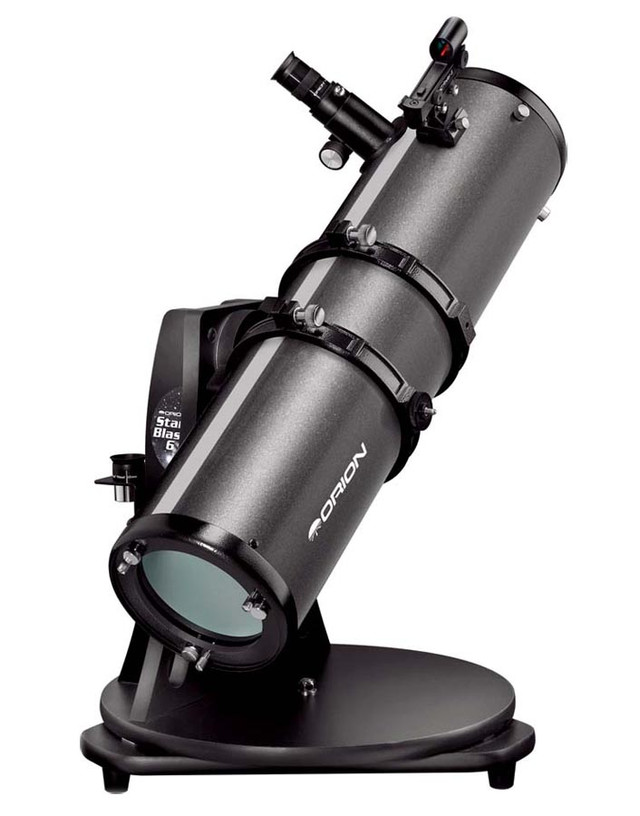
Orion StarBlast 6” Astro Reflector Telescope
- Dobsonian-style mount for easy adjusting
- Up to 300x magnification with a 150mm (6”) aperture and excellent optics (including a Plössl eyepiece), so you’ll get excellent views and clear, sharp images of planetary moons and rings as well as deep-sky objects like nebulas
- Comes with a finder scope to make star location easy.
Want to shop our full telescope selection?