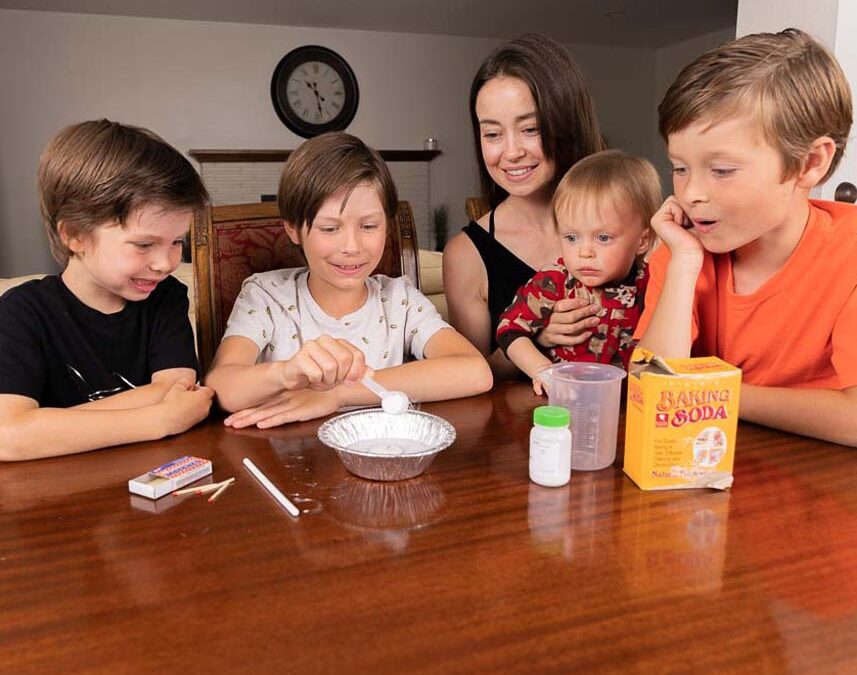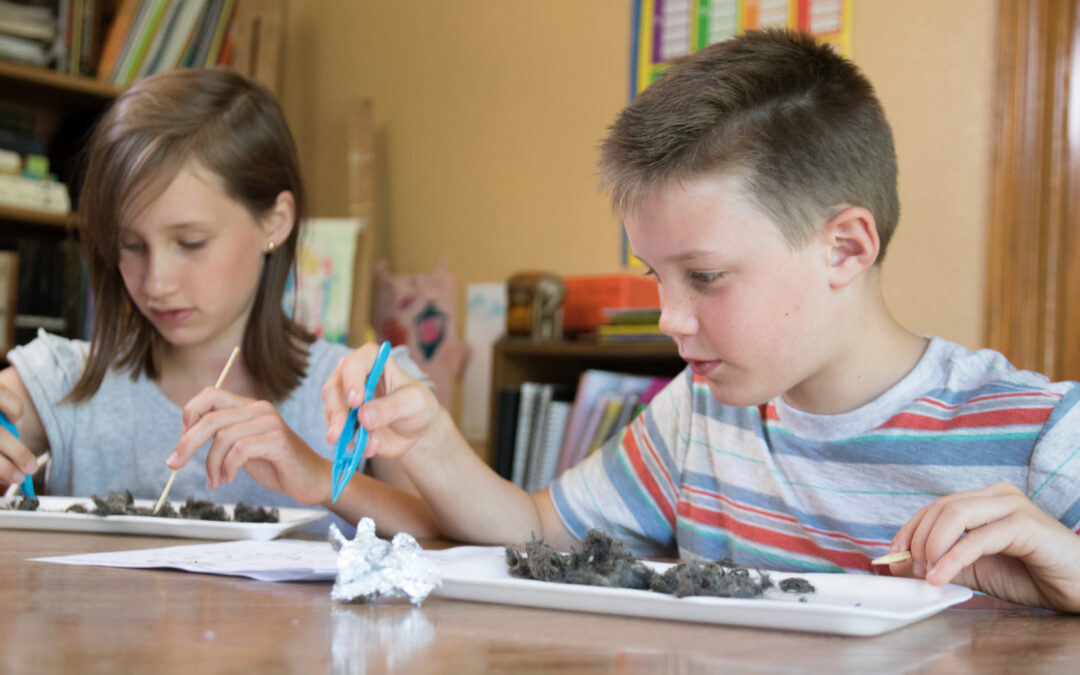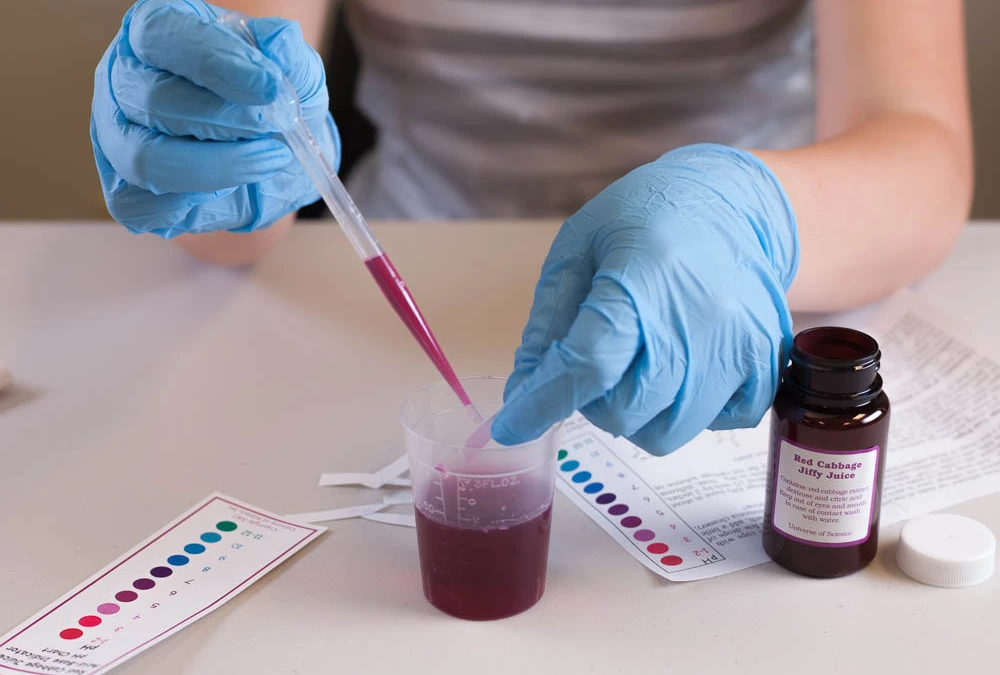
The best learning activities for some children are those that are all-in, hands-on learning. Doing science isn’t just for scientists and engineers, it’s a way of learning about the world that comes naturally for kids. Not convinced? Then read on!
Science Education for Children
Children are highly curious about the world around them. Most parents will agree that at a very early age kids begin to ask lots of “why” questions. Their questions have to do with real life and are therefore important to them. Why do trees lose their leaves? How fast does a ball roll downhill? What creatures live in the soil? These questions are also the beginning of the learning process. As parents and educators, we promote learning by inspiring, feeding and directing, their curiosity and questions. We suppress learning by ignoring or discouraging their questions or by ignoring opportunities to help develop their critical thinking skills.
Finding Answers, Developing Skills
Kids are also astute observers. They automatically observe, think, and do. In seeking real answers to their real questions kids progress further into the learning process. As a result, they begin to naturally develop science skills such as observing, classifying, reasoning, and predicting. We further promote learning by helping children to develop these science skills, which will benefit them throughout their life.
Using Science Experiments to Teach Science
Whether kids are walking in a park, playing with a ball, or digging in the dirt, they are fully engaged in questioning, observing, testing, thinking, and learning. They are in a sense “doing science”.
Kids learn science in a superior way when we direct their natural curiosity and build upon their developing science skills to actually do real science hands-on.
Simply stated, the best way for kids to learn science is by doing real science. A child can read scientific facts and obtain knowledge from a book. However, when they are fully immersed in the learning process, problem-solving and fully understanding science concepts will begin to come naturally.
Getting hands-on with learning science also reinforces the highly beneficial “inquiry process”.
They start out posing a question to explore, move on to gathering information, interpret their findings, and report their findings. Each of these stages is fluid, not linear, and results in revision after revision.
With a hands-on approach to science, instead of finding the easy answers, students are inspired to ask questions about the world around them and apply this method to solve their own problems.
What is “Real Science?”
- Real science is learning about the world through hands-on observation, experimentation, and discovery.
- Doing real science starts with a question, followed by activities to explore and to seek an answer. Think: the scientific method.
- Real science isn’t just for the classroom but is part of everyday life.
- Real science develops skills, ability, and capacity, not just knowledge.
Invest in Your Learners
A common mistake by parents and teachers is to only provide facts or a quick answer to a child’s question. While this is sometimes helpful and often convenient, it results in a stunted learning experience. It also trains our kids to find and give answers without really thinking through and understanding the how or why. Why do the hard work of thinking through a problem if I can find an easy answer through an Internet search?
How to Inspire Curiosity
It’s critical that we do the hard work of encouraging kids’ curiosity and engaging them in the science process when they ask questions. We do this by in turn asking them questions to help kids see what they already know, what they think, what they need to learn, or what they need to do to answer their own questions. Questions like:
- What do you think?
- How does it work?
- Why do you think that?
- What is the cause?
- What would happen if…?
- How might we test it to see if it’s true?
Simple Tools of the Science Trade
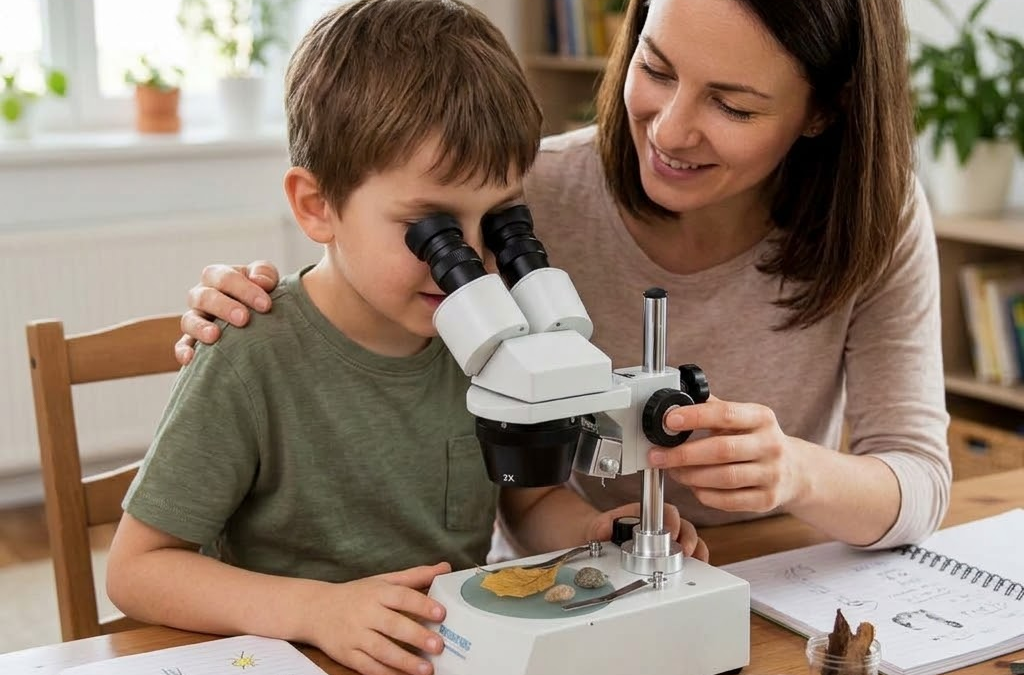
We can feed this curiosity and inspire kids to do real science by providing tools to help them engage in science learning for themselves. These tools can be as simple as a jar to observe insects, a magnifying glass to examine the parts of a flower, or a science notebook to record their questions, ideas, and observations. Providing tools like a rock pick, insect net, lab equipment, or a microscope can help to inspire kids to continue science discovery as their curiosity, questions, and science skills develop.
Don’t think of hands-on activities or experiments as cookie-cutter events — just follow the steps and get the result. This behavior may stunt the learning experience and inhibit the development of science skills. When we treat science activities as recipes to follow we teach kids that if something doesn’t work then give up or write it off as a bad idea.
Don’t Be Afraid of Mistakes
Most progress in science occurs by learning from failures — thinking about the experiment or test that went wrong and trying to decide why it didn’t work and what should be done differently the next time for it to work.
Think about famous scientific discoveries that came out of so-called “failures,” like the discovery of penicillin, the invention of plastic, or even the pacemaker — all of which came out of “accidents” in the scientific process (see 9 Brilliant Inventions Made by Mistake). As we teach our kids science, we want them to become skilled in learning from what didn’t work and in persevering to try again.
These are skills that will benefit them throughout their life.