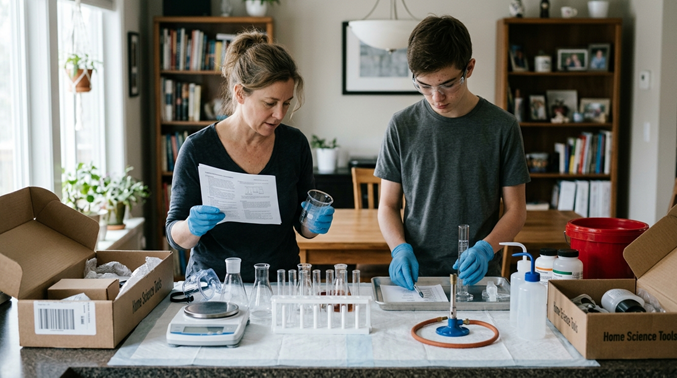
An owl pellet dissection is an interesting and educational opportunity to learn about owls, their diet, and the role they play in an ecosystem. With any owl pellet dissection, your student can learn about food webs, food chains, animal diet, and habitats.

Safety Note: Owl pellets are sterilized to kill bacteria. However, you should never perform an owl pellet dissection near food or drink. Also, do not put any part of the owl pellet in or near your mouth. Make sure to always wear gloves when handling an owl pellet. Importantly, thoroughly wash your hands before and after completing the pellet dissection.
What You Need:
Instructions:
- Put on gloves. Then, observe the owl pellet with the magnifying glass.
- Describe what the owl pellet looks like.
- Using a ruler, measure the length, width, and height of the owl pellet in centimeters (cm).
- Then, you will form a hypothesis about what you think you will find inside of the owl pellet. A hypothesis is a prediction of what you think the answer is or what you think will happen in a scientific experiment.
- Run the owl pellet under water. This will help loosen the material in the owl pellet and reduce the spread of the owl pellet “dust”.
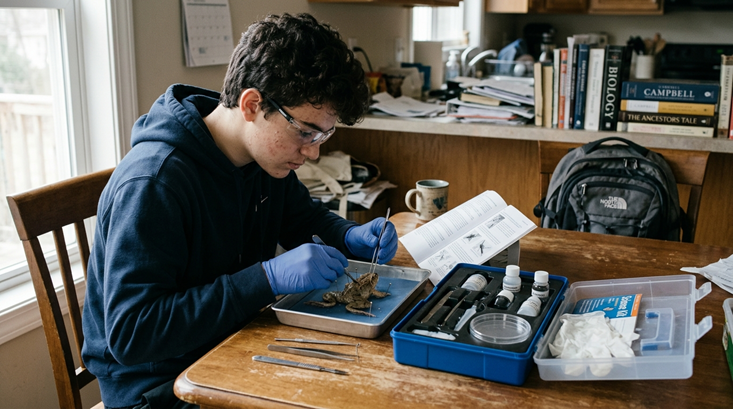
- Then, gently break the owl pellet in half with your hands. You will then place it on a dissection tray.
- Using forceps and a probe, dissect the owl pellet.
- Then, separate the bones from any other materials you find in the owl pellet.
- Dispose of the material that is not bone.
- Finally, observe the bones.
- Lastly, determine what prey animal the owl ate. Use the skull in the owl pellet to help you figure this out!
Wrapping Up Your Owl Pellet Dissection

You’ve just completed an owl pellet dissection. Well done, scientist! At this point, you’ve examined the bones inside the pellet, and uncovered clues about the owl’s diet and its role in the food web. Pretty amazing, right?
This activity doesn’t just teach you about owls. It helps you see how all animals fit into larger systems like food chains, food webs, and ecosystems. Every pellet tells a story, and now you know how to read it.
So, what’s next? Share what you learned with a friend, teacher, or class. Or better yet, create a chart of the bones you found and compare it to others. After all, science is about curiosity, and you’re just getting started.