Hands-On STEM Activities for Second Graders
Hands-on STEM activities are a great way to spark a lifelong love for learning. For second graders, having lessons they can participate in can help them better understand complex subjects. There are countless activities to choose from‒such as building a raft, candy chromatography, and more. There are also plenty of activities with STEM toys for seven-year-olds to consider.
In this article, we’ll dive into a variety of simple, yet engaging, projects for curious learners. Each activity is designed to inspire creativity and encourage critical thinking. Home Science Tools offers everything you need, from STEM activities for third graders to technology activities for elementary students!
Build a Raft
Building a raft with a sail is a great hands-on STEM activity that combines creativity, engineering, and physics. It introduces second graders to the basic concepts of buoyancy.
They will learn what makes objects float and how different materials behave in water. Children will have to strategize how to assemble the materials to create a functional raft.
Materials Needed:
- Popsicle sticks
- Craft glue
- A small piece of cloth or paper for the sail
- A straw for the mast
- Scissors
Instructions:
- Construct the base: Use the popsicle sticks to form the base of the raft. Apply the craft glue to secure them together. Allow the raft to dry completely.
- Create the mast: Cut the straw to the desired length for the mast. Using glue, attach it to the center of the raft base.
- Create the sail: Cut a small piece of cloth or paper into a triangle or rectangle for the sail. Punch holes at the top and bottom of the sail to thread it onto the mast. Secure the sail with glue if necessary.
- Final touches: Once the glue dries completely, place the raft in water to test its buoyancy and stability. Make changes if the raft isn’t floating or staying upright.
- Experiment: Place the strip into the container and make sure that the bottom of the strip is in the salt solution with the dye above the waterline. The water will travel up the paper, carrying the dye with it.
- Observe the results: As the water moves up the paper, it will separate the dyes into different colors. Once the water gets close to the top of the strip, remove the paper and let it dry.
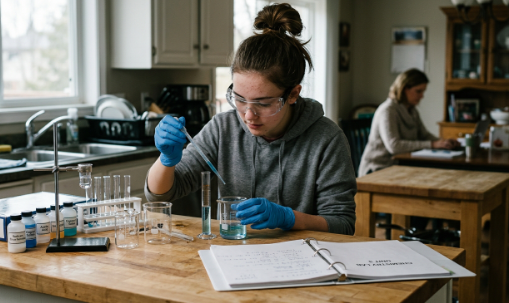
- Analyze and record: Examine the different colors that have separated on the strip. Have children record the findings in their lab notebook and compare the results from various candies.
Explore STEM Activities
These are just a few of the many hands-on STEM activities available for second graders. Explore more STEM activities on Home Science Tools. We have tons of fun science kits and materials you need to create mini innovators and problem-solvers who love learning.