
Oil spills have a great impact on our environment and wildlife. Learn about oil spills with these science projects.
What You Need:
- Shallow container, such as a small glass baking dish
- Water
- Blue food coloring (optional)
- Vegetable or olive oil
- Feather
- Dish soap
- Sponge
- Paper towels
- Plastic straw
- Cotton balls
- Syringe, pipet, or turkey baster
- Empty bowl
Part 1: Feathers and Oil
What You Do:
1. Fill the dish halfway with water (add a drop or two of blue food coloring, if you like).
2. Set the feather in the water and notice what happens; does it float or sink? Take the feather out and set it on a stack of paper towels.
3. Pour about 2 tablespoons of oil into the water. It should spread out over the surface (since water and oil don’t mix).
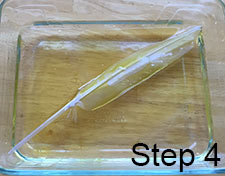
4. Set your feather on top of the oil and holding onto the end, swish the feather around in the oil so it gets thoroughly coated. Does it float? Does it feel heavier? Do you notice anything different about the feather once it’s coated in oil?
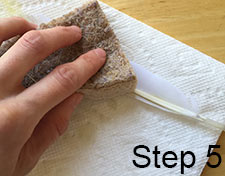
5. Remove the feather and set it back on the paper towels. Apply one drop of dish soap to a wet sponge and begin cleaning the soap off of the feather. Once you’ve removed as much oil as you can, carefully rinse the feather off and let it dry. Once it is dry, take a close look at it and answer these questions: Were you able to remove all the oil? Does the feather still feel as light as it did before the experiment? How well do you think the feather would float now?
Part 2: Removing Oil From Water
What You Do:
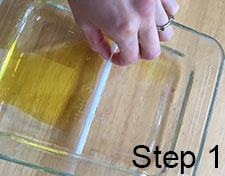
- Cut the straw so that it fits across the width of your dish (connect straws together if you dish is wider than the length of one straw). Place the straw on the surface of the water and oil at one end of the dish and carefully move it towards the other end. You should be able to use the straw to push the oil around, leaving behind water that only has a small amount of oil left in it!
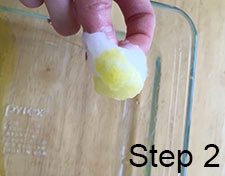
2. Now try removing some of the small oil spots with cotton balls.
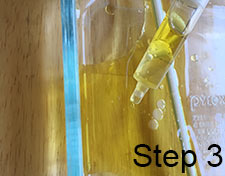
3. If you still have large patches of oil, try sucking them up with a syringe, pipet, or turkey baster.
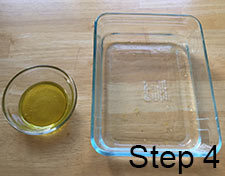
4. Were you able to remove most of the oil? Which method worked best? Which method removed the most water along with the oil? Can you think of any other ways to remove more oil? Try any method you can think of!
What Happened:
In the first part of the experiment, you demonstrated what happens during an oil spill and how it can impact animals with feathers. The feather should have floated just fine in the water before the oil spill. After it became coated in oil, it may have still floated, but was quite a bit heavier than before. Imagine if a bird were to land and dive for fish in the ocean where oil had leaked and then tried to fly. Do you think the bird’s now heavy, oil-coated feathers would have made flying difficult?
Applying soap and gently washing the feather worked pretty well to remove most of the oil from the feather. Of course, birds can’t clean themselves with soap and sponges! Oil spills can harm many animals that live in, on, and around bodies of water. Think about how oil might harm large animals with fur, such as seals, or small animals that feed near the surface, such as fish. Feathers and fur that are coated in oil are not good at insulating animals to keep them warm, and it can also poison animals who swallow the oil when they try to clean themselves!
In the second part of the experiment, you tested different methods for removing oil from water. When a real oil spill happens, clean up crews use similar methods to either remove oil or contain it in a smaller area. The methods they use are on a much larger (think ocean-sized rather than dish-sized!) scale, though. Which method did you find worked the best without removing much water? Which one was the quickest?
After you cleaned up as much oil from your water as you could, there were probably still puddles of oil left on the surface and even small droplets that had sunk down into the water. Keep in mind that the kind of oil that spills from oil tankers and wells into the ocean is much different from the cooking oil that we used—it is thick, black, and sticky. In a real oil spill,there is really no way to ever clean it up entirely and it’s hard, messy work!
For further study: Use an empty egg carton to demonstrate how water pollution occurs. Then read this Water Pollution Prevention science lesson.