Identifying a rock can tell you all about its journey and where it is in the rock cycle step. Did the rock you hold in your hand get pushed up by a mountain range when the Earth was being formed? Or did it get blasted out of a volcano, rolled downstream, and crushed under a glacier? Or, did it sit quietly under a deep, blue lake that is now your own backyard? If we know if it’s an igneous, metamorphic, or sedimentary rock, we can better imagine its own amazing story.

Materials for this activity:
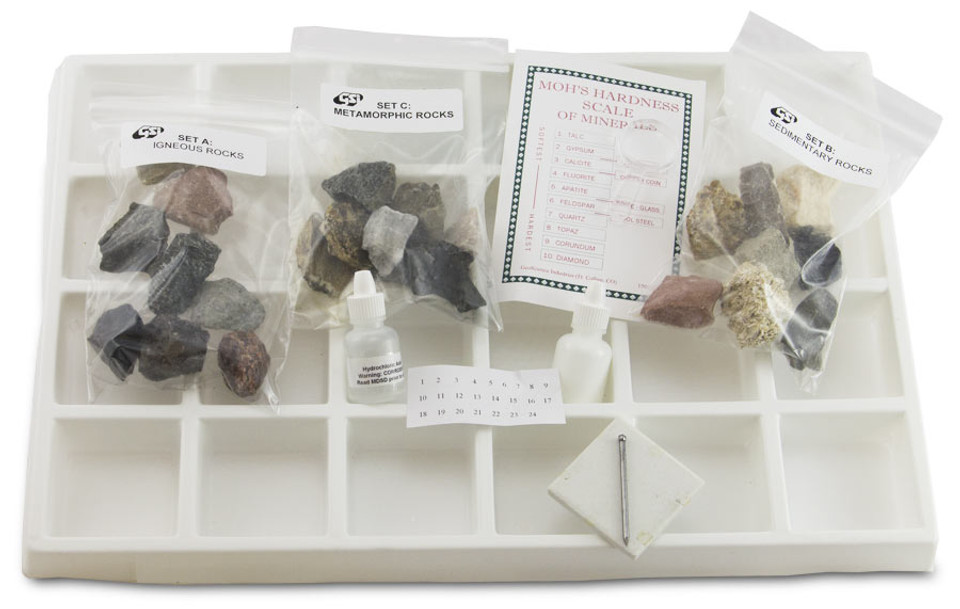
- Know Your Rocks Study Kit (Pictured)
- Mineral Test Kit
- Rocks, Minerals & Gems Golden Guide book
- Notebook
- Penny
- Vinegar
- Economy Rock Pick (Optional)
- Safety Impact Goggles, child-size (Optional)
Follow this easy, step-by-step activity:
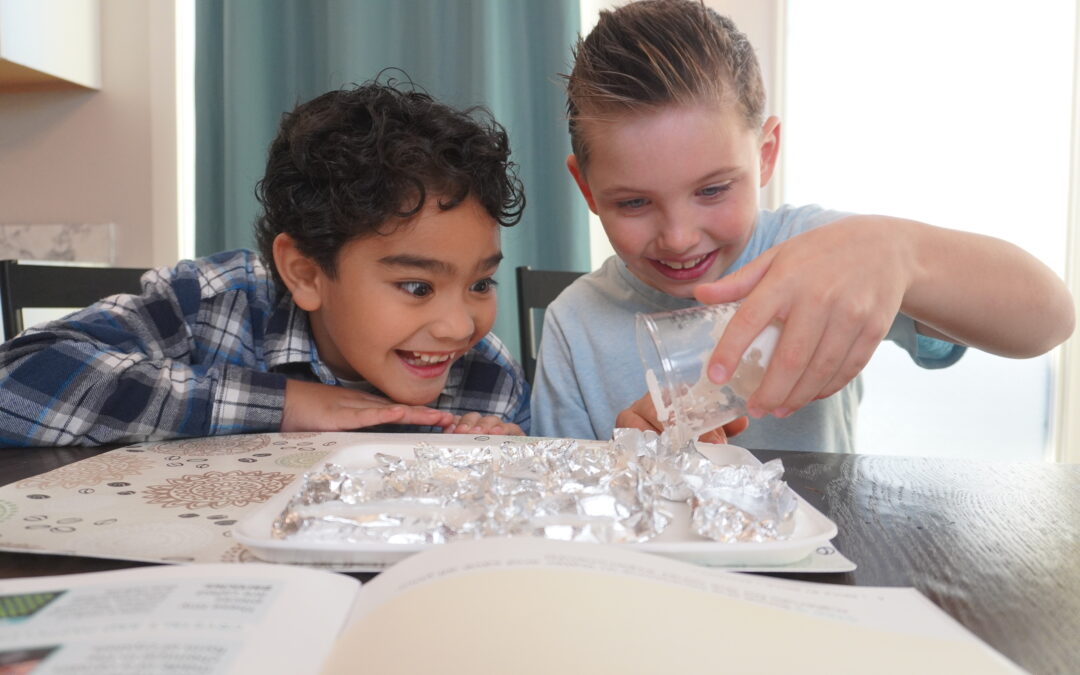
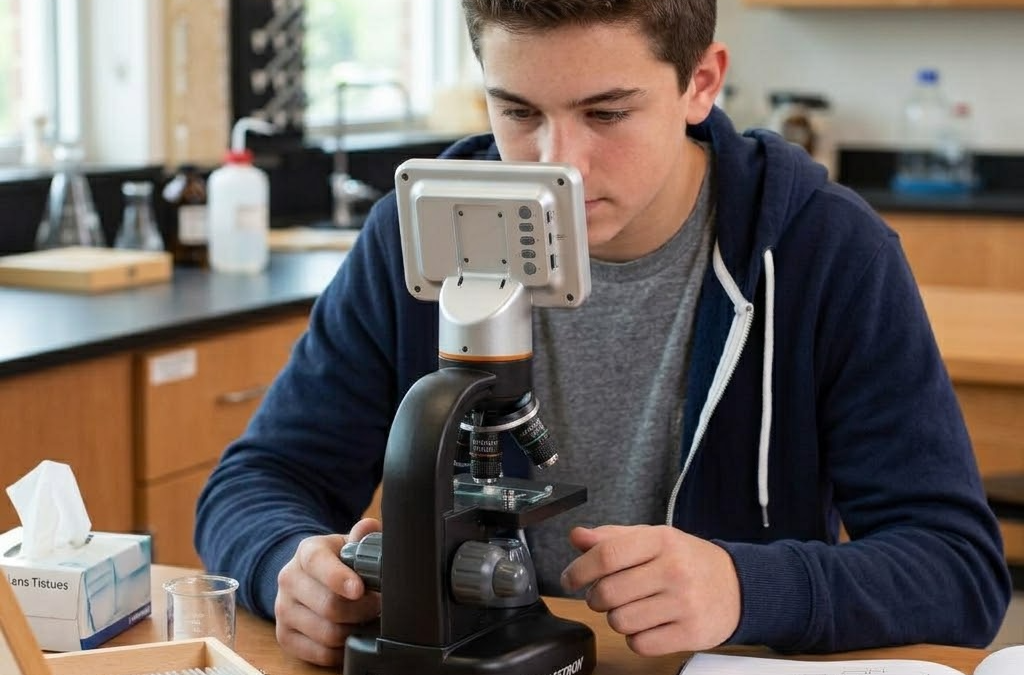
In this activity, kids will actively test rocks to find out what types of minerals are inside. They will analyze the results and employ critical thinking. Don’t worry; they’ll think they’re just having fun!
Note: After each step, write the results down on a piece of paper or in your notebook.
- Hardness test — Scratch the rock with a fingernail, a copper penny, a glass plate or nail, and a ceramic plate. Check your Guide to assign it a rating on the Mohs Scale of Hardness.
- Color streak test — Test for the “color streak” of the minerals by rubbing the rock across the ceramic plate in the Mineral Test Kit, or across smooth
cement. Look up which colors indicate which minerals are present. - Magnetism test — Hold the magnet in the Mineral Test Kit near your rock. If there is a magnetic pull, it has a metal mineral in it.
- Acidity test — Put vinegar in the bottle included in the Mineral Test Kit. Squeeze out a few drops on the rock. If it fizzes, it contains carbonate.
- Name that rock! Look at all the data you’ve collected. Use the Guide Book to compare the results and find which type of rock you have! See what category the specific type falls under (igneous, metamorphic,
etc.) and imagine how it was formed.
A few tips to help you out:
- Every type of mineral has a specific rating on the Mohs Scale of Hardness. Talc (like talcum powder) is the softest, with a rating of 1. Diamonds are the hardest mineral on earth, with a rating of 10. Everything else falls somewhere in between.
- When doing the color streak test, the color left on the plate is the color of the mineral in its original, powdered form. If several minerals are
present, you could see a variety of color streaks, depending on which mineral is producing the streak.
Go beyond the activity!
- The tests often work best if you break the rockto expose a fresh, new surface to test, using a Rock Pick while wearing Safety Goggles (flying
rock chips in the eye are no fun, but wearing goggles is seriously cool scientist stuff!). - If your child gets the Rock Pick, you may want to surprise him/her with a set of Crack-Open Geodes. Smack ‘em to see what’s hiding inside: cool mineral deposits or beautiful crystals!
Download
Download the activity worksheet for a formatted and ready-to-print version of this page.