Science Projects > Chemistry Projects > Solutions Science Lesson 

Solutions Science Lesson

All About Solutions

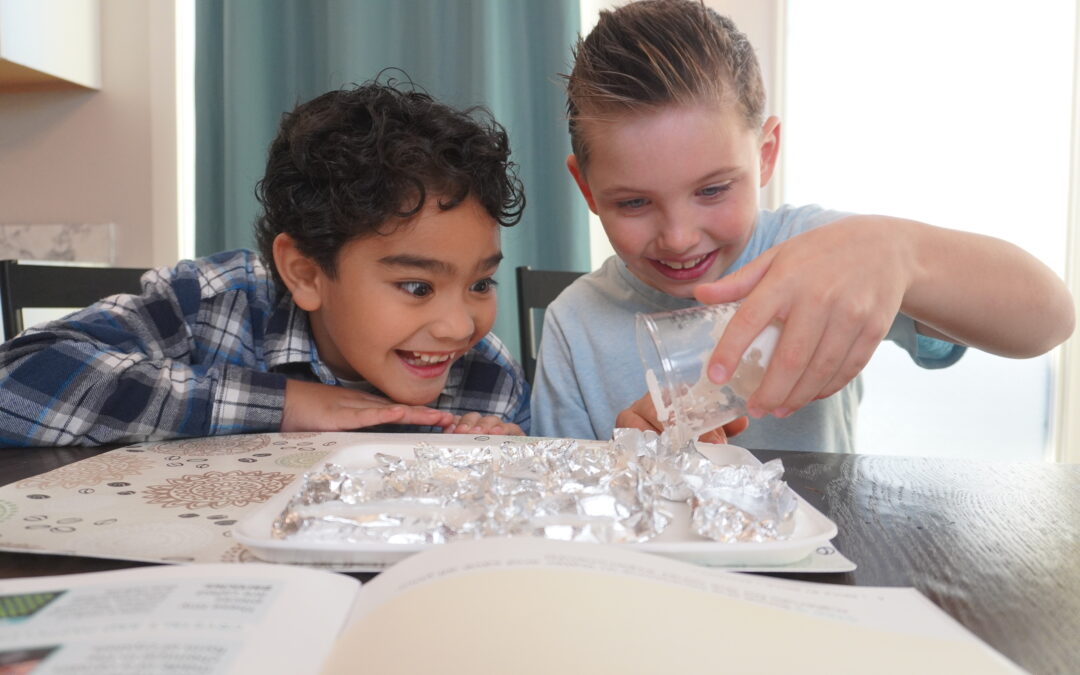
To begin, let’s discuss what the parts of a solution are. A solution consists of two things: a solvent and a solute. In most solutions you will encounter, the solvent will likely be water, which can dissolve so many things that we call it the “universal solvent!” A solute can be practically anything that can dissolve in water: sugar, salt, soap, a chemical, hot cocoa mix, etc. Note that other things besides water can be solvents as well. For example, if you heat milk on the stove and add sugar and cocoa powder to make hot chocolate, the milk is the solvent and the sugar and cocoa are the solutes.

A solution is formed when a solvent and a solute are mixed together. A saturated solution is formed when some solute is added to the solvent, but not all of the solute can be dissolved by the solvent, leaving some remaining at the bottom of the container or just hanging out in the solution, no matter how much the solution is mixed.

Now for a whole new spin on things: when you heat a saturated solution, the solvent is able to hold even more of the solute, and some or all of the solute that was just hanging out in the solution disappears as it dissolves into the solvent, forming a supersaturated solution! A supersaturated solution can only keep that larger amount of solute dissolved in the solution while it remains at a certain higher temperature, so as the solution cools, it becomes unstable and some of the solute will begin to crystallize back out of the solution as the temperature of the solution lowers. This means that a supersaturated solution is a great place to start when you are trying to grow crystals, just as we did in the rock candy science experiment!

Teaching Homeschool

Welcome! After you finish this article, we invite you to read other articles to assist you in teaching science at home on the Resource Center, which consists of hundreds of free science articles!

Shop for Science Supplies!

Home Science Tools offers a wide variety of science products and kits. Find affordable beakers, dissection supplies, chemicals, microscopes, and everything else you need to teach science for all ages!

Related Articles

Guiding Thinking, Not Managing Chaos 

Guiding Thinking, Not Managing Chaos 

How One Extended Learning Program Transformed What Science Instruction Looks Like  Home Science Tools | Summer of Success Series  There is a version of after-school science that most programs know well: a facilitator who is doing their best, working from a...

When After-School Science Works: Lessons from the Field

When After-School Science Works: Lessons from the Field

Home Science Tools | Summer of Success Series Out-of-school time programs occupy a position in a student's educational life that is genuinely different from the regular school day — not supplementary to it, but distinct from it in ways that matter for how...

Building a Strong Earth Science Curriculum for Homeschool Learning

Building a Strong Earth Science Curriculum for Homeschool Learning

A well-structured Earth Science Curriculum plays an essential role in helping students understand the natural world. The homeschool setting provides a unique chance to investigate scientific principles through direct observation, hands-on experiments, and practical,...

Inspiring Future Scientists with the Power of a Digital Microscope

Inspiring Future Scientists with the Power of a Digital Microscope

The journey of scientific discovery often begins with a single moment of wonder. For children and adolescents, the ability to see the intricate details of a honeybee’s wing or the complex cellular structure of a leaf can spark a lifelong passion for the STEM fields....

Recreating Famous Science Experiments at Home

Recreating Famous Science Experiments at Home

Science history isn’t just something to read about in a textbook; it’s something that should be experienced firsthand. At Home Science Tools, we believe some of the most powerful learning happens when students do science, not just study it. Many of the world’s most...

should I learn computer coding