What to Expect in Your Dissection Specimens
We guarantee your dissection specimens will arrive fully preserved, free from decay, and will not excessively dry out for one year after purchase. Please understand that all specimens, though preserved, eventually dry out. Specimens used within one year will have the best outcomes. Occasionally, a specimen will appear normal, but the internal tissue is not fully preserved.
These specimens can decompose over time and become unusable. If you receive a specimen like this or suspect that you did, please call us at 406-256-0990. We will be happy to send you a replacement or refund.
Q: Why should I include dissections in my lesson plans?
Animal dissection allows students to see the anatomical structure of different animal classes and species. The mammal specimens we offer have similarities to humans that are helpful for learning about our own bodies.
For example, by dissecting and examining the anatomy of a cow eye, students learn the components of human eyes, including the cornea, iris, pupil, connecting muscles, and veins. Other animal specimens, such as a dogfish shark or crayfish, show the anatomy of simpler species.
Hands-on science projects, like dissection, allow students to both see and touch (with gloves), helping your child learn (and remember) more.
Q: What tools do I need?
Note that Science Dissection Kits come with the basic dissection tools you’ll need.
Individual specimens do not come with tools. The basic dissection tools are a dissection tray, pins, a scalpel, and scissors. You can also use a teasing needle or probe to examine delicate parts.
Sometimes it’s helpful to have multiple scalpels or teasing needles, as a different size or shape may help examine different parts of a specimen. You’ll also want a guide to show you how to dissect the specimen.
We recommend wearing latex or nitrile gloves when handling specimens to minimize exposure to residual chemicals. Wash hands thoroughly after use.
- Find dissection toolsets and individual tools here.
- Find dissection guides and other information here.
Q: Should I wear safety equipment?
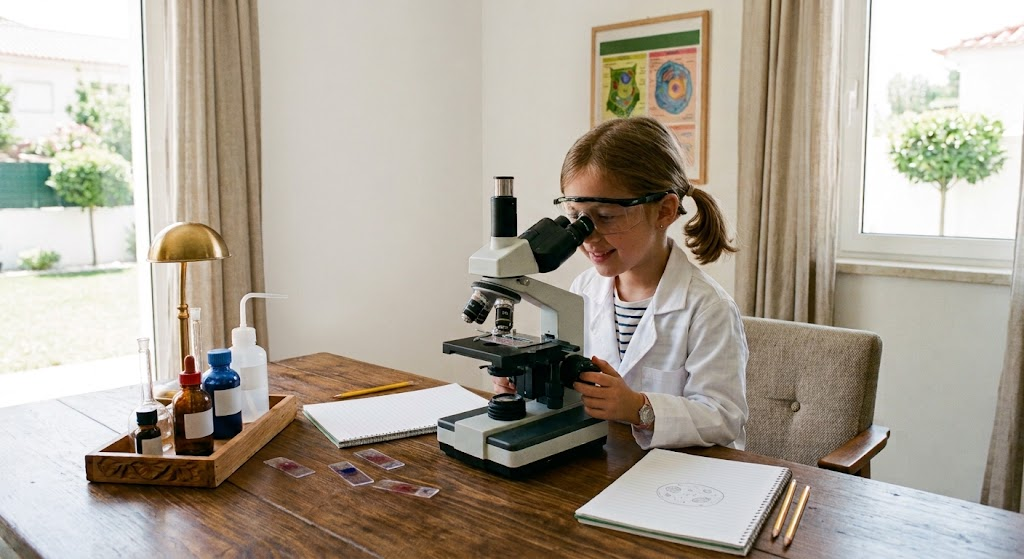
Specimens contain trace amounts of preservation chemicals. To eliminate skin contact with these chemicals, wear nitrile or latex disposable gloves. Also, wear safety glasses or goggles, as liquids containing trace amounts of chemicals can occasionally squirt out during dissection.
Q: Do the specimens need refrigeration? How do I store them?
The specimens are fully preserved and do not need refrigeration.
It’s best to keep them away from direct sunlight or a hot place like an attic; a closet works well.
Specimens may discolor over time. This is normal and does not indicate decay.
Q: How do I dispose of a dissected specimen?
Seal the dissected specimen in a Ziploc bag and place it and the dissection tray in your regular outdoor trash container.
Use disinfectant soap and water to thoroughly clean your dissection tools and the area where you worked.
Q: What if I can’t finish my dissection during one class period?
Seal the dissected specimen in a Ziploc bag to keep it from drying out. Finish the dissection within a week for best results.
If you want the specimen to stay fresh longer, use a heavy-duty plastic Ziploc bag, and add a bit of water or glycerin to keep it moist.
Q: What do “single injected” and “double injected” mean?
Specimens can be injected with red and/or blue latex to clearly show the arteries and veins. ‘Single-injected’ means that just the arteries have been injected with red latex. ‘Double-injected’ means that the arteries are injected with red latex and the veins have been injected with blue latex
Q: Do the dissection specimens smell bad?
If you did dissections more than 10 years ago, you might remember the terrible formaldehyde smell of preserved specimens. Things have improved since then! Our specimens are initially preserved in formaldehyde, then it’s displaced with a glycol solution and then with a water solution, so there will be very little chemical or “preserved” smell.
You will smell some of the natural odor of the specimen, such as a fishy smell with the perch or dogfish. Because specimens have been originally fixed in formaldehyde and a trace may remain, students should wear latex or nitrile disposable gloves and eye protection during dissections.
Q: Are dissections hard to do?
Dissections vary in the amount of time each takes, as well as complexity. Generally, a student in junior high or high school will be able to dissect any specimen we offer. Elementary students do well with an owl pellet, earthworm, or cow eye. Frogs and snakes are slightly more complex.
For more advanced students, a fetal pig dissection is appropriate.
Plan to allow about 45-60 minutes for a simple dissection and 90-120 minutes for larger specimens with more complicated anatomy, such as a shark or fetal pig. Allow more time for in-depth dissections that identify major muscle systems or trace the circulatory system. Usually, all that is required is to identify the major organs.
Q: How do I store vacuum-packed specimens sold in large quantities?
We sell our quantity discount specimens in a 10-pack. Therefore, if you order 14 cow eyes, you’ll get a vacuum pack of 10, plus four individually packaged ones. If you don’t want to use all the specimens at once, you can repack each one in a heavy-duty Ziploc plastic bag and use a little water or glycerin to keep the specimens moist.
They should keep indefinitely; we guarantee them for one year from the date of purchase.