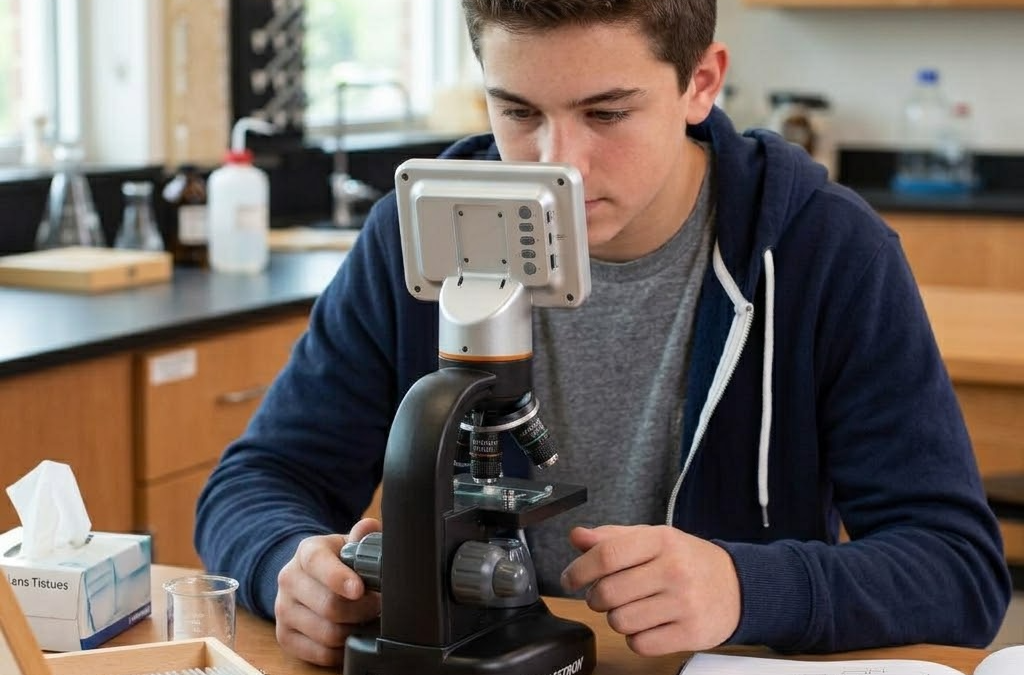
Science often becomes more exciting when children can see tiny details with their own eyes. A microscope turns ordinary objects into fascinating discoveries, helping young learners explore cells, insects, crystals, fabrics, and plant structures in close detail. At Home Science Tools, we help families and educators introduce children to practical STEM learning through engaging activities and reliable equipment.
Microscopes for kids create opportunities for curiosity, observation, and experimentation. Young learners gain confidence while preparing slides, adjusting focus knobs, and recording discoveries. These simple activities strengthen patience, concentration, and problem-solving skills naturally.
Choosing the Right Microscope for Young Learners
Different microscope styles support different learning experiences. Selecting the right model often depends on a child’s age, interests, and experience level.
Pocket Microscopes
Pocket microscopes are lightweight and portable. They work well for outdoor exploration and quick observations during hikes, backyard activities, or field trips. Children can examine leaves, bark, sand, and insects while moving easily from place to place.
Digital Microscopes
Digital microscopes connect to screens and allow images to appear larger for group viewing. These models often appeal to children interested in technology and photography. Capturing images also helps with science journals and school projects.
Stereo Microscopes
Stereo microscopes create a three-dimensional view of larger specimens. Rocks, flowers, coins, feathers, and insects appear with impressive detail. These microscopes are easier for beginners because they require less slide preparation.
Compound Microscopes
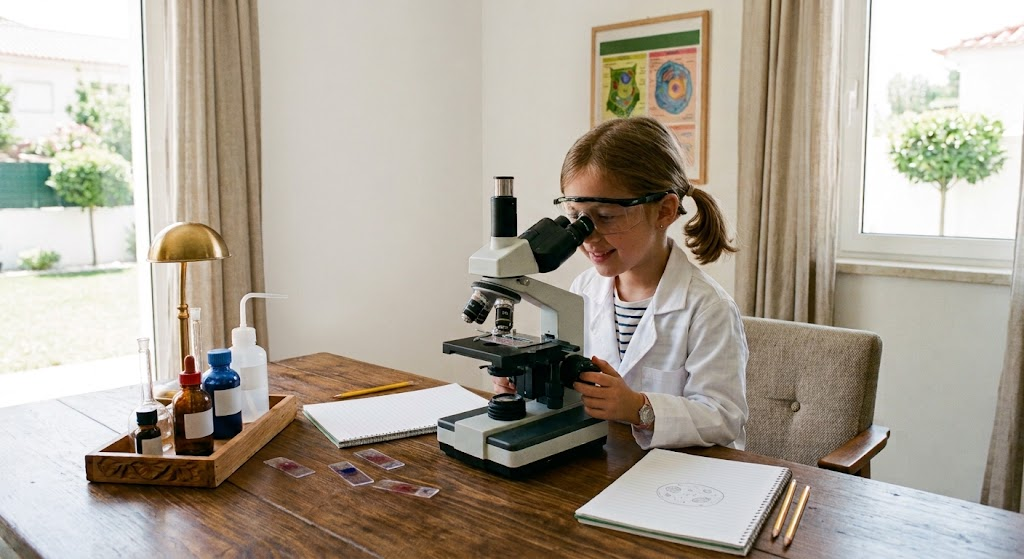
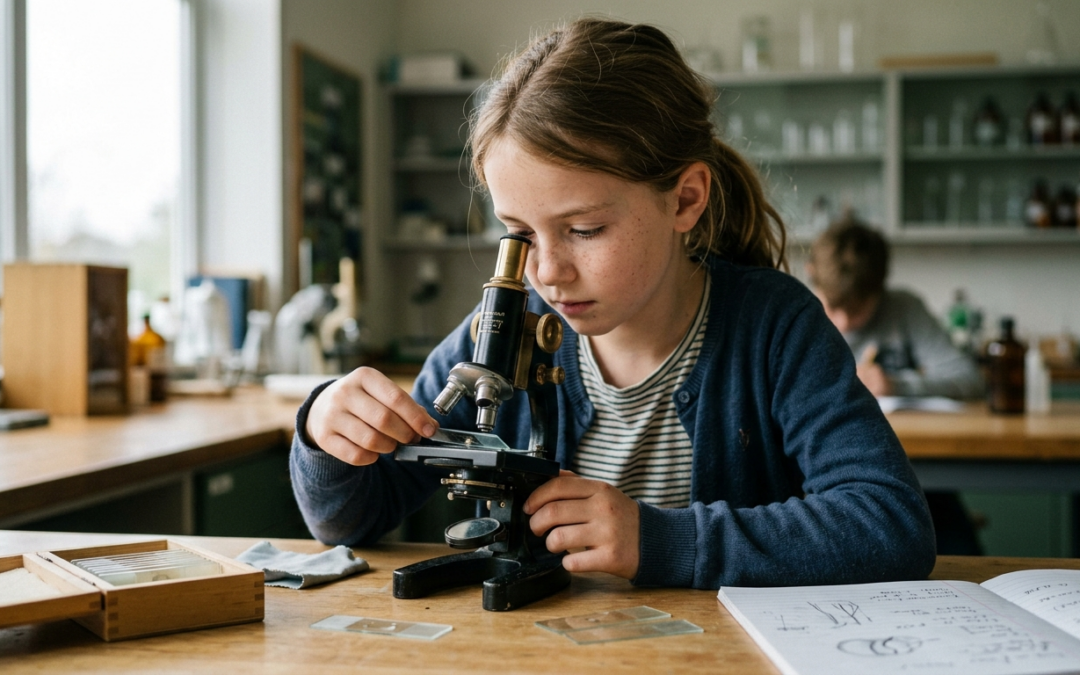
Compound microscopes provide higher magnification for viewing tiny specimens such as plant cells and microorganisms. Older children and middle school students often enjoy these models for biology-focused activities.
At Home Science Tools, many beginner kits include prepared slides, blank slides, collection tools, and experiment guides. These additions help children begin exploring immediately.
Essential Accessories for Microscope Activities
A microscope becomes even more useful with the right accessories. Many science activities rely on simple tools that encourage experimentation and safe specimen handling.
Helpful supplies include:
- Prepared slide collections
- Blank slides and cover slips
- Tweezers and droppers
- Petri dishes
- Storage cases
- Stains for slide preparation
- Specimen containers
Prepared slide sets often introduce children to plant cells, insect parts, and common microorganisms. Blank slides allow creative experimentation using household items and outdoor samples.
How to Care for a Child’s Microscope
Proper care helps a microscope stay functional for years. Children also learn responsibility while maintaining scientific equipment.
Keep Lenses Clean
Microscope lenses should remain free from fingerprints and dust. Lens paper works best for cleaning optical surfaces. Paper towels and rough cloths may scratch the glass.
Dust covers also help protect microscopes during storage. After each activity, placing the microscope in a secure location reduces accidental damage.
Store the Microscope Safely
Storage cases protect equipment from bumps and moisture. Microscopes should stay in cool, dry areas away from direct sunlight. Carrying the microscope with two hands prevents accidental drops.
At Home Science Tools, we recommend creating a designated science shelf or cabinet for microscope supplies and accessories.
Handle Slides Carefully
Glass slides require careful handling, especially for younger children. Broken slides should be discarded safely. Plastic slides may provide a safer option for beginners.
Teaching children to place slides gently on the stage also helps prevent scratches and mechanical wear.
Protect the Light Source
Many beginner microscopes use LED lights because they remain cool during use and last a long time. Turning lights off after activities helps preserve battery life and prevents unnecessary wear.
Cordless microscopes should also receive regular battery checks to maintain brightness and image clarity.
Fun Science Experiments With a Kids’ Microscope
Hands-on experiments encourage creativity and scientific thinking. Many activities use materials already found around the home or backyard.
Exploring Plant Cells
Thin onion skin creates an excellent beginner slide. After placing the sample under the microscope, children can observe small rectangular plant cells arranged in organized patterns.
Leaves also reveal interesting textures, veins, and tiny surface structures.
Comparing Fabrics
Fabric fibers appear very different under magnification. Cotton, wool, denim, and polyester each show unique textures and weaving patterns.
Children can compare:
- Thickness
- Fiber arrangement
- Color patterns
- Surface texture
This simple activity introduces observation and comparison skills.
Investigating Pond Water
Pond water samples often contain tiny moving organisms. Children enjoy searching for microorganisms while learning about aquatic ecosystems.
Safety remains important during these activities. Hands should always be washed after handling outdoor water samples.
Examining Insects
Stereo microscopes work especially well for insect observations. Butterfly wings, beetle shells, and ant legs display impressive detail under magnification.
Many children become interested in biology after observing insect structures closely.
Crystal Growing Projects
Crystal kits pair well with microscope activities. After crystals form, children can study edges, shapes, and reflective surfaces.
These projects introduce chemistry concepts alongside observation skills.
Building STEM Skills Through Observation
Microscope activities support long-term educational development. Scientific exploration encourages children to ask questions, record findings, and test ideas.
Skills developed during microscope activities include:
- Attention to detail
- Fine motor coordination
- Scientific observation
- Critical thinking
- Patience during experimentation
- Organization and note-taking
These experiences often encourage greater interest in biology, chemistry, environmental science, and engineering.
We value educational tools that inspire independent exploration and curiosity. Children often remember hands-on science experiences long after formal lessons end.
Creating a Home Science Routine
Regular science activities help children stay engaged with learning. Even short observation sessions can build excitement around discovery.
Families often create weekly science projects using:
- Garden plants
- Kitchen ingredients
- Rock collections
- Household fabrics
- Flower petals
- Feathers and leaves
Keeping a science notebook nearby encourages children to sketch observations and record questions.
Simple routines often create lasting enthusiasm for STEM learning.
Supporting Different Age Groups
Young children usually benefit from durable microscopes with lower magnification and simple controls. Older students may prefer higher magnification and advanced slide preparation options.
Beginner-friendly features often include:
- Large focus knobs
- LED lighting
- Lightweight frames
- Cordless operation
- Durable materials
Microscope kits designed for children help reduce frustration and encourage independent exploration.
At Home Science Tools, we carefully select products that match different skill levels and educational goals. Many families start with simple models before progressing to more advanced microscopes later.
Encouraging Lifelong Curiosity
Scientific discovery often begins with small observations. A leaf, a feather, or a drop of pond water can inspire questions about the natural world. Microscopes create opportunities for children to explore these questions through direct experience.
At Home Science Tools, we support families, homeschool groups, and classrooms with beginner-friendly microscopes, prepared slides, and science kits designed for hands-on learning. From portable pocket microscopes to compound and stereo models, there are many ways to encourage curiosity and scientific thinking at home. Explore our collection and discover tools that help young scientists investigate the hidden world around them.