Science Projects > Life Science Projects > Animal Babies in Spring 

Animal Babies in Spring

Baby Animals

Why are baby animals born in spring? Many animals have their young as the days are getting warmer, and plenty of food is available. Spring is a great time to see kittens, chicks, lambs, or other baby animals! You can learn more about why animals have babies in the spring.

Do you know what the names of different baby animals are? What is a baby cow called? Some of these names may surprise you!
young calf

  • A baby bear is called a cub.
  • A baby cow is called a calf.
  • A baby fish is called a fry or fingerling.
  • A baby goat is called a kid. A mother goat is a nanny.
  • A baby horse is called a foal.
  • A baby kangaroo is called a joey.
  • A baby sheep is called a lamb. A mother is a ewe.
  • A baby monkey is called an infant.
  • A baby pig is called a piglet. A mother pig is a sow.
  • A baby platypus is called a puggle.
  • A baby spider is called a spiderling.
  • A baby swan is called a cygnet.

What other names of baby animals do you know? Test your knowledge with this Animal Babies Coloring Page.

Baby Animal Science Projects

Are you a kid looking for more information about baby animals? Or an adult looking for awesome science experiments for kids? Check out seven wonderful projects and worksheets below.
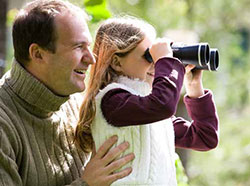
observing baby animals

  1. Observe Animal Babies – visit a zoo, wildlife reserve, or even your backyard or local park to see baby animals in action this spring. You could also visit a farm supply store to see chicks and ducks, or a pet store to see kittens and pups.
  2. Make an Insect Habitat – have you found a ladybug, beetle, or ant outside? Make a habitat it will thrive in with this project.
  3. Make a Bird Feeder – use simple household supplies to make four different kinds of feeders! Attract birds to your yard this spring.
  4. Make a Bird’s Nest – mimic the design you see in nature with this fun and crafty project! Use natural materials like twigs, grass, and mud.
  5. Hatch Chicks – Learn to care for newly hatched chicks with this science lesson. This project is perfect for spring! Use an incubator and eggs.
  6. Learn the Ladybug Life Cycle – use this cut and paste worksheet to learn the four stages of a ladybug’s life, from egg to adult.
  7. Amazing Butterfly Metamorphosis – watch our video to see a baby butterfly (larva) turn into a beautiful winged insect. Plus, learn how to grow your own with a butterfly habitat!
Teaching Homeschool

Welcome! After you finish this article, we invite you to read other articles to assist you in teaching science at home on the Resource Center, which consists of hundreds of free science articles!

Shop for Science Supplies!

Home Science Tools offers a wide variety of science products and kits. Find affordable beakers, dissection supplies, chemicals, microscopes, and everything else you need to teach science for all ages!

Related Articles

Crystal Growing Kit: A Fun Introduction to STEM Learning

Crystal Growing Kit: A Fun Introduction to STEM Learning

Hands-on science activities help students connect classroom concepts with real-world observations. A crystal growing kit is an engaging way to explore chemistry, scientific observation, and critical thinking through a simple experiment. Watching crystals...

Entomology for Kids: A Hands-On Guide

Entomology for Kids: A Hands-On Guide

What is Entomology? Entomology is the study of insects through observation, collection, and investigation, but entomology is something kids can easily take part in! As a quick refresher, insects are small animals with three main body parts, six legs, and often wings....

Fun Science Activities to Try at Home With a Digital Microscope

Fun Science Activities to Try at Home With a Digital Microscope

Science activities at home can turn ordinary afternoons into memorable learning experiences. A digital microscope gives children and families a chance to explore details that are impossible to see with the naked eye. From plant cells to fabric fibers, small...

Microscopes for Kids and the Joy of Hands-On Science

Microscopes for Kids and the Joy of Hands-On Science

Science often becomes more exciting when children can see tiny details with their own eyes. A microscope turns ordinary objects into fascinating discoveries, helping young learners explore cells, insects, crystals, fabrics, and plant structures in close detail. At...

Exploring the Night Sky with a Telescope for Kids

Exploring the Night Sky with a Telescope for Kids

A telescope for kids introduces astronomy through direct observation and simple experiments. It supports curiosity about stars, planets, and distant objects while building patience and focus. At Home Science Tools, our goal is to connect scientific ideas...

should I learn computer coding