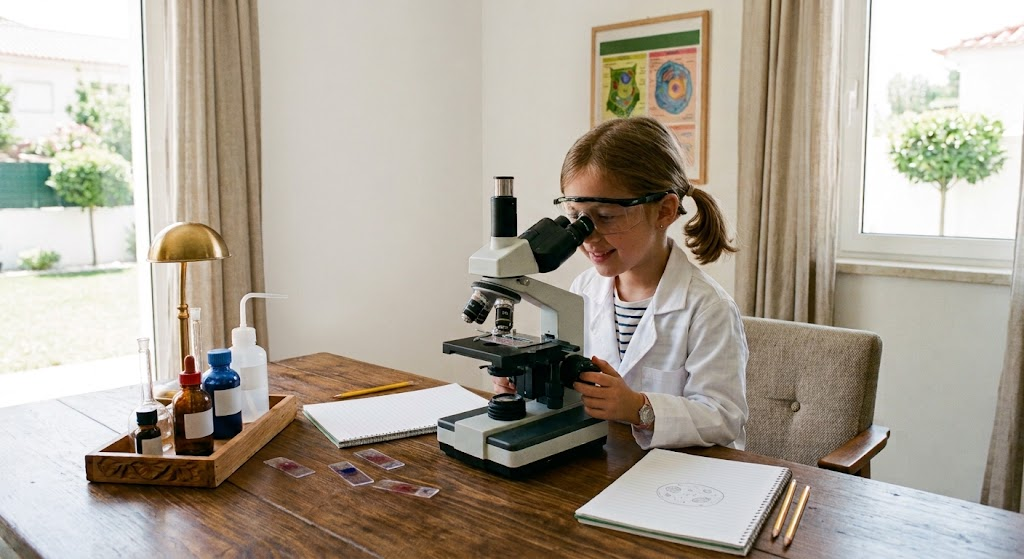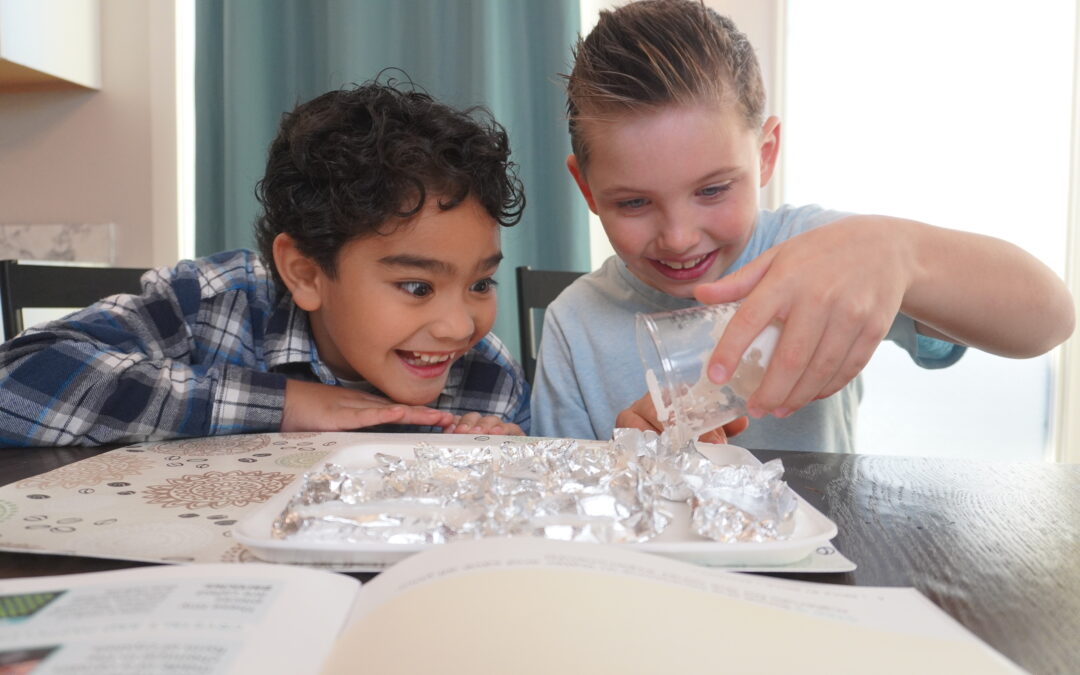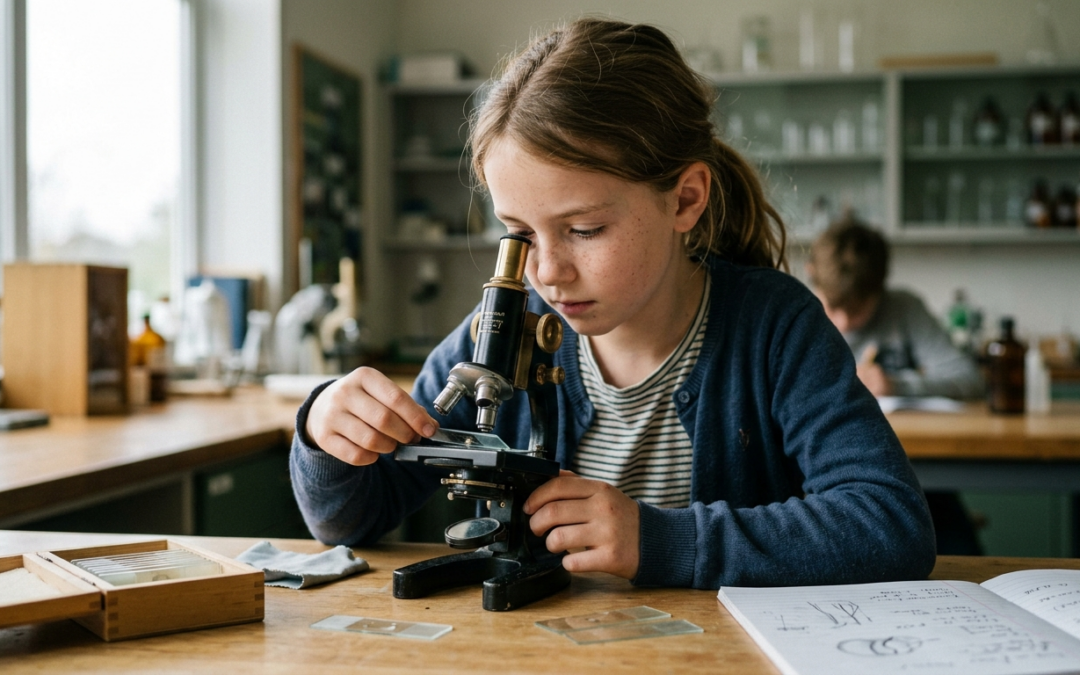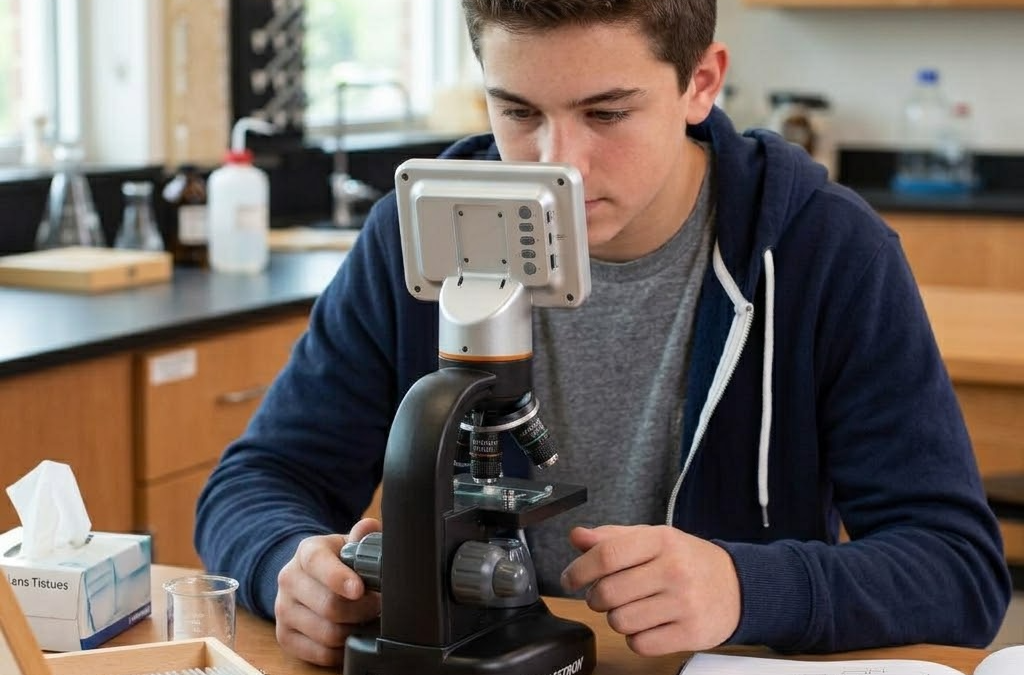
Building a science classroom that removes friction means preparing for great science lessons long before students walk into the classroom.
The Lessons That Never Happened
There are a handful of science lessons I still think about, not because they were particularly successful, but because they never happened.
As a classroom teacher and a passionate constructivist, I believed students learned science by doing science. My favorite days centered on students leaning over lab tables, making predictions, arguing over evidence, and celebrating discoveries—not on worksheets. Those were the moments when science came alive, moments that reminded me of why I became a teacher.
Ironically, those lessons were typically postponed.
Like so many teachers, I was trying to balance everything. There were papers to grade, faculty meetings to attend, and three children waiting for me at home who needed help with homework, rides to practice, and dinner on the table. Somewhere between all of that, I had to remember to shop for baking soda, vinegar, and balloons before Thursday’s investigation. Sometimes I remembered. Sometimes I didn’t. I often assumed the school already had everything I needed, only to find empty vinegar bottles, dead batteries, and missing graduated cylinders.
So, I’d move the investigation to the following week, believing I would circle back to it later. Sometimes I did. Sometimes I didn’t. Looking back, I don’t remember the worksheet that replaced those investigations, but I do remember the opportunities my students missed. Years later, after coaching teachers across the country, I realized my story wasn’t unique. It was almost universal.
When Great Science Gets Replaced by “Good Enough”
Whether I’m visiting an established school with science supplies tucked into a storage closet or a beautifully equipped STEM lab in a growing district, teachers tell remarkably similar stories. They talk about spending their planning period looking for supplies, discovering materials were never reordered, or realizing too late that one missing consumable would derail the entire lesson.
For a long time, I thought these were stories about time management. Now I know they’re stories about hundreds of tiny obstacles, like a missing consumable, a broken balance, materials stored in three different locations, or a lesson that requires one item no one remembered to replenish. Individually, none of those challenges seem significant. Collectively, though, they change instruction.
There’s a concept from chemistry I keep coming back to when I think about this. Before two substances can react, they need a minimum amount of energy to start the reaction. This is what chemists call activation energy. Below that threshold, nothing happens, no matter how reactive the ingredients are. Prep time works the same way. Locating supplies, testing equipment, and working around the one missing item adds up.
A teacher might have everything she needs to believe in inquiry: training, curiosity, real love for the subject. But if the energy required just to start the lesson climbs high enough, the investigation never crosses its own threshold.
What you wind up with is a lesson that settles for whatever requires less energy to deliver. The investigation becomes a demonstration. The demonstration becomes a video. Eventually, the video becomes a worksheet, not because teachers stop believing in inquiry, but because the system convinces them that “good enough” is all they have time for.
That’s the cost of friction, and it steals the moments that students remember long after they’ve forgotten the vocabulary quiz.
Researchers see this pattern that coaches like me notice in hallways. A 2025 report titled Strategic Investment in TK-12 Science found that students in well-resourced communities are far more likely to experience hands-on elementary science, while students in high-poverty and rural schools often go without it entirely in those early grades. That gap usually starts with the friction I’ve just described, and friction, unlike funding, is something most buildings can start addressing this week.
The Science Classroom Is More Than a Room
One of the first things I notice when I visit a school isn’t the décor or even the technology. I watch what happens during the first five minutes of class.
Can the teacher begin the investigation immediately?
Do students know where materials are located?
Can every student participate? Or does valuable instructional time disappear while everyone waits for supplies to be gathered and equipment to be located?
Those first few minutes reveal whether the classroom has been intentionally designed to support inquiry or whether the teacher must overcome unnecessary obstacles before learning can even begin.
That’s when I realized the science classroom isn’t simply where science happens. It’s one of the teacher’s most valuable instructional tools. When the environment works well, teachers rarely think about it. When it doesn’t, it’s all they can think about.
A well-designed classroom organizes materials, but it also protects instructional time, reduces decision fatigue, and creates consistency. Most importantly, it allows teachers to focus on students instead of logistics.
Science Beyond the Four Walls
That same principle—an environment that does its job—doesn’t stop at the classroom door.
Some of the richest investigations I’ve watched happen outside, and they almost never required a budget. A second-grade class measuring shadows on the blacktop at three points during the day. Students don’t need a state park to notice that the maple tree by the flagpole loses its leaves before the oak does, or that the puddle by the gym door takes longer to dry on cloudy days. They just need a teacher who can return to that maple tree, that puddle, that fence post, again and again, without losing the purpose of the investigation.
This part of environment design is easy to overlook because it doesn’t look like a supply list. The Next Generation Science Standards call this phenomena-based learning, anchoring a unit in something students can observe for themselves, and it only works if the classroom supports going back to the phenomenon over time. A leaf collection needs somewhere it won’t be cleared out during Friday’s cleanup. A watershed unit needs a few stakes and jars that can travel from the classroom to the creek and back without becoming someone’s recycling.
I’ve watched teachers set aside some of their best ideas because there was nowhere reliable to keep the evidence between Tuesday and Thursday. That’s a room problem, and administrators can solve it with a shelf, a labeled bin, and a little trust that a jar of pond water on a windowsill is doing what it’s supposed to do.
The Invisible Work Teachers Do Every Day
Teachers make hundreds of decisions before students ever walk through the classroom door. They’ve already adjusted lesson plans, answered emails, responded to parent concerns, attended meetings, and prepared for instruction. Science often adds another layer of decisions that have nothing to do with teaching.
Do I have enough materials?
Can I substitute something else?
Should I postpone this investigation?
Will every student be able to participate?
None of those questions improve instruction. They simply consume mental energy.
One administrator I coach put it to me plainly during a walkthrough debrief last fall. A teacher walking into a room that isn’t ready, she said, has already spent energy before the first student shows up. “We talk about reducing teacher burden,” she told me, “but we miss the simplest version of it. Make sure what they need is there, organized, and ready. That’s not about spending more. It’s about spending with intention.”
One of the greatest gifts administrators can give teachers is reducing those unnecessary decisions before the first bell rings. When teachers know investigations are fully supported with organized, accessible, and complete materials, they make different instructional choices. They choose the investigation instead of the worksheet and encourage exploration instead of demonstrations. They spend their energy listening to students’ thinking instead of wondering whether there are enough safety goggles for every child.
That’s why I don’t think of science materials as supplies. I think of them as instructional support.
What Great Science Classrooms Have in Common
After visiting hundreds of classrooms, I’ve noticed something surprising. The most memorable science classrooms and best inquiry I’ve ever observed happened in rooms that looked remarkably ordinary.
What those classrooms shared was intentional systems.
Teachers knew where the materials were located. Students understood classroom routines. Consumables were replenished before they ran out. Safety equipment was visible and accessible. Lessons began with curiosity instead of logistics.
As administrators, perhaps the most valuable question we can ask isn’t, “What should we purchase?” Instead, ask, “Could a teacher walk into this classroom tomorrow and confidently teach an investigation without making a trip to the store?”
That simple question transforms a shopping list into a readiness audit.
Where the Audit Starts
That question sounds simple until you try to answer it room by room. Over the years, I’ve built a short list I return to on every walkthrough, not because every room needs to look identical, but because every room needs the same categories covered.
Consumables: the things that run out. Reagents and lab chemicals in grade-appropriate quantities, batteries, graph paper, basic biology and chemistry staples like seeds, soil, vinegar, and baking soda, fresh gloves, and the labels that keep materials organized mid-unit.
Equipment: the things you buy once and maintain. Working scales, beakers, graduated cylinders, thermometers, hand lenses, a safe heat source for the grade level, basic circuit kits, rulers, and storage bins labeled for how the room is used today, not how it looked when the kit arrived.
Safety: the things that are never optional. Eyewash access, a current fire extinguisher, enough goggles for a full class, gloves sized for students, safety data sheets people read, posted emergency procedures, and ventilation for anything involving fumes.
Reference: the things that keep everyone oriented. A grade-level standards reference within reach, a current inventory, an educator guide that explains the why and not just the steps, lab-safety anchor charts, and a simple system for tracking what needs reordering before the next unit.
I still ask myself a version of the same five questions on every walkthrough:
- Can the teacher start the investigation without leaving the room?
- Are the safety basics inspected and genuinely reachable, not locked behind a cabinet nobody has the key to?
- Is there one predictable place for shared materials, or does it shift depending on who used it last?
- Where does most of the prep time disappear?
- If this teacher were out tomorrow, could a substitute find what they need on their own?
None of this requires a bigger budget. It requires walking the room with the right questions instead of the right invoice.
When the Room Isn’t Really Yours
Not every teacher gets a room like the ones I’ve been describing. Plenty of the teachers I coach share a tub of materials or set up an entire investigation in a cafeteria after the dismissal bell, then tear it down again before pickup. I think about after-school facilitators running a science club in a gym with a rolling bin and little time, often without a science background to fall back on. One of the coordinators I work with runs her program out of a rolling cart and a converted storage closet. Her materials budget, she has told me more than once, is the first thing cut and the last thing restored, because after-school always gets treated as the extra. “When a kit shows up genuinely complete, not mostly,” she says, “that’s not a convenience. That’s the difference between the activity happening and it falling off schedule.”
Teachers need a system that travels with them. A cart that holds exactly what a unit needs, organized the same way every time. A kit that arrives complete because the one missing item is usually the one that turns an investigation into a demonstration. Some districts solve this with pre-assembled kits built for this kind of mobility. HST’s Science Unlocked line is one example I’ve seen schools rely on specifically because it travels well between rooms that change hands every period.
Wherever a dedicated science space is possible, it’s worth fighting for: a sink that’s always there or storage that isn’t reassigned every August. But for the building that can’t offer that, the better investment is making mobility reliable. A cart system, a fixed drop-off spot, a prep routine simple enough for a first-year teacher or a substitute. Science doesn’t need a permanent address. It needs a system that knows where it’s going.
What This Looks Like on Monday
Back-to-school science readiness is about removing the small barriers that make investigations harder to teach than they should be.
None of this requires a strategic plan with a five-year timeline. Just a short list, repeated on a calendar instead of left to memory.
- Walk a science room with the questions above. Open the cabinets, not just the door.
- Check consumables against the unit calendar for the term ahead, not last year’s leftover stock.
- Put a name on the replenishment cycle, so it’s somebody’s job.
- Look at what’s coming home in student folders. If it’s mostly fill-in-the-blank pages instead of data students collected themselves, the materials gap is often the explanation.
The Strategic Investment in TK-12 Science report includes a striking example. One California district paired teacher training with reliable materials and protected instructional time, and elementary classrooms moved from spending under twenty minutes a week on hands-on science investigation to nearly a hundred, with engagement and attendance moving right along with it. That shift started with removing enough friction and activation energy that teachers had something solid to build on.
So do this work before the bell rings, and the morning will go the way the lesson plan is intended.
The next article in this series picks up where this one leaves off: once the room is ready, how do we support the people inside of it, whether it’s the veteran who has taught science for twenty years, the first-year teacher who majored in something else, or the after-school facilitator running a club with a rolling cart and forty-five minutes?
About the Author
Cynthia Evans is an educational consultant, STEM coach, and former classroom teacher with more than 35 years of experience helping educators create engaging, inquiry-driven learning environments. After spending 25 years in the classroom, she now partners with schools across the country to support teachers, instructional coaches, and administrators in building strong STEM and science programs.
As a nationally recognized STEM educator and coach, Cynthia believes the best science learning happens when students are encouraged to ask questions, investigate ideas, and make sense of the world through authentic discovery. Her work focuses on helping educators remove barriers to hands-on learning, so every student has the opportunity to experience the curiosity, wonder, and confidence that great science instruction inspires.
When she’s not working with schools, Cynthia enjoys traveling, spending time with her family, and continuing to advocate for meaningful science education that prepares students to think critically, solve problems, and never stop asking, “Why?”