A successful homeschool chemistry curriculum depends on more than engaging lessons and interesting experiments. A safe, organized laboratory allows students to investigate chemical principles while developing good scientific habits. With the right equipment and a dedicated workspace, homeschool families can create an environment that supports accurate observations, careful experimentation, and confident learning.
At Home Science Tools, we design our chemistry curriculum and lab kits to help families prepare for hands-on science with structured lessons, quality equipment, and teacher resources that simplify every stage of instruction.
Why Prepare a Safe Home Laboratory
Chemistry introduces students to measuring liquids, observing reactions, heating materials, and recording experimental data. A well-prepared laboratory minimizes distractions and allows students to focus on following procedures correctly.
Creating a dedicated workspace also reinforces laboratory routines. Students learn to organize equipment, handle chemicals responsibly, and complete cleanup procedures after every investigation. These habits strengthen scientific thinking while preparing learners for advanced laboratory courses.
Choosing the Right Location
The laboratory should provide enough space for experiments without competing with daily household activities. A sturdy table with a smooth surface creates an ideal work area for chemistry lessons.
Several features improve safety and convenience:
- Good ventilation
- Bright lighting
- Easy access to water
- Stable work surfaces
- Nearby storage for laboratory supplies
The area should remain free from food preparation, pets, and unnecessary household items while experiments are in progress.
Personal Protective Equipment
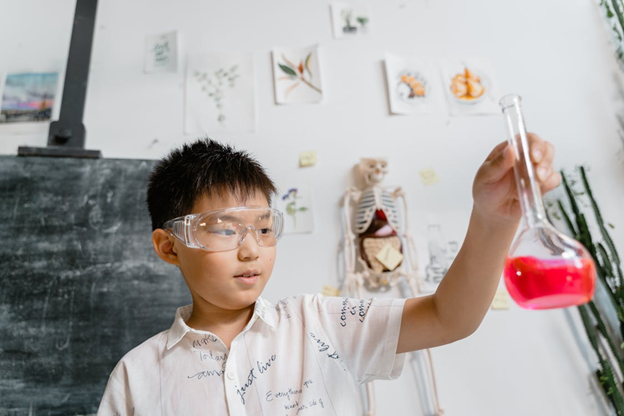
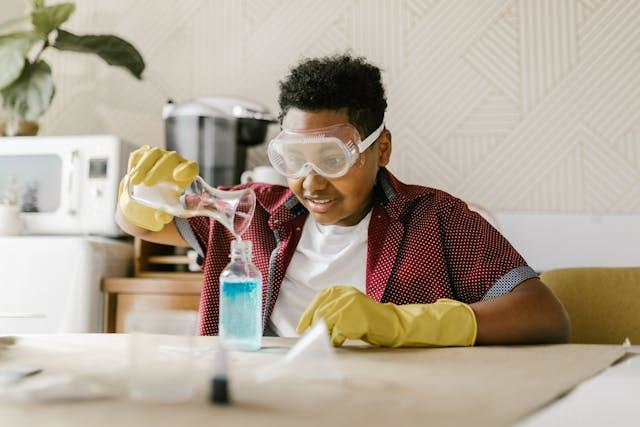
Every chemistry laboratory begins with proper protective gear. Students should become familiar with safety equipment before opening the first experiment kit.
Essential protective items include:
- Chemical splash safety goggles
- Disposable or reusable gloves when required
- Protective apron or lab coat
- Closed-toe shoes
- Hair ties for long hair
Consistently using protective equipment establishes habits that remain valuable in future science education.
Basic Glassware and Containers
Reliable laboratory glassware allows students to measure, mix, and observe materials accurately.
A complete homeschool chemistry workspace benefits from:
- Beakers
- Test tubes
- Graduated cylinders
- Erlenmeyer flasks
- Plastic sample containers
- Stirring rods
Educational lab kits from Home Science Tools include many of these essential items, reducing preparation time before each lesson.
Measuring Equipment
Chemistry depends on accurate measurements. Students gradually build confidence when using laboratory tools designed for precision.
Important measuring equipment includes:
- Digital balance
- Thermometer
- Pipettes
- Measuring spoons
- Graduated cylinders
- Stopwatch or timer
Learning to collect reliable measurements strengthens analytical thinking and improves laboratory results.
Equipment for Heating Experiments
Some chemistry activities require controlled heating. Safe instructional materials always specify appropriate procedures and temperatures for each investigation.
Common laboratory heating equipment includes:
- Alcohol burner or approved laboratory heat source
- Heat-resistant pad
- Beaker tongs
- Test tube holder
Students should always complete heating activities under adult supervision while following curriculum instructions carefully.
Organizing Chemicals Safely
Chemical storage deserves as much attention as the experiments themselves. Organized supplies improve efficiency and reduce unnecessary handling.
Helpful storage practices include:
- Keep chemicals in labeled containers.
- Store supplies in a cool, dry location.
- Separate laboratory chemicals from household products.
- Return every container immediately after use.
- Keep storage areas inaccessible to young children.
Following consistent storage routines protects materials while extending their usability for future lessons.
Preparing for Laboratory Cleanup
Cleanup should become part of every experiment rather than an afterthought. Students learn responsibility while preparing the workspace for the next lesson.
Useful cleanup supplies include:
- Paper towels
- Waste containers
- Mild soap
- Cleaning cloths
- Disposable gloves when appropriate
Glassware should be cleaned promptly and inspected before being returned to storage.
Using Complete Curriculum Kits
Gathering laboratory supplies individually can require significant preparation. Complete curriculum kits simplify the process by providing materials matched to specific lessons.
At Home Science Tools, our chemistry curriculum includes laboratory equipment, experiment supplies, student workbooks, assessments, and teacher guides that support organized instruction from the beginning of the course.
Each activity introduces laboratory skills gradually, allowing students to become comfortable with new equipment before progressing to more advanced investigations.
Maintaining an Organized Laboratory
An orderly laboratory encourages careful work and reduces interruptions during experiments.
Helpful organizational habits include:
- Return equipment to assigned storage locations.
- Label storage bins clearly.
- Inspect laboratory tools before each lesson.
- Prepare experiment materials in advance.
- Review safety procedures before beginning every activity.
These routines allow students to concentrate on scientific investigation rather than searching for supplies.
Building Confidence Through Preparation
Confidence grows when students understand laboratory expectations before beginning each experiment. Reviewing procedures, organizing equipment, and preparing materials create a calm learning environment that supports accurate scientific work.
Hands-on chemistry also encourages students to ask questions, evaluate evidence, and develop critical thinking through direct experimentation. These experiences build valuable laboratory skills that extend into future science courses and lifelong learning.
At Home Science Tools, our homeschool chemistry curriculum provides complete lesson plans, laboratory equipment, experiment supplies, and detailed teacher resources that help families create safe, organized, and engaging home chemistry laboratories. With thoughtfully designed curriculum kits and structured hands-on investigations, students can explore chemistry with confidence while developing strong scientific foundations.