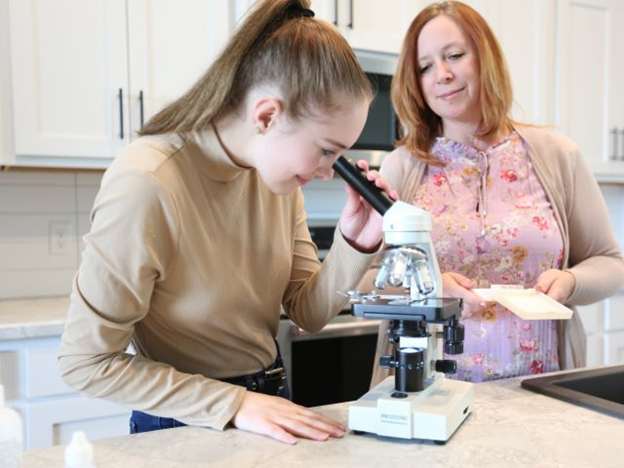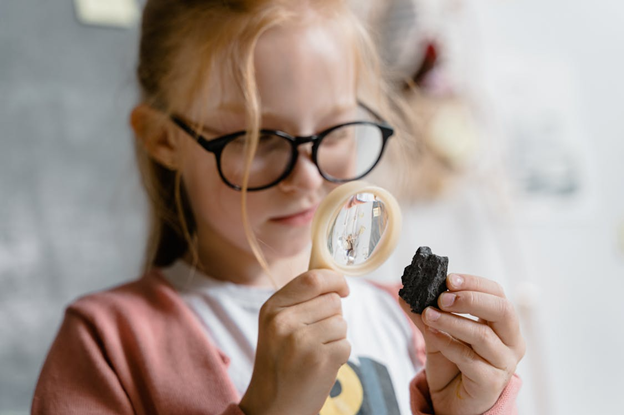
The integration of hands-on activities is a cornerstone of effective homeschooling, especially when exploring Earth sciences. A rock tumbler is not merely a hobbyist tool; it is a compact laboratory that transforms abstract textbook concepts, such as the rock cycle, into a tangible, multi-week scientific experiment. By automating the natural process of erosion, this device provides a tangible connection between theoretical textbook lessons and physical reality, making it an indispensable resource for young scientists.
Geological Simulation: How a Rock Tumbler Replicates Nature
In a standard science curriculum, understanding erosion often feels theoretical. A rock tumbler addresses this by simulating “attrition”—the geological process where rocks are smoothed by water and friction. In nature, this takes centuries; in a controlled environment, a motorized base rotates a barrel at a precise speed, ensuring the stones slide against each other rather than crashing, mimicking the gentle yet persistent flow of a river.
The silicon carbide grit serves as a proxy for the sand and sediment found in nature. As the barrel turns, the friction wears away the jagged exterior of the rocks. This mechanical weathering process allows students to observe how external forces alter the shape of solid matter, providing a clear demonstration of physical abrasion and kinetic energy in action.
The Scientific Method: A Step-by-Step Laboratory Process
Using a rock tumbler requires a methodical approach that mirrors professional scientific protocols. The process is divided into four stages, offering a perfect opportunity for mathematical integration by measuring mass and volume loss at each interval:
- Stage 1: Reshaping (coarse grit): This stage involves significant material removal. Students should use a digital scale to record the initial weight of the stones and calculate the percentage of mass lost after the first week to practice statistics and data analysis.
- Stage 2: Smoothing (fine grit): The focus shifts to removing surface scratches. This serves as a lesson in surface area and the transition from macro to microscopic refinement.
- Stage 3: Pre-Polishing: The stones achieve a satin finish. Using a magnifying glass or macro photography, students can document “control stones” to compare visual changes throughout the process.
- Stage 4: Polishing: An ultra-fine compound, such as aluminum oxide, creates a mirror-like finish. This final stage illustrates the principles of optics and how smooth surfaces reflect light differently from porous ones.
By documenting each phase, students practice recording data, maintaining a laboratory journal, and observing long-term experiments—skills essential to higher-level scientific study.
Mineralogy and the Mohs Scale of Hardness
A rock tumbler provides a practical application for the Mohs Scale of Mineral Hardness, which ranks minerals from 1 to 10. In a homeschooling setting, this becomes a critical lesson in experimental variables and material compatibility.
If minerals of different hardnesses are mixed, the harder stones will pulverize the softer ones. For a successful first experiment, it is recommended to start with varieties of Quartz or Agate (Mohs 7), avoiding the mixture of softer stones like Fluorite (Mohs 4). This requirement encourages independent research, requiring students to identify and categorize specimens before starting the machine.
Practical Life Skills and Environmental Responsibility
Operating a rock tumbler is a powerful pedagogical tool for character development, teaching patience and delayed gratification. The weeks-long tumbling cycle demonstrates that high-quality results require consistent, long-term effort, shifting students away from a quick-fix mentality.
The process also necessitates learning essential protocols for environmental responsibility, specifically regarding the “slurry” byproduct. This dense mixture of water and fine rock dust (e.g., aluminum oxide) must not be poured down household or municipal drains. Improper disposal is an infrastructure hazard, as the particulates can solidify like cement, causing costly plumbing blockages and damaging the wastewater system.
A mandated procedure requires students to use a multi-stage sediment bucket to separate water from the solid rock dust. This filtration not only prevents damage but compels students to confront the environmental impact of industrial processes.
By engaging with these disposal methods, students internalize the necessity of regulatory compliance and ethical environmental mitigation, transforming a simple hobby into a comprehensive lesson in applied science, discipline, and environmental stewardship.
Enhancing the Homeschool Curriculum
The inclusion of a rock tumbler in a homeschool program transforms a passive reading lesson into an active discovery. The polished results can be used for further study, such as creating a mineral collection, starting a jewelry-making project, or even a small-scale business lesson in selling finished gems. It bridges the gap between various disciplines—geology, physics, mathematics, and environmental science—in a single, ongoing project.
To expand the home laboratory and ensure the best results for every geological experiment, having the right supplies is essential. Check out the essential rock tumblers and other Earth Science tools and accessories here at Home Science Tools to find professional-grade grits, refills, and kits designed for the next generation of scientists.