What Is a Homeschool Curriculum?
‘Homeschool curriculum’ is a broad term that describes the content, activities, media, assessments, and anything else used in your child’s learning. In some cases, home educators purchase preassembled curricula and supporting materials. Other times, they create their own from a variety of resources–or use a combination of the two approaches.
What Is the Purpose of a Curriculum?
Think of curriculum as a roadmap for learning. If the goal is to teach your child about chemistry over the next few months, you might look for the best homeschool science curricula available.
After identifying target learning outcomes sometimes referred to as ‘the student will be able to…’ or TSWBAT, work backwards to create a timeline and lesson plans that achieve these goals. There are always many ways to get to an endpoint. The route you choose is your curriculum.
Public schools follow a curriculum set by the state and school district, but home educators have more flexibility in how they instill knowledge. Check your state’s requirements and ask if you need a curriculum to homeschool. In many cases, you don’t, but it can save a lot of time and work if you source a ready-made curriculum.
Employers and colleges will want to know that your child has certain academic skills and knowledge when the time comes that they are applying to schools or looking for a job.
Fundamentals of a Homeschool Curriculum
One of the greatest advantages of a homeschool education is the freedom to decide what and how your child learns. However, creating meaningful lessons requires a significant amount of time and energy to do it well. Some states may also require you to prove that you covered certain basics.
Curriculum is not static. It can be adjusted and personalized based on the child’s interests. Different approaches on the same subjects can be used depending on the strengths and challenges of each child.
A homeschool education also does not mean it is done alone–there are many online resources with grade-specific curricula. There are also community programs associated with libraries, churches, sports associations, bands, choirs, and more that give a homeschooled child an opportunity to socialize with others their age and participate in extracurricular activities.
Different Approaches for Different Kids
Children learn differently, and homeschooling allows you to make the best choice for each child. Online assessments can help you determine if your child is an auditory, visual, or kinesthetic learner.
A visual learner learns by reading textbooks and watching videos, while auditory learners do better by listening to lectures, audiobooks, and other forms of verbal communication. Kinesthetic learners absorb information by doing, such as using manipulatives or working on science projects.
Your Go-to Resource for All Things Science
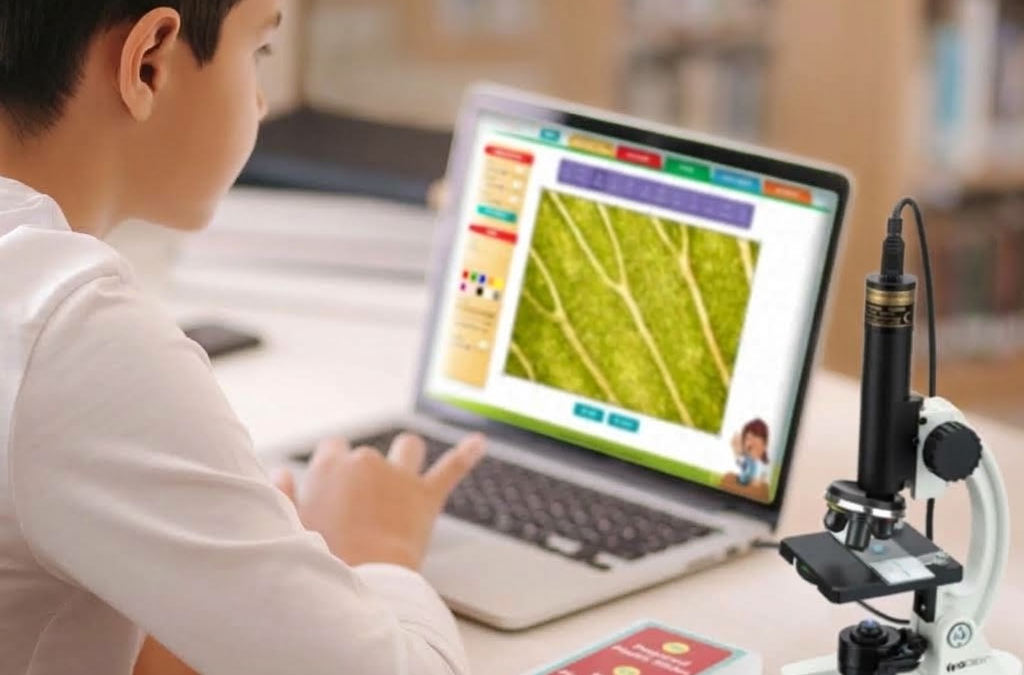
Science is one area in which you can get super creative and develop an exceptional curriculum based on hands-on learning. If you’re looking for innovative ideas and programs, check out Home Science Tools.
Our company was founded twenty-five years ago by home educators who knew firsthand how difficult it could be to develop exceptional science lessons. Our educational materials are created and tested by professional science educators, and our kits contain everything you need to deliver meaningful lessons and encourage your child to engage with the exciting world of science.
Wondering what the best homeschool programs are? Be sure to read our latest article.