
Butterflies are some of the most beautiful creatures you will see in the summertime.
You might watch them flutter through your yard now and then in search of sweet nectar.
But to attract a greater variety of butterflies, use two different methods to make a butterfly feeder. Keep a field guide handy so you can identify your visitors!
(An Audubon guide is a great choice for older kids and adults, and a Golden guide works well for younger kids.)
Some butterflies love flower nectar, while others prefer to eat sugar from a rotting fruit. Learn two different ways to make a butterfly feeder and see if they attract different types of butterflies.

Make a Butterfly Feeder – Jar Method
Construct a butterfly feeder using a baby food jar and some sugar water. Adult supervision is recommended.
What You Need:
- Small jar (like a baby food jar)
- Hammer and nail
- Kitchen sponge
- String
- Sugar
- Water
- Construction paper or artificial flowers
What You Do:
1. Make some butterfly food with nine parts water and one part sugar (use tablespoons or teaspoons depending on the size of your jar). Add the sugar to the water and boil in a pan until it is dissolved. Let it cool while you prepare the butterfly feeder.
2. Have an adult help you use a nail and a hammer to punch a small hole in the lid of the jar.
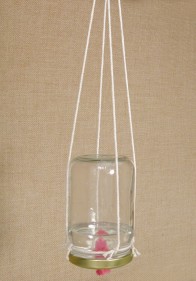
3. Cut a strip of the kitchen sponge and pull it through the hole in the lid, leaving about a half-inch sticking out from the top of the lid. You want the sponge to be a tight fit – it should get soaked with the sugar water, but not drip. (Test it by putting water in the jar and turning it upside down. If it leaks, try a bigger piece of sponge.)
4. Next, make a hanger. Tie some string around the mouth of the jar. Cut two more lengths of string about 30′ long. Take one and tie an end to the string around the mouth of the jar. Attach the other end on the opposite side of the jar to make a loop. Tie the second length of the string in the same way to make a second loop perpendicular to the first one. Use one more piece of string to tie the tops of the loops together. Now turn the jar upside down and make sure it hangs steadily.
5. Decorate the jar with brightly colored construction paper (flower shapes are best) or artificial flowers. The ‘prettier’ it is, the more it will attract butterflies!
6. Fill the jar with the cooled sugar water, screw the lid on tightly, and turn the jar upside down.
7. Hang your feeder outside and wait for the butterflies to come!
Make a Butterfly Feeder – Plate Method
Create this butterfly feeder quickly and easily! Plus, use up old fruit that usually gets thrown away.
What You Need:
- A plate or plastic lid from a 1-gallon ice cream container.
- String
- Overripe, spoiling fruit. (See if your grocery store will let you have what they are throwing out for free if you don’t have any at home.)
- Orange juice
What You Do:
1. Use the string to make a hanger for your plate. If you’re using an old ice cream lid you can punch holes in the side and tie the string to it. If it’s a plate that you can’t punch holes in, use tape. You can decorate the strings with artificial flowers to make it more attractive to butterflies.
2. Hang your plate from a tree branch before you fill it to make the process less messy! It will probably attract other bugs besides butterflies, so you may want to hang it in a far corner of your yard.
3. Put overripe fruit on the plate; try slices of watermelon, oranges, or bananas. You can also add some orange juice to keep the fruit from drying out as fast. Bananas will be mushier and more appealing to butterflies if you freeze them first and then thaw them and cut them in slices.
4. Watch and see what kinds of butterflies come to eat. Do different species prefer different kinds of fruit? How many butterflies can you see feeding on your plate at once?
5. When the fruit gets too dry, throw it out and put more on the plate.