Science Projects > Life Science Projects > Introduction to Insects 

Introduction to Insects

If you have very young children, you might want to start with teaching them the parts common to most insects: head, thorax, abdomen, wings, antennae, compound and simple eyes, exoskeleton (hard outer skeleton), and six jointed legs. These six legs distinguish insects from bugs such as eight-legged arachnids. Also see our Insect Investigations Science Lesson to get more ideas for younger children.
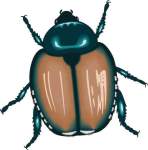
Japanese beetle

Have your children label the different parts of an insect, using a picture from a magazine, the internet, or one that they have drawn themselves.

For slightly older children (3rd grade and up), it might be beneficial to learn some of the basic characteristics of the most common insect orders. Butterflies and moths are members of the order Lepidoptera, because of their scaly wings. Dragonflies are members of the ‘toothed’ order Odonata. Beetles are members of Coleoptera (‘sheath wing’); and bees and ants, because of their membranous wings, are members of order Hymenoptera. Memorizing each order name is not as important as really understanding the concept that each insect has distinguishing characteristics that put it in a specific order!

For more insect study ideas, visit our Making an Insect Collection Science Project.
Teaching Homeschool

Welcome! After you finish this article, we invite you to read other articles to assist you in teaching science at home on the Resource Center, which consists of hundreds of free science articles!

Shop for Science Supplies!

Home Science Tools offers a wide variety of science products and kits. Find affordable beakers, dissection supplies, chemicals, microscopes, and everything else you need to teach science for all ages!

Related Articles

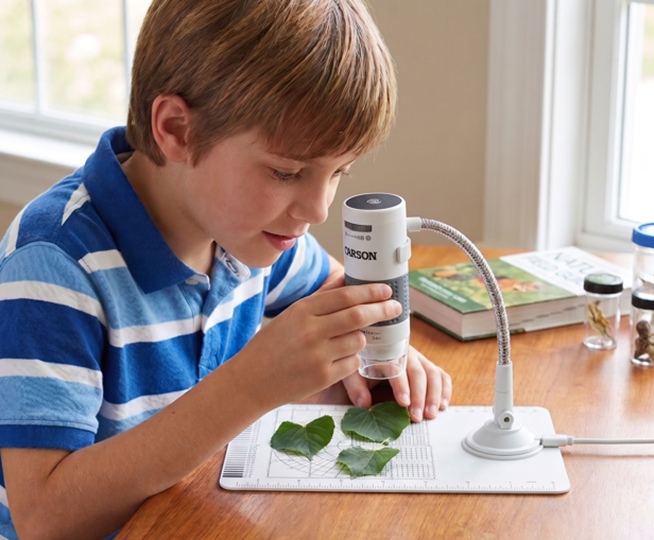
Fun Science Activities to Try at Home With a Digital Microscope

Fun Science Activities to Try at Home With a Digital Microscope

Science activities at home can turn ordinary afternoons into memorable learning experiences. A digital microscope gives children and families a chance to explore details that are impossible to see with the naked eye. From plant cells to fabric fibers, small...

Making Science Fun with Outdoor Toys for Kids

Making Science Fun with Outdoor Toys for Kids

Childhood is filled with questions, discoveries, and small moments that shape how the world is understood. Around the age of four, curiosity becomes more intentional. There is a growing interest in how things work, what things are made of, and why nature behaves the...

Recreating Famous Science Experiments at Home

Recreating Famous Science Experiments at Home

Science history isn’t just something to read about in a textbook; it’s something that should be experienced firsthand. At Home Science Tools, we believe some of the most powerful learning happens when students do science, not just study it. Many of the world’s most...

How to Introduce Chemistry to a Middle School-Aged Child at Home

How to Introduce Chemistry to a Middle School-Aged Child at Home

Often, memories of dense textbooks and complicated formulas come to mind whenever someone says the word “chemistry”. Thus, teaching it at home to a middle schooler can seem particularly daunting. In truth, though, chemistry at this age is less about memorizing the...

Planning Ahead: Your Solution to Next Year’s Science

Planning Ahead: Your Solution to Next Year’s Science

Nothing beats the feeling of next year's curriculum arriving at your doorstep. Planning for next year is exciting but can also feel overwhelming. When it comes to choosing the right science curriculum for your family, we're here to help. With numerous options...

should I learn computer coding