What exactly is computer coding? It’s writing. Of course, the sentences are not in plain English. Rather, they’re written in programming languages. These can look like a strange mix of words, numbers, brackets, and parentheses. One question that often comes up when discussing computer coding is difficulty. Is it hard to learn? As with other subjects, the answer depends on your existing knowledge, aptitude, and desire. But, as with any new skill, it’s always best to start at the beginning!
How Coding Works
Computers require instructions, or commands, to work. Those instructions are written in code. Code is a snippet of a programming language. Computer software understands and responds to specific code. Software comes in three varieties: operating software, programming software, and application software. Hardware refers to a computer’s wiring, components, and exterior.
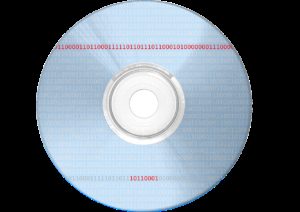
Computers run on binary (machine) code. Binary code uses two digits, zero (0) and one (1) to represent letters, digits, and other characters. It’s hard to read and write. Programming languages were created to translate binary code into easier-to-use text.
History of Computer Coding
The first computer code of the modern era, was stored electronically in the “Baby,” a computer from 1948. Its code could perform subtractions. In 1953, IBM, produced the first electronic computer for the masses. Its code enabled the computer to perform 2000+ multiplications per second. The first code for email was written in 1965 at the Massachusetts Institute of Technology. The command “MAIL” enabled students to send and receive short blurbs of text.
In the 1970s, code from arcade games was used to create home-video games. Since then, the graphics of video games–powered by new code–have improved tremendously!
More recent code functions include:
• Hyperlinks for connecting pages on the internet.
<a href = “https://www.homesciencetools.com”>SOMETHING</a>
• Pop-up ads for overlaying advertising windows on web pages.
window.open(‘https://www.homesciencetools.com.com/’)
• Display Buttons for ordering a product, reading an article, or “liking” a Facebook ad.
<button>Home Science Tools</button>
Careers in Coding
Computer coders are also known as programmers. There is a slight difference in specialization between the two roles, but most people speak of them as synonyms. On the job, coders design, write, test, fix, and maintain the source (original) code of programs. Source code is usually written in plain-text language.
Keeping the source code clean is crucial. Source code contains the instructions for the computer to follow, so that it can function. Computer coders spend much of their day modifying source code with new directives without harming functionality. Generally speaking, computer coders have lots of job opportunities. They get paid well, and have (much) lower-than-average unemployment.
Since every product that uses electricity (cars, vacuum cleaners, etc.) uses code, there’s no shortage of need. Programming languages, though, come and go. The coders who are most successful learn the most popular languages. They also stay informed about ongoing technology changes, like robotics, that could impact their careers.
The Future of Computer Coding
Computer coding, as a discipline, is changing fast. Long code is giving way to shorter, simpler code that can accomplish the same results. Why? One reason is space. Long code takes up more of it. Another reason is that long code is better at hiding costly mistakes!
The trend is for new programs to take over (automate) lower-level coding functions. This means that while computer coders will still have to know how to create and run these functions, they’ll spend more of their time on higher-level, abstract thinking. One futurist, a dean of an engineering school, thinks coders are moving towards a universal programming language. She imagines code living in blocks, similar to kid’s alphabet blocks.
Future coders will be able to move and connect these blocks without writing additional text. Coding is not going away. In fact, more kids are learning to code than ever before–at school and at home. Building a mini-computer and programing it to make your own interactive devices has never been easier with the Raspberry Pi Project Kits! Which means, the speed of coding changes is likely to increase!