Choosing a homeschool science curriculum starts with understanding what your child needs. Their grade level, prior science experience, and learning abilities can help you determine which course will provide the right balance of instruction and hands-on exploration.
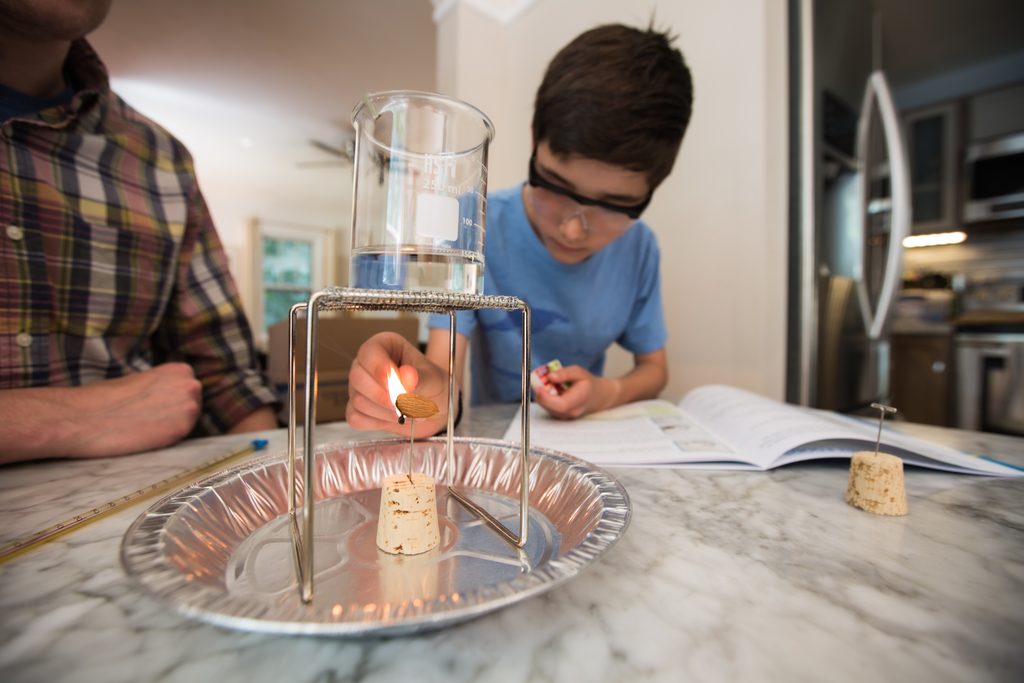
Science Unlocked® offers a structured science curriculum for grades K-12, with lessons, experiments, and materials designed to help students develop scientific knowledge and skills.
In this article, we will help you find the right Science Unlocked curriculum for your child, then walk you through your first lesson so you know exactly what to expect and how to prepare.
Start With Your Child’s Grade Level
Science Unlocked is organized into three learning levels, each designed to introduce scientific concepts and skills appropriate for a different stage of development.
Wonder (Grades K-2)
Wonder introduces young learners to science through observation, simple experiments, and guided exploration. Students investigate topics across biology, chemistry, physics, engineering, and earth and space science while developing foundational skills.
Accelerate (Grades 3-7)
Accelerate introduces more focused scientific study. Each grade explores a particular discipline, including earth and space science, physics, engineering, chemistry, or biology. Students practice collecting data, measuring results, and using evidence to explain their observations.
Launch (Grades 8-12)
Launch provides more advanced coursework in biology, chemistry, physics, earth and space science, and engineering. Students develop laboratory skills, apply mathematical reasoning, and conduct increasingly independent investigations.
When choosing a course, consider your child’s current grade level and visit the Science Standards tab near the bottom of each curriculum product page. There, you can see which science standards the course covers and use that information to help determine the best fit for your child.
Consider Your Child’s Prior Science Experience
Grade level is an important starting point, but your child’s previous experience matters, too.
Think about the science subjects they’ve already studied and how comfortable they are with experiments and following instructions.
A student who has completed several years of structured science instruction may be ready for more independent work. A student who is new to hands-on science may benefit from additional guidance, particularly during laboratory activities.
Not sure which course is the best fit for your child? Visit the FAQs tab at the bottom of each product page for more information about the course content and what to expect. You can also reach out to our team for help choosing the right course.
Choose a Full-Year Science Unlocked Curriculum or Individual Module
Science Unlocked offers both full-year curricula and individual modules.
Full-year curricula provide a planned sequence of lessons and experiments covering the course’s learning objectives. This is ideal for families who want a complete science program for the academic year.
Each module focuses on a specific scientific discipline, making it easy to supplement another curriculum, dive deeper into an area of interest, or try Science Unlocked before committing to a full-year course.
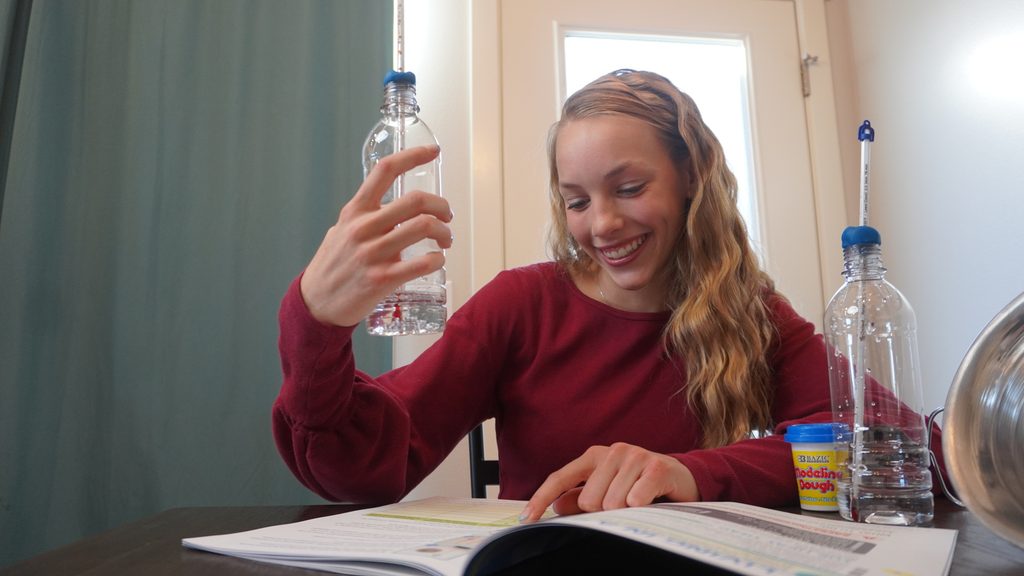
If you would like Science Unlocked to be your child’s primary science curriculum, a full-year course is generally the best starting point.
Know What’s Included
Science Unlocked combines instruction and hands-on learning materials in one curriculum. Each module includes:
- Student Workbook: Lessons, activities, questions, and space for recording observations and results.
- Teacher Guide: Instructional guidance, lesson preparation information, and answers to help parents teach and assess learning.
- Science Materials: Equipment and supplies for the included experiments and activities.
Some lessons may require common household items, so review the materials list before beginning each activity.
Parents don’t need extensive science experience to teach Science Unlocked. The Teacher Guide provides the explanations and support needed to work through lessons with their students.
Getting Started: Your First Science Unlocked Lesson
Once you select your curriculum, return to this section, because here is where we will walk you through your first lesson! The following steps will help you know what to expect and ensure you start with confidence.
First, start with the Teacher Guide. Review the lesson objectives, suggested schedule, and teaching instructions. You’ll see what your child should learn and how the activities support those goals.
Then, review the Student Workbook. Take a look through the Student Workbook with your student. Explore the first lesson and see what your child will read, the questions they’ll think about, and the experiments they’ll try.
Next, gather your materials. Check the experiment supply list and locate the materials included with your module. Set aside any additional household items and review the safety instructions.
Now you can complete the lesson together. Follow the Teacher Guide, allowing time for your child to ask questions, make predictions, and record observations. Younger students may need more assistance, while older students can work more independently.
Lastly, gauge their understanding. After the lesson, review your child’s responses and discuss what they discovered. Use the Teacher Guide to address any concepts that need clarification.
There’s no need to rush through the material. Give your child time to understand each concept before moving ahead, even if it goes beyond the suggested schedule’s proposed time.
Ready to Jump In?
The right science curriculum should meet your child where they are academically while helping them develop the skills they will need for more advanced study.
Whether you’re introducing science to a kindergartner or preparing a high school student for laboratory coursework or college-level learning, Science Unlocked offers a clear path forward.
Get started today! Click here to find the right course for your child.