A microscope for kids can make familiar things feel completely new. A piece of onion, a feather, or a grain of salt can reveal surprising details under a lens. For children, these small discoveries can turn an ordinary afternoon into a hands-on science lesson.
At Home Science Tools, we believe that good science starts with curiosity. Our collection of microscopes and science supplies gives young learners the tools to explore cells, fibers, crystals, and other tiny structures.
Many interesting specimens are already found around the house. With proper supervision and a few basic supplies, everyday objects can become fascinating microscope samples.
15 Everyday Things to Examine Under a Microscope
- Onion Skin
Onion skin is a favorite starting point for young scientists. A very thin layer reveals rows of plant cells, creating a memorable first look at the microscopic world.
- Salt Crystals
A pinch of table salt becomes surprisingly interesting under magnification. Individual grains reveal geometric shapes and sharp edges. Different types of salt can also produce different crystal patterns.
- Sugar
Sugar crystals make another simple specimen. Looking at sugar and salt side by side provides an easy way to compare the shapes and structures of familiar materials.
- Pond Water
A drop of pond water may contain algae, plant fragments, tiny organisms, and other particles. It offers a glimpse into a miniature ecosystem that is impossible to see with the naked eye.
- Hair
Human and pet hair are easy to collect. Under magnification, individual strands show surface details. Comparing different types of hair can make this activity even more interesting.
- Paper
Paper contains a network of tiny fibers. A microscope reveals those fibers clearly and makes an everyday sheet of paper look surprisingly different.
- Fabric
Small pieces of cotton, wool, linen, or synthetic fabric can reveal very different fiber structures. This easy activity requires little preparation.
- Leaves
The surface of a leaf contains tiny structures that become visible under magnification. Depending on the plant, a sample may reveal stomata, hairs, veins, and other details.
- Flower Petals
Flower petals are fun to examine because their surfaces contain intricate patterns and textures. Some samples may also reveal pollen grains or tiny structures within the petal.
- Pollen
Pollen grains come in many shapes and textures. A small amount from a suitable flower can make an interesting specimen, while prepared pollen slides offer an easy alternative.
- Insect Wings
A fallen insect wing or prepared slide can reveal delicate veins and repeating patterns. Prepared specimens are particularly useful for younger children.
- Feathers
A feather looks simple from a distance, but magnification reveals a complex arrangement of tiny barbs. It is an excellent example of how small structures work together.
- Dust
Dust may seem uninteresting, but a microscope tells a different story. A sample can contain fibers, hair fragments, mineral particles, and other tiny pieces of everyday material.
- Pencil Shavings
Pencil shavings provide a simple look at wood fibers and graphite. Comparing shavings from different pencils can add another layer to the activity.
- Prepared Skin Slides
Prepared skin slides offer a closer look at cells and tissue. They are a practical choice when you prefer a ready-made specimen over collecting and preparing a sample.
Safety First
Microscope activities should always match the child’s age and skill level. Adults should supervise specimen collection and slide preparation when needed.
A few basic safety reminders:
- Wash hands after handling specimens.
- Avoid unknown plants, fungi, and insects.
- Never taste or eat anything used as a specimen.
- Handle glass slides and cover slips carefully.
- Use tweezers when appropriate.
- Follow instructions when using stains or other microscope supplies.
Once you cover those precautions, plenty awaits discovery.
Make Microscopy Part of the Science Routine
Looking through a microscope is only part of the experience. Recording observations makes the activity more engaging and gives children a chance to practice scientific thinking.
A simple notebook can include:
- Specimen name
- Magnification
- Date of observation
- A labeled drawing
- Notes about shapes, colors, or textures
- Questions about what was seen
Drawing is particularly useful. Taking time to sketch a specimen encourages careful observation and can reveal details that were missed at first glance.
Prepared slides are another great way to expand the collection. At Home Science Tools, we offer elementary slide sets featuring insects, plants, cells, and other specimens. Blank slides, cover slips, droppers, and specimen tools let you explore additional materials.
Finding the Right Microscope for Kids
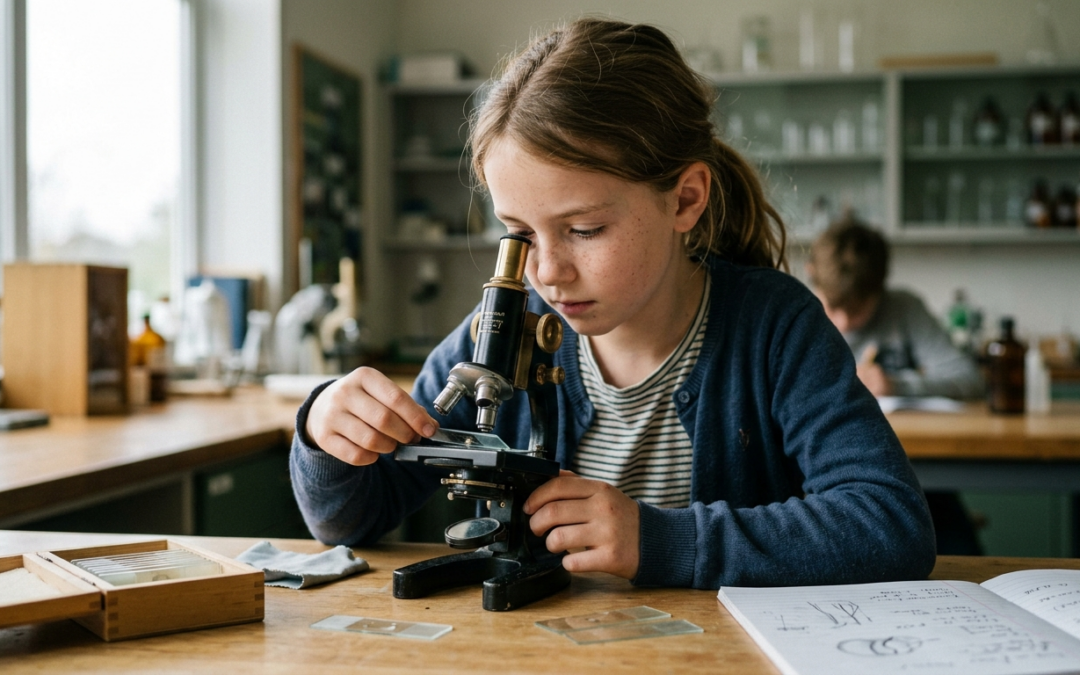
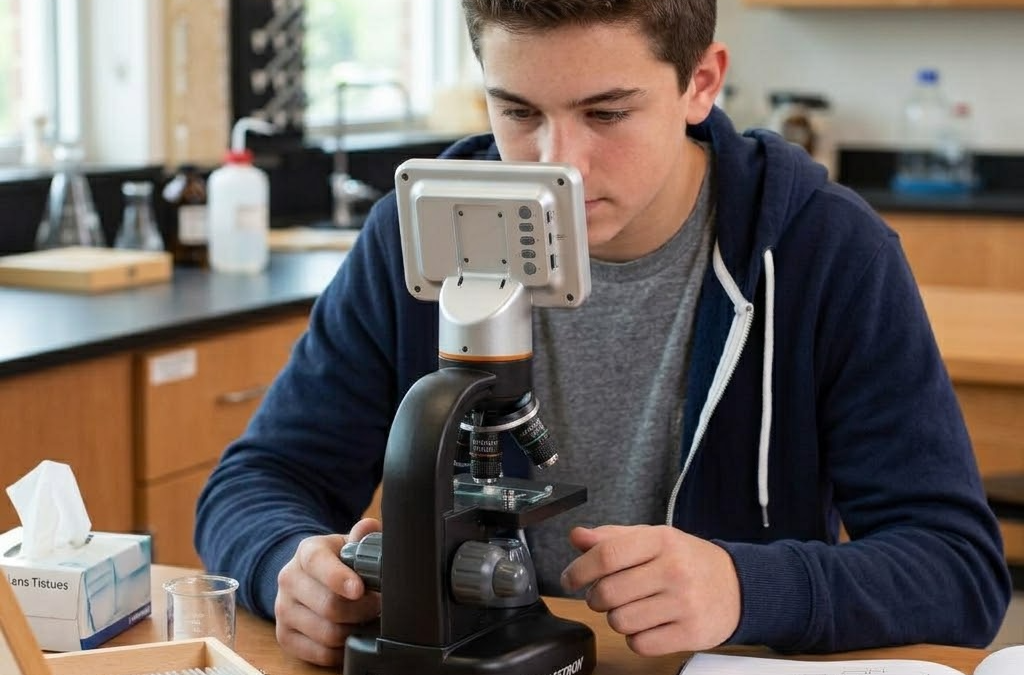
The best microscope for kids should be comfortable to hold and simple to operate. Optical microscopes provide a traditional hands-on experience, while digital models make it easy to display magnified images on a screen.
Magnification matters, but higher magnification is not always the best choice for beginners. Clear optics, good lighting, and easy focusing also make a big difference.
Our selection includes lightweight microscopes designed for young scientists. Many models feature LED lighting and straightforward controls that make early microscopy activities easier to manage.
At Home Science Tools, we offer microscopes, prepared slides, and microscope supplies for hands-on science at home and in educational settings. Explore our collection and find the tools needed to make the microscopic world part of the next scientific discovery.