A microscope for kids can make an ordinary leaf, insect, or drop of water feel completely new. Under the lens, tiny details come into view, and familiar objects become science specimens. For kids, that first look can turn curiosity into a hands-on science activity.
At Home Science Tools, our microscope collection includes models made for young scientists at different skill levels. Some are small enough to carry around the house. Others offer higher magnification for slides and biological specimens. The important difference is the quality of the viewing experience and how well the microscope supports regular use.
Real Microscopes and Toy Microscopes: What’s the Difference?
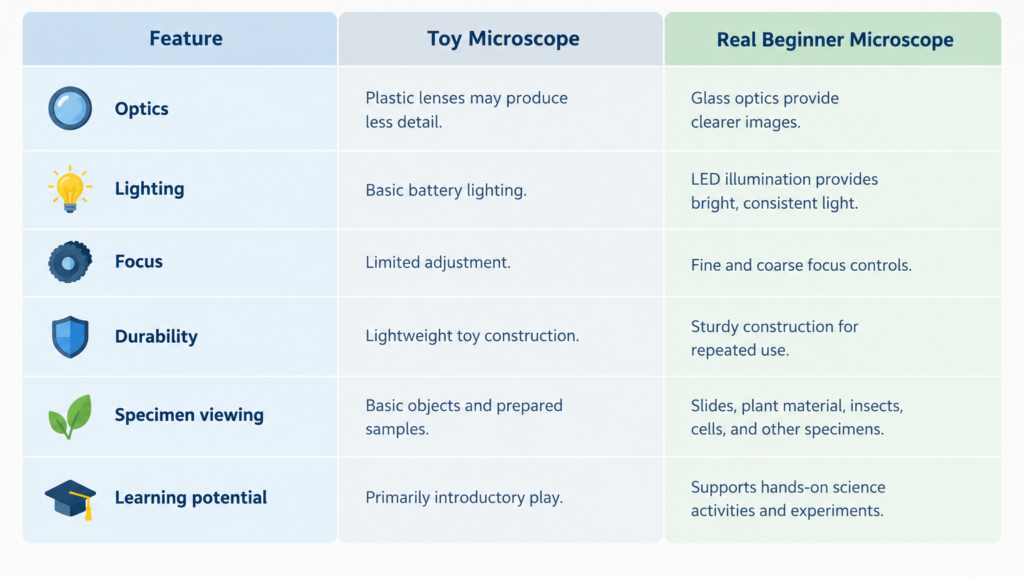
Toy microscopes are designed primarily for simple exploration. Many use plastic lenses, basic battery lights, and lightweight parts. They may be fun for a first introduction, but the image quality can make observations difficult.
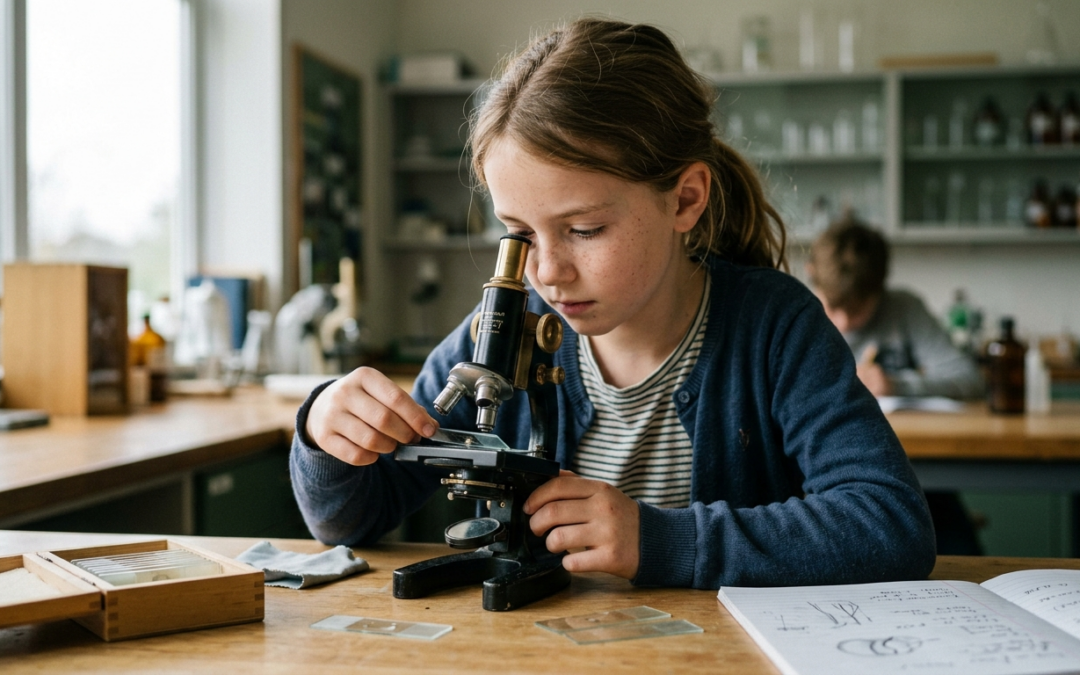
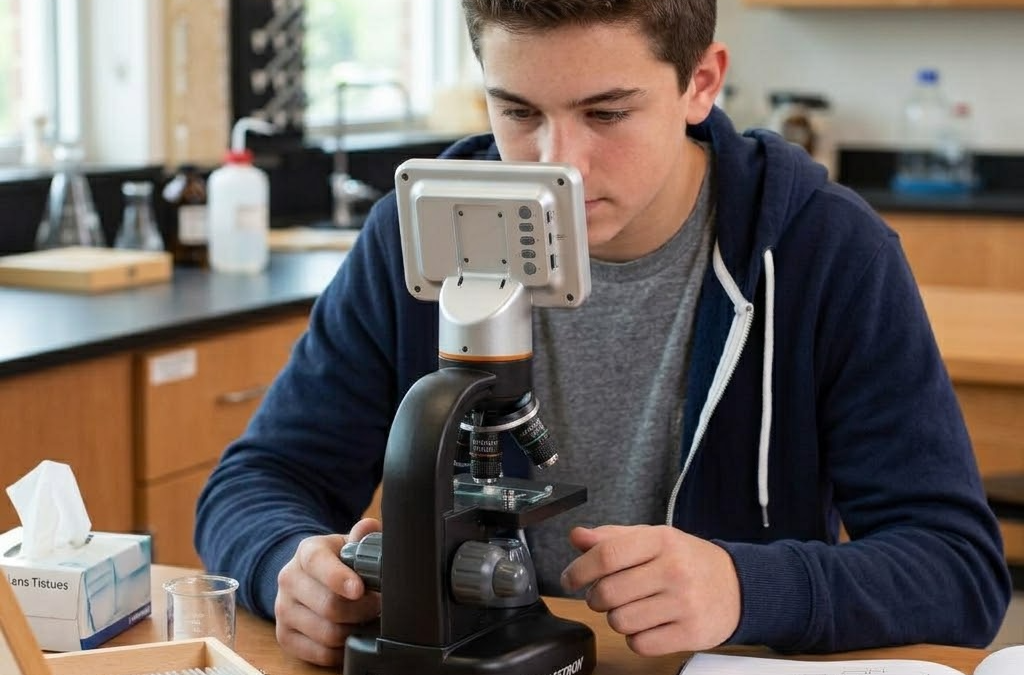
A beginner microscope uses optical components and controls designed for actual specimen viewing. Glass optics, adjustable focus, stable construction, and LED illumination make it easier to see what is on a slide.
The difference becomes easy to notice when a child starts working with real slides. A clear image makes it easier to adjust the focus and spot small structures. A stable microscope also stays in place while you adjust the slide or focus knob.
Glass Optics Make Small Details Easier to See
The quality of the lenses affects what appears through the eyepiece. Glass optics are commonly used in educational microscopes because they deliver a clearer view of specimens.
Plastic lenses are useful for simple toy designs, but they may produce softer images. That can make small details harder to distinguish.
A prepared slide showing plant cells, for example, requires enough clarity to see the structures within the sample. The same applies to insect parts, fibers, and other specimens.
At Home Science Tools, our selection includes beginner microscopes with optical systems suited to hands-on science. Clear viewing gives young learners a better chance to see the details that make each specimen interesting.
LED Lighting Keeps the View Bright and Clear
Good lighting matters just as much as good optics. Even a well-made slide becomes difficult to examine when the specimen is poorly illuminated.
Many beginner microscopes use LED lights because they provide bright, steady illumination. LEDs also produce little heat, making them practical for longer science sessions.
Cordless models with LED lighting bring another benefit: portability. A compact microscope can move from a desk to another part of the house without requiring a nearby outlet.
A Sturdy Microscope Stands Up to Regular Use
Kids learn through hands-on practice. That means a microscope needs to handle frequent adjustments, slide changes, and movement from one activity to the next.
A sturdy frame keeps the microscope steady while you adjust the focus. Durable parts also make the instrument suitable for repeated science projects.
At Home Science Tools, many microscopes in our collection were created for young learners. Lightweight construction makes them easier to handle, while practical controls suit smaller hands. Storage cases and accessories also make it easier to keep everything together between activities.
What Can Kids See Under a Real Microscope?
A quality microscope opens up many possibilities once it becomes part of a science routine. Prepared slides offer an easy place to begin. Blank slides let you turn specimens collected at home into an activity. Here are some examples:
- Plant cells and plant tissue
- Insect wings and other body parts
- Pond water and microorganisms
- Fibers from clothing and household materials
- Crystals and mineral samples
- Prepared biological specimens
- Leaves, stems, and other plant structures
Prepared slide sets are especially useful for getting started. They provide ready-to-view specimens without requiring complicated preparation. Later, tools such as blank slides, cover slips, droppers, tweezers, and petri dishes open up more activities.
Finding the Right Microscope for Young Scientists
A pocket microscope suits quick observations and easy storage. Compound microscopes provide higher magnification for slides and biological specimens. Stereo microscopes give a three-dimensional view of larger objects.
Magnification deserves some attention, too. A higher number does not automatically mean a better microscope. Clear optics, good lighting, stable construction, and accurate focusing all affect the final image.
For a beginner, a clear and steady view is usually more useful than the highest possible magnification.
Explore Microscopes for Kids at Home Science Tools
A quality microscope for kids gives young scientists a practical way to explore biology and the world around them. Clear optics, dependable LED lighting, adjustable focus, and sturdy construction make each observation easier.
At Home Science Tools, we offer beginner microscopes, along with prepared slides, blank slides, specimen tools, and science activity supplies. Explore our collection to find the right microscope for the next experiment, science project, or afternoon of discovery.