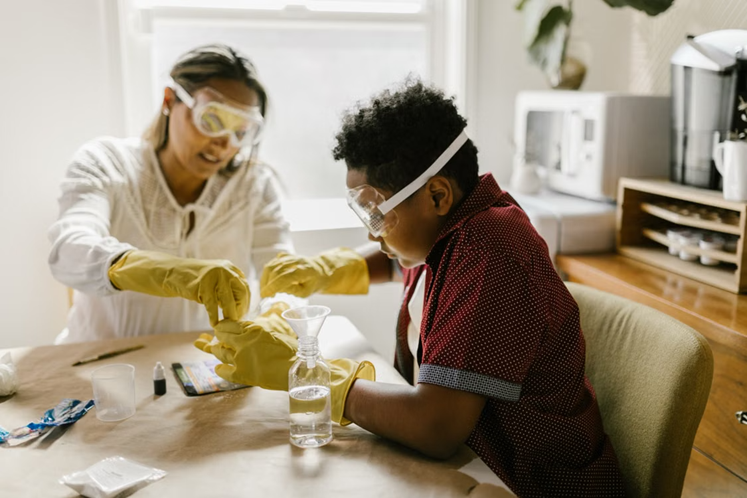
High school chemistry introduces students to laboratory techniques, scientific reasoning, and experimental investigation. Practical activities transform theoretical concepts into memorable learning experiences, allowing students to observe reactions, measure changes, and analyze evidence. A successful home laboratory depends on careful preparation, clear procedures, and reliable materials that promote safe experimentation from the first lesson to the final unit.
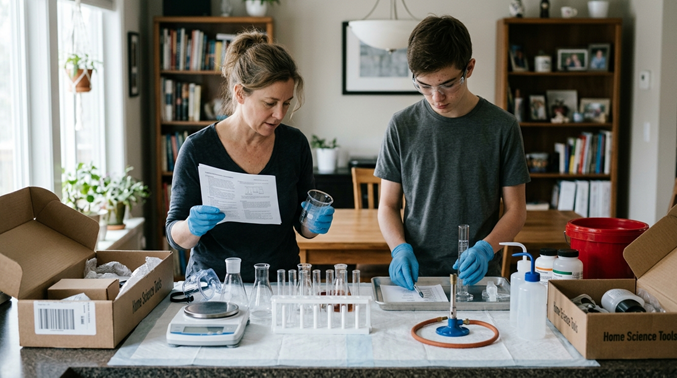
At Home Science Tools, we believe that a well-organized learning environment helps families conduct chemistry labs with confidence. Our homeschool chemistry curriculum and lab kits provide structured lessons, detailed teacher guides, and carefully selected materials that support safe scientific exploration in a homeschool setting.
Creating a Dedicated Laboratory Space
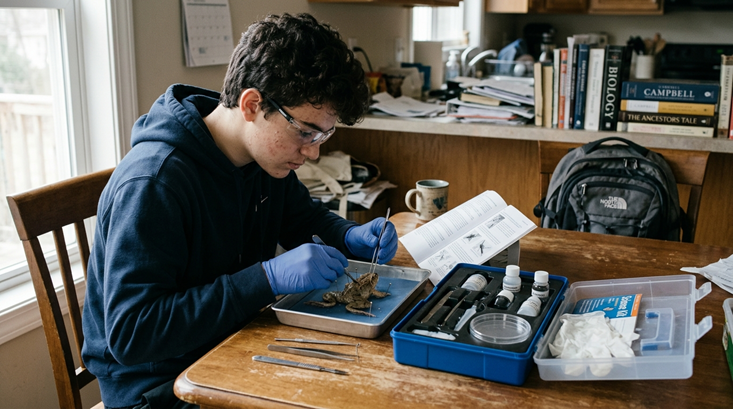
A home chemistry lab does not require a specialized classroom. A clean, organized area with adequate lighting and ventilation creates an excellent environment for scientific work. Selecting a consistent workspace also encourages good laboratory habits and reduces distractions during experiments.
The laboratory area should include a sturdy work surface with enough room for equipment, notebooks, and experiment materials. Personal items, electronics, and unnecessary supplies should remain outside the workspace to prevent contamination and accidental spills.
Simple organization also helps students locate materials quickly and return equipment to proper storage after every activity.
Establishing Laboratory Safety Rules
Safety expectations should become part of every chemistry lesson. Reviewing laboratory procedures before each experiment creates routines that support careful scientific work.
Basic laboratory rules include:
- Read all experiment instructions before beginning.
- Wear safety goggles during laboratory activities.
- Tie back long hair.
- Avoid eating or drinking in the laboratory area.
- Keep experiment supplies organized.
- Wash hands after completing each lab.
- Dispose of materials according to lesson instructions.
Repeating these practices helps students develop habits commonly used in academic and professional laboratories.
Using Teacher Guides Effectively
Strong laboratory instruction begins with preparation. Reviewing lesson plans before gathering materials allows parents and teachers to anticipate each step of the investigation.
At Home Science Tools, every Science Unlocked curriculum includes detailed teacher guides featuring:
- Lesson planning timelines
- Background scientific explanations
- Step-by-step experiment procedures
- Answers to discussion questions
- Guidance for supervising laboratory work
These resources reduce uncertainty during experiments while helping instructors explain complex chemistry concepts with greater confidence.
Choosing Materials Designed for Education
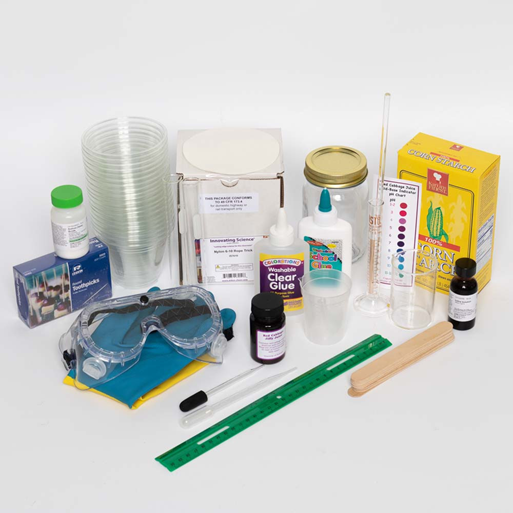
Educational chemistry kits simplify laboratory preparation by providing carefully selected materials matched to individual lessons.
Using supplies intended for science education improves consistency across experiments and minimizes the need to substitute household products, which can yield unpredictable results.
Each laboratory activity in the High School Chemistry Full-Year Curriculum includes the equipment and chemicals necessary for meaningful investigations, allowing students to focus on scientific observation instead of gathering supplies from multiple sources.
This organized approach also reduces preparation time before each lesson.
Learning Safe Chemical Handling
Responsible chemical handling forms the foundation of every successful laboratory experience.
Students should learn to:
- Measure chemicals carefully.
- Use only the required quantities.
- Keep containers closed when not in use.
- Read labels before handling materials.
- Return supplies to designated storage locations.
- Report spills immediately.
These habits reinforce scientific responsibility while helping students understand the importance of precision during laboratory work.
Understanding Laboratory Equipment
Chemistry introduces students to equipment that supports accurate measurement and observation.
Before beginning complex experiments, students benefit from becoming familiar with common laboratory tools such as:
- Graduated cylinders
- Beakers
- Test tubes
- Pipettes
- Thermometers
- Balances
- Safety goggles
Learning the purpose of each tool builds confidence and encourages careful laboratory technique during later investigations.
Building Skills Through Structured Experiments
The High School Chemistry Full-Year Curriculum from Home Science Tools includes nine Science Unlocked Launch-level kits organized into three instructional units. Each investigation builds laboratory skills while reinforcing scientific concepts through direct experimentation.
Chemical Reactions
The opening unit introduces students to chemical change using engaging investigations.
- Rate of Reaction explores how different variables influence reaction speed through measurable experiments.
- Naturally Nuclear compares chemical and nuclear energy using safe demonstrations that introduce energy transformations.
- Reaction Rainbow investigates acids, bases, indicators, and pH while encouraging careful observation of color changes during controlled reactions.
These activities strengthen laboratory technique while reinforcing scientific reasoning.
Exploring Matter Through Observation
The second instructional unit focuses on particle behavior and physical properties.
Students complete investigations, including:
- Super Cool examines crystalline structures and phase changes.
- The Material World connects chemical structure with physical properties.
- Salty States studies molecular interactions during phase transitions.
Each experiment encourages students to collect evidence, compare results, and explain observations using scientific vocabulary.
Careful measurements and organized recordkeeping are valuable skills that carry over to future laboratory investigations.
Developing Advanced Chemistry Skills
The final instructional unit expands scientific understanding through atomic and molecular chemistry.
Students investigate:
- Atomic structure in Good to Glow
- Mole calculations in The Mighty Mole
- Molecular geometry in Atoms and Angles
These laboratory experiences introduce increasingly sophisticated chemistry concepts while maintaining structured guidance and safe experimental procedures.
As students gain experience, confidence naturally increases alongside scientific accuracy.
Keeping Accurate Laboratory Records
A laboratory notebook serves as an essential scientific tool. Recording observations during every experiment encourages careful thinking and supports later analysis.
Useful notebook sections include:
- Experiment objective
- Materials used
- Procedure summary
- Data tables
- Observations
- Conclusions
- Reflection questions
Detailed records also make it easier to compare results between experiments and identify patterns across multiple chemistry topics.
Managing Chemicals After Each Lesson
Proper cleanup protects laboratory equipment and prepares the workspace for future investigations.
Students should develop routines that include:
- Returning chemicals to storage.
- Cleaning glassware immediately.
- Wiping laboratory surfaces.
- Inspecting equipment for damage.
- Organizing remaining supplies.
Completing these tasks after every lesson reinforces responsibility and helps maintain a safe learning environment.
Encouraging Scientific Thinking
Laboratory safety extends beyond protective equipment. Scientific thinking also includes planning carefully, following procedures, evaluating evidence, and asking thoughtful questions.
Each experiment provides opportunities to develop observational, critical-thinking, and analytical skills. Students gradually become more comfortable interpreting data, recognizing patterns, and connecting laboratory evidence with chemistry principles introduced during lessons.
These experiences prepare learners for advanced science courses while strengthening confidence in experimental investigation.
Supporting Safe Chemistry Learning at Home
Hands-on laboratory experiences create lasting connections between scientific theory and practical investigation. A structured curriculum, organized workspace, and consistent safety routines allow high school students to explore chemistry with confidence while developing valuable laboratory skills.
At Home Science Tools, our High School Chemistry Full-Year Curriculum provides complete lesson materials, laboratory equipment, teacher guides, and engaging Science Unlocked experiments that support safe, organized chemistry education from the first investigation to the final lab. Our goal is to help homeschool families build a strong scientific foundation through meaningful, hands-on learning in a well-prepared home laboratory.