Soil insects are easy to overlook, but just below the surface is a constant flow of activity.
Life Beneath Your Feet
When you look at the ground, you might see dirt, leaves, or small rocks. But just below the surface, there’s a constant flow of activity. Soil and leaf litter are home to a wide range of tiny organisms, including mites, springtails, small beetles, and insect larvae.
Together, these organisms make up soil biodiversity—the variety of life that supports healthy ecosystems.
Why Soil Insects Are Hard to See
Most soil insects are small and stay hidden in dark, protected spaces. Their color and size help them blend into their surroundings, making them difficult to observe with the naked eye. To study them, you need a method that brings them out of hiding.
What Is a Berlese Funnel?
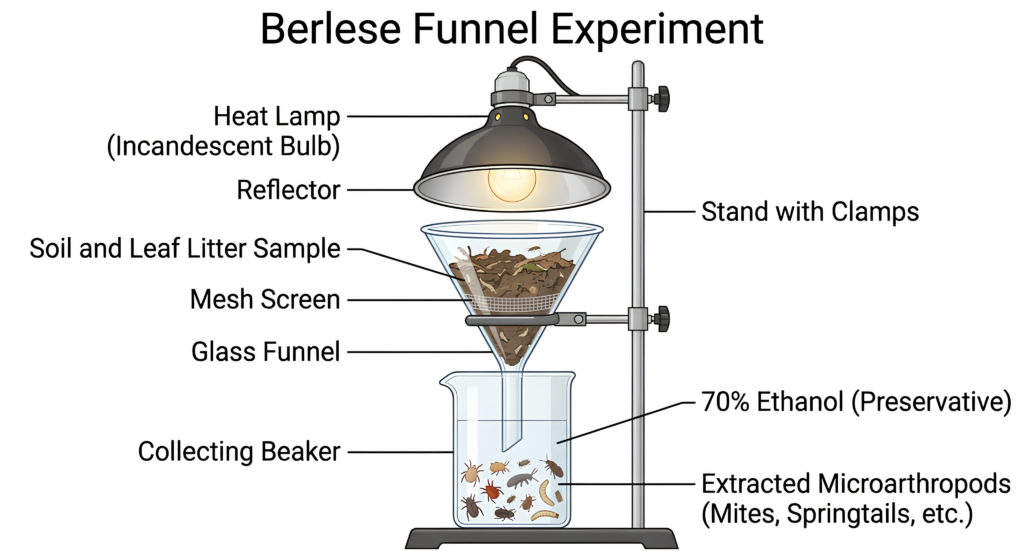
A Berlese funnel is a simple tool used to collect soil insects from leaf litter and soil samples. It uses light and heat to create a drying effect from above.
As the sample dries, insects move downward to escape the heat and light. They pass through the funnel and collect in a container below, where they can be observed more easily.
This method makes it possible to study organisms that are normally out of sight.
Compare Soil Insects in Different Locations
Question: Do different environments contain different soil insects?
You need:
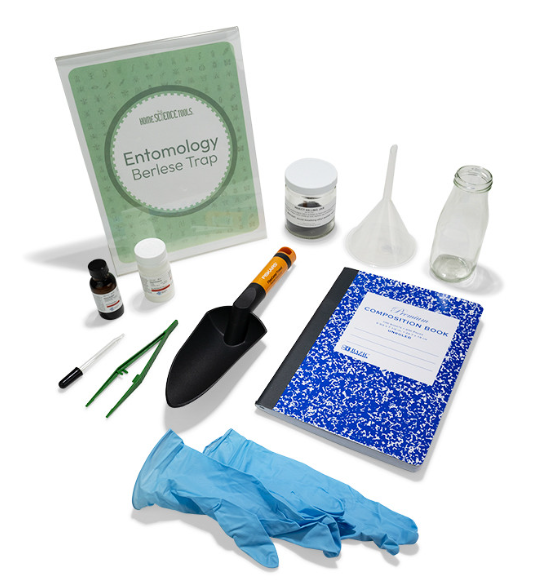
- Berlese funnel setup
- Soil samples from two locations
- Notebook for observations
To do:
- Collect soil from two different areas (for example, under a tree and in open grass)
- Place one sample into the Berlese funnel
- Run the setup for 24–48 hours
- Observe what collects in the container
- Record your findings, then repeat with the second sample
What to Observe
As you examine your samples, look for:
- The number of insects collected
- The types of organisms present
- Differences in size, shape, and movement
You may find that shaded, moist areas support a greater variety of soil insects than dry, exposed locations.
Why Soil Insects Matter
Soil insects play an essential role in maintaining healthy ecosystems. They help break down dead plant material, improve soil structure, and support plant growth by recycling nutrients. Without these organisms, soil would be less productive and less able to support life above ground.
Tips for Using a Berlese Funnel
- Use dry or slightly damp leaf litter for best results
- Avoid overly wet samples, which can slow insect movement
- Keep a consistent light source above the funnel
- Allow enough time (24-48 hours) for insects to move through the sample
Explore What’s Below the Surface
A Berlese funnel gives you a practical way to study soil insects and understand how ecosystems function from the ground up. With the right setup, what once looked like ordinary dirt becomes something you can observe, question, and learn from.
Entomology Berlese Trap Kit