Science activities at home can turn ordinary afternoons into memorable learning experiences. A digital microscope gives children and families a chance to explore details that are impossible to see with the naked eye. From plant cells to fabric fibers, small discoveries often inspire curiosity and encourage deeper interest in biology, chemistry, and earth science.
At Home Science Tools, we enjoy helping families and homeschool educators create meaningful science experiences for children. A digital microscope supports hands-on learning for kids aged 8+, while introducing photography, observation, and scientific recording skills.
Why Digital Microscopy Feels Exciting for Kids
Children naturally enjoy discovering hidden details. A microscope with a built-in camera adds another layer of excitement because images appear directly on a screen. Siblings, classmates, or parents can view the sample together without taking turns at an eyepiece.
Digital models also make focusing easier for beginners. Many children quickly gain confidence when they can enlarge an image, capture a photo, and compare findings with previous observations.
Several features support young learners:
- Live image projection on a monitor
- Video recording for experiments
- Image editing software
- Easy photo sharing for homeschool reports
- Comfortable viewing positions during longer activities
These tools encourage patience and careful observation, both valuable skills in science education.
Educational Benefits for Homeschool Learning
Homeschool families often look for activities that connect multiple subjects in one lesson. Microscopy supports science, photography, technology, and writing assignments. A digital microscope can help children practice:
Scientific Observation
Students learn how to describe textures, shapes, and patterns accurately. Recording observations builds stronger analytical thinking.
Documentation Skills
Capturing still images and videos teaches children how scientists organize information. Many microscope programs also allow labels, measurements, and annotations.
Critical Thinking
Children begin asking deeper questions during investigations. Why does one leaf look different from another? Why do salt crystals form geometric shapes?
Technology Familiarity
Digital imaging software introduces students to image editing and file management. These skills become useful for future academic work.
Independent Learning
Many kids enjoy setting up their own slides and choosing samples. Independent exploration encourages confidence and creativity.
For children ages 8 and older, microscopy activities often become an engaging part of weekly homeschool science lessons.
Easy Samples to Explore at Home
Many interesting specimens already exist inside a typical home or backyard. Children can gather samples safely with adult supervision.
Popular choices include:
- Flower petals
- Grass blades
- Table salt
- Sugar crystals
- Feathers
- Fabric threads
- Sand grains
- Coins
- Insect wings
- Pencil graphite
- Human hair
- Tree bark
Children often enjoy comparing similar materials. A strand of pet hair beside human hair can reveal surprising differences in thickness and texture.
Fun Experiment: Crystal Growth Observation
Crystal projects work especially well with digital imaging because children can document changes over time.
Materials
- Table salt
- Warm water
- Clear container
- Spoon
- Microscope slides
Activity Steps
- Dissolve salt in warm water.
- Place a small drop onto a microscope slide.
- Allow the water to evaporate.
- Observe crystal shapes under magnification.
- Take photos every hour if possible.
Children can compare crystal structures formed from salt and sugar. This experiment introduces evaporation and crystal formation concepts visually.
Backyard Nature Investigation
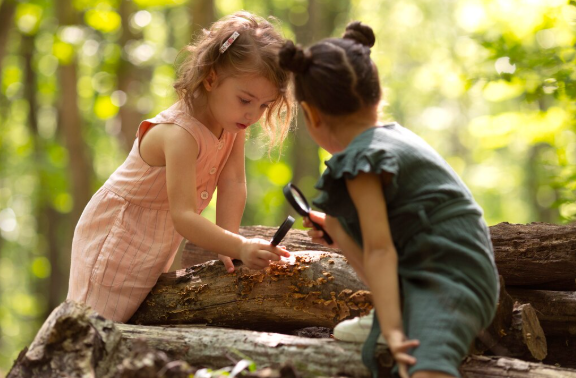
Outdoor science activities often produce excellent microscope samples. Leaves, soil, and flower pollen reveal intricate structures that children rarely notice otherwise.
Nature Hunt Ideas
- Compare leaves from different trees
- Examine pollen from flowers
- Observe moss textures
- Analyze grains of soil
- Inspect tiny insect parts
Many families turn these observations into nature journals with printed microscope images and written notes.
Digital Photography Through the Microscope
Microphotography introduces children to scientific imaging in an approachable format. Digital microscopes allow still image capture and video recording without complicated camera equipment.
Our team recommends image collection projects because they keep children engaged over longer periods.
Children can create:
- Science scrapbooks
- Digital slide galleries
- Homeschool lab reports
- Time-lapse growth projects
- Printed comparison charts
Image-based learning also helps visual learners retain scientific information more effectively.
Comparing Digital Microscopes and Microscope Cameras
Families sometimes wonder whether a full digital microscope or a microscope camera attachment makes more sense for home learning.
A digital microscope includes a built-in camera and imaging system. These models work well for beginners and homeschool environments because the setup remains straightforward.
Microscope cameras attach to traditional microscopes through the eyepiece. This option allows families to upgrade equipment they already own while adding image capture capabilities.
Several camera models available through Home Science Tools include editing software, calibration tools, and USB connections for computer display.
High-resolution cameras can produce detailed still images and smooth video recording, making classroom demonstrations and science projects easier to manage.
Creative Microscope Challenges for Kids
Children often stay interested longer when activities feel playful and interactive.
Mystery Sample Game
Place unknown objects under the microscope and ask children to identify them using clues from texture and structure.
Texture Comparison
Compare paper towels, cotton shirts, and synthetic fabrics under magnification.
Mini Art Exploration
Study printed magazine images to see how tiny colored dots create photographs.
Water Drop Investigation
Observe pond water or rainwater samples with adult supervision. Tiny organisms may become visible in surprising detail.
These activities help children connect scientific tools with everyday life.
Supporting Long-Term Interest in Science
Hands-on science experiences often shape future academic interests. Children who regularly experiment and document discoveries may become more comfortable with biology, chemistry, and laboratory work later in school.
Microscopy also encourages curiosity-driven learning. A child investigating a feather may eventually ask questions about birds, ecosystems, or flight patterns. Those connections strengthen long-term engagement with science education.
Digital tools can make learning feel approachable for reluctant students as well. Viewing enlarged images on a computer screen feels familiar and interactive for many children.
Choosing the Right Equipment for Home Use
Several factors matter when selecting microscopy tools for families or homeschool settings:
- Image quality
- Ease of focusing
- Software compatibility
- Magnification range
- Portability
- Durability for younger students
Entry-level digital microscopes often work well for children ages 8 and older, especially for introductory biology and nature studies.
Families interested in advanced projects may prefer stereo zoom models or higher-resolution microscope cameras for detailed imaging.
At Home Science Tools, our digital microscopes and microscope cameras are designed for beginners, homeschool educators, and science enthusiasts. Educational tools that encourage curiosity can help transform science lessons into memorable discoveries that children continue discussing long after the activity ends.