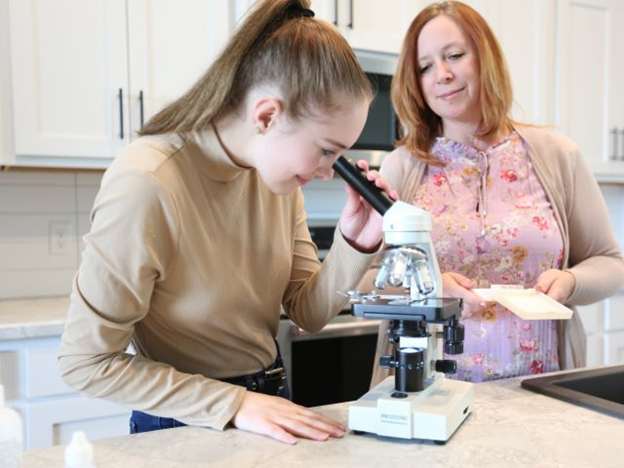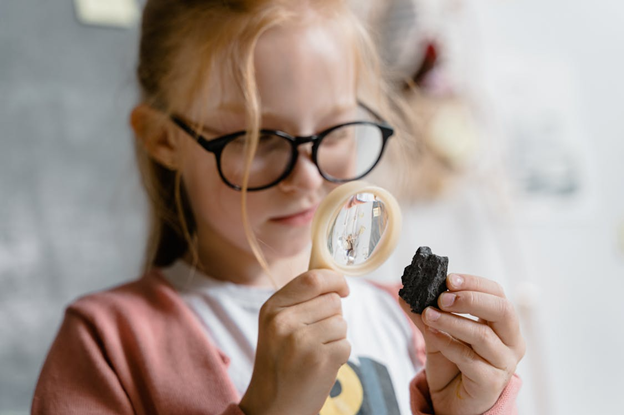
The natural world is full of wonders that remain invisible to the naked eye. A plain, gray pebble found in a garden might appear to be nothing more than a mundane object destined to be ignored. However, under the lens of a microscope, that same pebble transforms into a jagged mountain range of glittering crystals and complex mineral structures. This transition from the ordinary to the extraordinary is the fundamental power of scientific instrumentation. It connects the visible world and a hidden, tiny universe, turning a simple table into a gateway for exploration.
Microscopes for kids help turn education from passive consumption to active discovery. For a young mind, this is not merely about introducing young minds to sciences such as biology or chemistry. It is an invitation to realize that adventure exists in every corner of the environment. When the right tools are provided, the world expands, revealing layers of complexity that foster a lifelong appreciation for the intricacies of nature.
The Role of the Microscope in Early Development
The microscope offers a tactile, hands-on engagement with reality for the kids. While tablets and applications can simulate environments, they cannot replicate the authentic “superpower” of physical discovery. Peering through an optical lens to see a living cell or a crystalline structure nurtures a profound sense of wonder that digital media often fails to provide.
The Shift in Perspective
Every adjustment of a focus knob serves as an exercise in curiosity. The “wow factor” associated with microscopy is a powerful educational tool. Consider the following common objects and how they are transformed:
- Human Hair: To the eye, it appears as a thin thread; under a microscope, it appears as a thick, translucent cable with scales or smooth textures.
- Denim Fabric: What appears to be a solid blue surface reveals itself as a complex, interlaced web of individual fibers and ropes.
- Salt vs. Sugar: Macroscopic grains look identical, but a microscope for kids reveals that salt consists of perfect cubes while sugar crystals are jagged and irregular.
This shift in perspective is educationally profound. It demonstrates that the world is multi-layered and that the initial appearance of an object rarely tells the whole story.
Developing Patience and Precision
Beyond the visual stimulation, operating a microscope requires the development of fine motor skills and patience. Bringing a specimen into crisp, clear focus is a meditative process. It teaches the observer that the most significant secrets of the natural world are revealed to those who take the time to look closely and adjust their approach with precision.
Building a Scientist’s Mindset Through Observation
When an observer looks at a leaf and sees the intricate, lace-like structures of its veins, the brain naturally shifts from passive observation to active investigation. This is the precise moment where scientific thinking takes root.
The Power of the Hypothesis
The microscope allows for the practical application of the scientific method. Instead of receiving direct answers, the observer can engage in a process of prediction and verification. By asking questions such as “What will be visible inside this onion skin?” or “Why do certain fibers look different than others?”, a child begins to practice the habits of real-world scientists.
The process follows a logical progression:
- Prediction: Anticipating what the microscopic structure might look like.
- Observation: Using the microscope to examine the specimen.
- Analysis: Comparing the initial thought to the visual evidence.
- Conclusion: Understanding the relationship between form and function.
Nurturing this innate curiosity through small, controlled investigations does more than introduce the micro-world; it cultivates problem-solving and critical thinking skills applicable across all areas of life.
Choosing the Right Kids Microscope
To ensure a successful experience, it is essential to select an instrument that matches the developmental stage of the user. Not all microscopes are created equal, and the “best” model depends heavily on age and intent.
Types of Microscopes
There are two primary categories of microscopes that are suitable for young explorers:
- Stereo Microscopes (Dissecting Microscopes): These use two eyepieces to provide a 3D view of solid objects such as rocks, insects, or coins. These are ideal for younger children (ages 3–7) because they require no slide preparation.
- Compound Microscopes: These are used to examine transparent specimens on slides, such as blood cells or plant sections. These offer higher magnification and are better suited for older children who have developed the dexterity to handle glass or plastic slides.
Key Features to Consider
When researching a microscope for kids, certain technical specifications should be prioritized to ensure the device is both functional and durable:
- Optics: Glass lenses are vastly superior to plastic ones, providing much clearer images and a more rewarding experience.
- Light Source: Modern LED illumination is preferred as it stays cool, preventing the specimen from drying out or burning.
- Durability: A metal frame or high-quality polymer construction is necessary to withstand the rigors of enthusiastic exploration.
The Long-Term Impact of Microscopic Exploration
The introduction of a microscope is often the beginning of a lifelong adventure for kids. When it is understood that an entire world is bustling beneath the surface of a drop of water or a single blade of grass, the concept of discovery becomes a constant possibility. This realization encourages a proactive approach to learning.
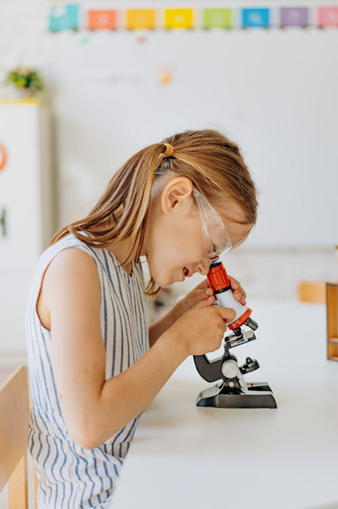
This experience is more than a simple science lesson; it is a fundamental shift in how one perceives the environment. The most minor explorations conducted at a kitchen table can spark the greatest aspirations in fields like medicine, engineering, or environmental science. By providing a lens into the invisible, a foundation is laid for a future defined by curiosity and analytical thought.
Accessing Quality Instruments
Here at Home Science Tools, we offer a wide selection of microscopes tailored to different age groups. This includes models designed for children as young as age 3, ensuring that even the youngest individuals can begin a scientific journey safely and with high-quality equipment.
A microscope is not just a piece of laboratory equipment. It is a vital educational investment. It transforms the mundane into the extraordinary and turns the home into a laboratory of endless potential. Independent of the educational setting, whether through homeschooling or a traditional classroom, a high-quality microscope for kids serves as a vital instrument for challenging existing knowledge and awakening the innate scientific curiosity within a developing mind.