Discover evaluation criteria for science programs that build genuine understanding through hands-on investigation and deliver measurable instructional ROI.
In a school district outside Sacramento, I once watched a fourth-grade class complete what looked like a strong science lesson. Students worked through an activity on the water cycle, carefully labeling diagrams and defining evaporation, condensation, and precipitation. Everyone was on task. From an administrative standpoint, it appeared successful.
Then I asked a simple question: “What would happen to the water cycle if we did not have any mountains?” The room went quiet. Students stared back at their papers, searching for an answer that was not there. They had completed the task, but they could not apply their knowledge to a new situation. While this is one example, similar patterns appear across many classrooms and grade levels.
This gap between completing science activities and building scientific understanding is one of the most persistent challenges in K–12 education today.
The Worksheet Problem
Challenges arise when worksheets become the primary evidence of learning rather than one of several tools supporting sense-making. When leaders talk about why science so often fails to build real understanding, they are rarely blaming paper or teachers. The problem is what happens when science becomes something students finish instead of something they figure out.
In many classrooms, worksheets and scripted activities serve as primary evidence of learning. Students follow directions, arrive at correct answers, and demonstrate what appears to be mastery. When students encounter a new situation, one that does not look exactly like the example, they have not developed the understanding needed to make sense of it.
This disconnect can show up in many forms. Sometimes it is literally worksheets—fill-in-the-blank exercises where students copy definitions. You could find this in labs where students follow step-by-step directions to reach predetermined outcomes. At times it is STEM activities where students build impressive models but cannot explain the scientific principles that make them work.
The reason worksheets persist is often practical, not philosophical. When science materials are incomplete, unreliable, or require extensive prep, worksheets become the default. Teachers are not choosing low-impact instructions but rather making do with what they have.
Worksheets fail when they prioritize memorization over sense-making. Without opportunities to explain, predict, and troubleshoot, students never build understanding that transfers. That gap is exactly what investigation-based learning is designed to address.
“We measure engagement in terms of how many questions do they ask? And a question is as simple as, oh, I wonder how this can be applied to X, Y, and Z. Those kinds of questions can only happen if the students are really wondering about the science behind it.” — Felicia Chen (K-12 IB Science Teacher)
Investigation-based learning produces different outcomes. Students observe carefully, ask testable questions, analyze evidence, and revise ideas based on results. For many administrators, this is the evaluation lens: look for programs that create space for student reasoning and evidence, not just task completion.
Investigation Over Information
Nearly every science program claims to be hands-on, but true hands-on investigation is not about touching materials. It is about positioning students as investigators who ask questions, design tests, collect data, and revise their thinking when results surprise them. That cycle of testing and discovering is what builds real scientific literacy.
This looks different at every grade level, but the core components stay consistent.
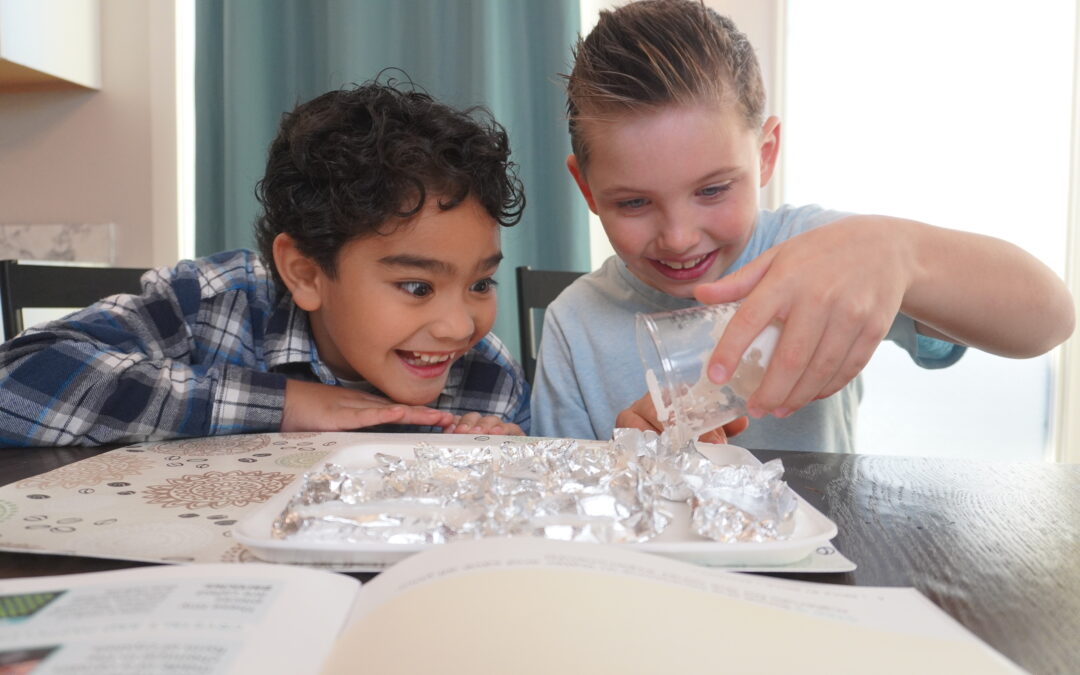
Elementary: Students work with observable phenomena. They might test which materials keep ice cold the longest or track how shadows change during the day. The experiments are simple, but the thinking is not. Students predict, observe, compare results, and explain patterns they notice.
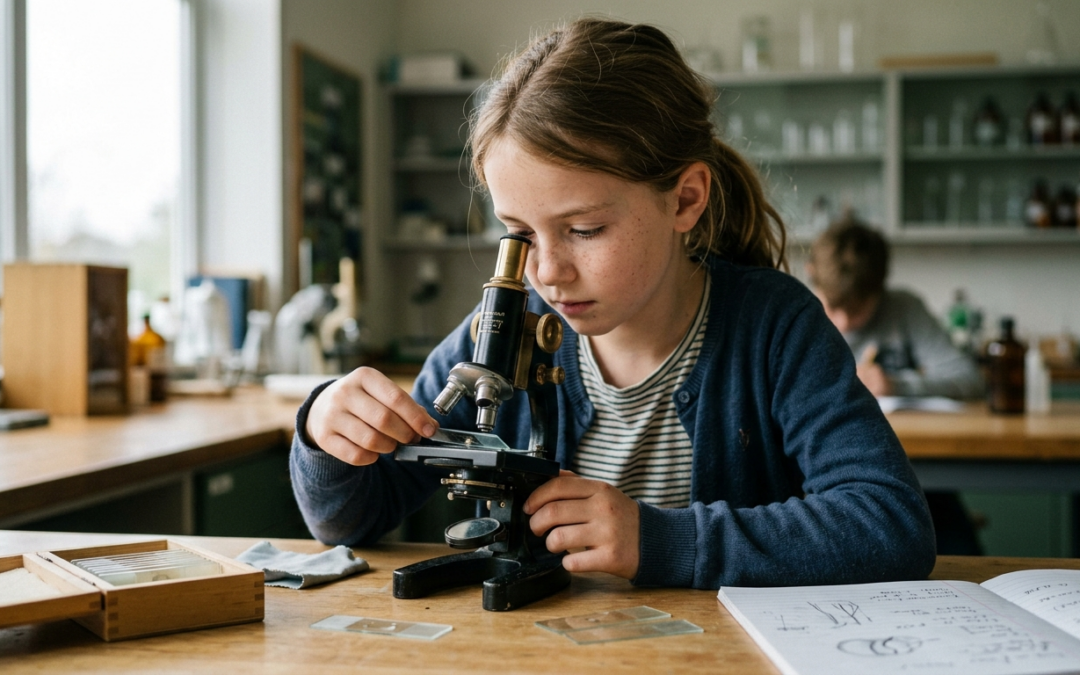
Middle School: Investigations become more complex and data driven. Students explore variables that affect plant growth or motion, collect measurements over time, and analyze trends. They learn to identify controls, recognize limits in their methods, and use evidence to defend their claims.
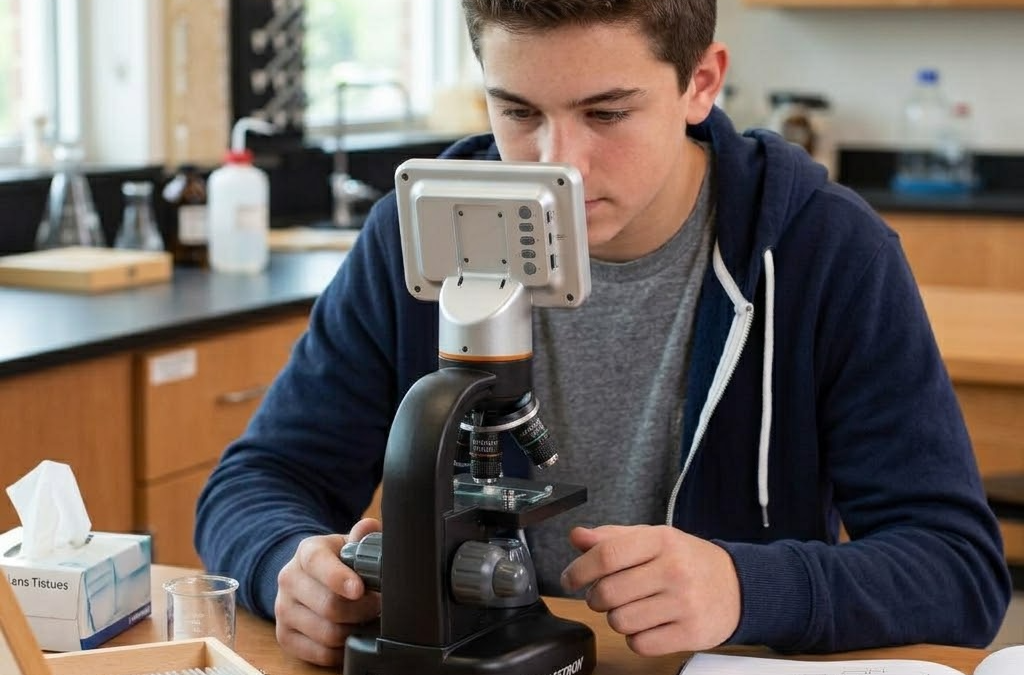
High School: Inquiry becomes sophisticated. Students design multi-variable investigations, use statistical tools to analyze data, and connect findings to broader scientific systems. They are not just learning content; they are learning how scientists reason.
Contrast this with cookbook labs and scripted STEM builds. When students follow directions to reach a known outcome, they may be busy, but they are not thinking scientifically. When conditions change, progress stops. In investigation-based learning, students adapt because they understand what to test next.
This approach aligns naturally with NGSS three-dimensional learning. Students use Science and Engineering Practices to explore Disciplinary Core Ideas through Crosscutting Concepts as they explain real phenomena.
These investigations work across classrooms, after-school programs, and summer settings because the structure is the same: clear guidance, reliable materials, and open-ended phenomena that invite students to test, discover, and explain.
Accessibility and Scalability
There is a reality every administrator knows, but few program brochures acknowledge: not every educator facilitating science instruction has a strong science background. Elementary teachers are often asked to serve as generalists, after-school staff may come from youth development or recreation backgrounds, and even in secondary settings, staffing shortages can result in educators teaching outside their primary areas of expertise.
That is why accessibility matters. In a robust science program, accessibility means three things working together: clear educator guidance, high-quality materials, and built-in instructional support. Programs that assume expertise limit equity. Programs that build it expand opportunity.
“They need resources that lead them through the learning experience, not just activities. When help is built-in, they can facilitate while kids are learning. For example, the Science Unlocked guide anticipates questions, provides science background in accessible terms, and gives confidence to educators who might otherwise skip science entirely.”
Accessible programs also rely on observable phenomena. When students can see cause and effect directly, educators do not need advanced science degrees to facilitate meaningful learning. Ice melts. Bulbs light. Objects fall. Science becomes visible, which allows teachers to focus on guiding thinking rather than explaining abstract theory.
Structure is what makes this possible. Turnkey does not mean scripted. It means the program provides enough support so educators can succeed at every level. Clear setup instructions, safety guidance, and pacing help teachers manage time. Reliable, well-designed materials eliminate troubleshooting and last-minute substitutions.
“One of my strongest teachers spent her entire planning period driving to three stores for materials for a density lab… When every material is included, organized, and labeled, that scavenger hunt disappears.”
Scalability depends on these same elements. A robust program works for novice and experienced educators alike. It delivers consistent quality across multiple classrooms. It is manageable to set up, safe to run, and adaptable to different schedules, class sizes, and learning settings, whether during the school day, in after-school programs, or in summer learning.
When accessibility and scalability are designed, science instruction becomes dependable rather than fragile.
The Components of Robust Programs
When administrators evaluate science programs, everything can look good on paper. The real work is distinguishing substance from surface. The five components below provide concrete criteria for deciding whether a program will actually deliver instructional impact.
Component 1: High-Quality Materials
Strong programs include materials that are durable enough to withstand repeated use and reliable enough to work consistently. They are designed for the age of the students and engaging enough to invite curiosity rather than compliance. Most importantly, the materials must enable observation. Students should be able to see cause and effect directly, not just manipulate plastic parts or watch demonstrations.
When everything needed for the investigation is provided and organized logically, teachers spend their time facilitating learning instead of scavenging for supplies or improvising substitutions. This eliminates one of the most significant barriers to consistent implementation.
Component 2: Clear Educator Guidance
Robust programs support teachers with more than a list of steps. Learning objectives are stated clearly, so educators know what understanding students should build. Step-by-step implementation guidance makes setup, timing, and safety manageable. Background science content explains why the investigation works. Assessment suggestions help teachers look for evidence of thinking, not just correct answers. Differentiation options allow educators to support struggling learners while extending to students who are ready to go further.
Component 3: Student-Led Structure
In high-quality programs, students are positioned as investigators within a carefully designed learning experience. They ask questions, make predictions, and test ideas about a shared phenomenon. The curriculum provides the structure, what is explored, what data is collected, and what ideas are being developed, while students generate the evidence that leads them to the big scientific concept. Multiple explanations are possible at first, but claims must be supported by data, allowing students to refine their thinking toward a coherent understanding. Discovery is real, but it is purposeful and aligned with what students are meant to learn.
Component 4: Meaningful Learning Progression
Concepts and skills should be built over time. Early observations lead to later data analysis. Simple models lead to more complex systems of thinking. Each investigation connects to previous learning and prepares students for what comes next. When science instruction links to real-world applications students recognize, understanding transfers beyond a single lesson to new contexts.
Component 5: NGSS Alignment
True NGSS alignment is essential because it ensures students are learning how science works, not just what scientists know. Strong programs integrate Science and Engineering Practices, Disciplinary Core Ideas, and Crosscutting Concepts through phenomena-based investigations. Performance expectations are grade appropriate, and assessments measure three-dimensional learning, not rote recall. When these elements work together, students build scientific literacy that carries into other subjects and future learning.
From Program Quality to Classroom Impact
In many cases, for decision-makers, quality is not philosophical. It is financial. When science programs are designed around strong materials, clear guidance, and student-led investigation, they strengthen Tier 1 instruction. That foundation creates a powerful chain: robust program → confident educator → engaged students → measurable outcomes.
The return on instruction shows up in reduced need for higher-cost support. Tier 2 small-group interventions require additional staff time, specialized materials, and extended minutes. Tier 3 intensive interventions require even more resources. When primary science instruction builds real understanding the first time, fewer students fall behind in reasoning, vocabulary, and background knowledge. Those savings matter, not just in science, but across reading, math, and problem solving.
Consistency is what makes this return possible. A program that only works with your strongest science teachers does not protect your investment. Robust programs are designed to work across your entire building, whether they are facilitated by veteran specialists, new teachers, or after-school educators. When every classroom can deliver high-quality investigation, student outcomes become predictable instead of dependent on who is teaching.
This kind of reliability requires ongoing educator support. Teachers need opportunities to deepen their understanding of how to facilitate inquiry, interpret student thinking, and connect investigations to standards. In the next article, we will explore what professional learning looks like and how districts can build the capacity needed to sustain high-quality science instruction over time.
Download: Science Program Evaluation Checklist
If you are evaluating science programs this year, clear criteria matter. Our Science Program Evaluation Checklist provides concrete, research-informed indicators to help you assess hands-on science solutions with confidence.
Use it during vendor meetings to guide the right questions, compare programs consistently, and ensure you are selecting resources that truly support investigation, accessibility, scalability, and measurable instructional return.
Download the Science Program Evaluation Checklist to support informed decision-making and protect your investment in high-quality science instruction.
Author Bio
Cynthia Evans, M.S. STEM Ed, is a nationally certified STEM trainer and coach with over 36 years of experience in K–12 education. She works with schools across the United States to design science programs that build deep understanding through hands-on investigation and deliver measurable instructional impact.