To start your plant identification science lesson, you should be able to use a flower, weed, or tree field guide. A good guide will list habitat and growing season as well as common and scientific names. Plants come in two kinds: monocots and dicots. The former have one seed leaf or cotyledon (the part of a plant embryo containing stored food), flowers in multiples of three, parallel venation in the leaves, and scattered vascular bundles (which transfer material through the plant) in the stem. Dicots, on the other hand, have two seed leaves, flowers in multiples of four or five, palmate venation, and vascular bundles arranged in a circle. Corn is a good example of a monocot, and beans are an example of a dicot.
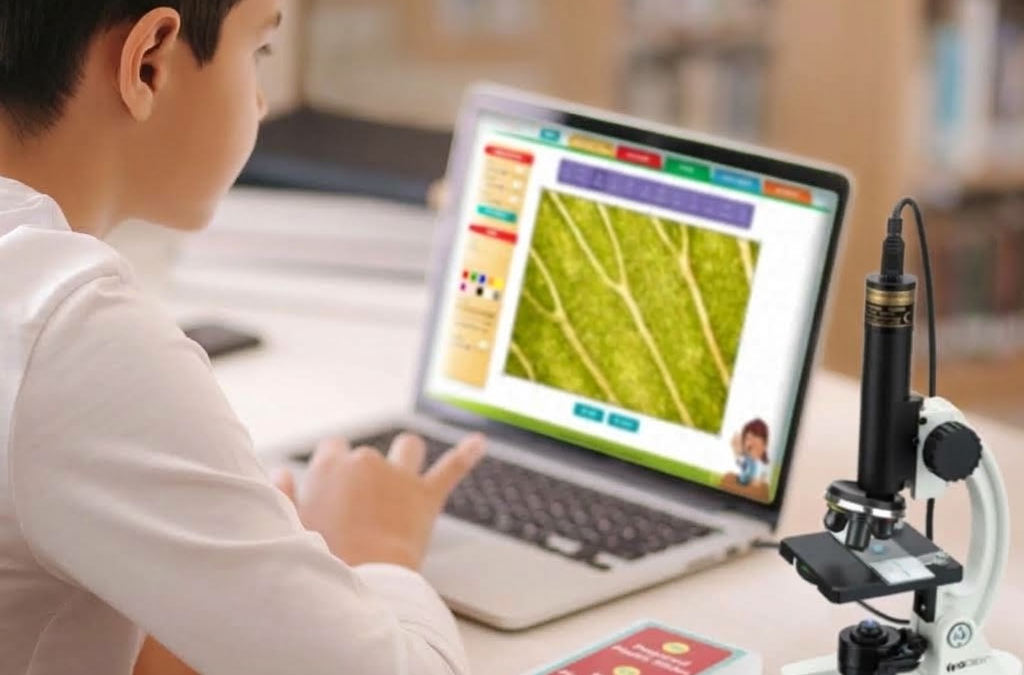
One of the main features to use in identification of a plant is its leaves. What shape are they? Are the edges smooth or toothed? Look at the veins of a leaf: what kind of pattern are they in? If parallel, the veins will run side by side (like grass). If pinnate, small veins branch out from the middle, somewhat resembling a feather. If palmate, the veins have more than one major vein with smaller ones branching from it (like a maple leaf). For needles, are they long or short? Covered with scales? Find the closest-to-identical leaves in your field guide.
When looking at flowers, count whether their petals come in multiples of three, or else four or five. (For plants with lots of small petals, it’s easier for you to use other features to determine monocot or dicot.) Use color and petal shape and arrangement to help you in identification.
You can also look at its fruit to help you identify a plant. Simple fruit is formed from one flower with a single pistil (the female part of the flower, containing the ovary). There are several different types of simple fruit. Drupes, such as mangos and peaches, have a fleshy layer around a seed-containing stone. Pomes, such as apples and pears, have a fleshy layer with seeds and a core. And berries, such as tomatoes, grapes, and oranges, have a fleshy layer containing seeds. Legumes and grains are also considered simple fruit. Aggregate fruit are formed from one flower with multiple pistils; strawberries and blackberries are aggregate fruit. Multiple fruit, such as pineapples, are formed from several flowers.
To preserve your plant specimens after you identify them, press them in a plant press or between layers of heavy paper or newspaper pressed between heavy books. Usually at least a week is required for specimens to dry; after that, you can make a framed collage of pressed plants or put the specimens in an herbarium, a notebook collection of preserved plants. Use thin strips of tape to attach a specimen, and label it with scientific and common names, the date and location where you found it, as well as any relevant facts or interesting information about it that you want recorded.