Epsom salt crystals are a fun and easy way to explore science right in your kitchen. With just a few simple ingredients, you can grow beautiful crystals in just a few hours—and learn a little chemistry along the way!
Introduction
Salt is more than just something we shake on our food. It’s a naturally occurring mineral with some pretty cool properties. It’s been used for centuries to help preserve food, make meals taste better, and even support health in different ways.
Epsom salt is a special kind of salt that’s often used for things like relaxing baths, easing sore muscles, and helping with digestion. And here’s the fun part—you can also use it to grow crystals!
Usually, crystal growing takes a few days. But with this super simple method, you’ll start seeing sparkly, needle-like Epsom salt crystals in just a few hours. It’s a quick and fun way to see science in action (oh, and be sure to check out the cool video below)!
Epsom Salt Crystals
What You Need:
- Epsom salt
- Food coloring
- Beaker, cup, or small bowl
Instructions:
1. In your beaker, stir 1/2 cup of Epsom salts with 1/2 cup of very hot tap water for at least one minute. This creates a saturated solution, meaning no more salt can dissolve in the water. (Some undissolved crystals will be at the bottom of the glass.)
2. Add a couple of drops of food coloring if you want your crystals to be colored.
3. Then, put the beaker in the refrigerator.
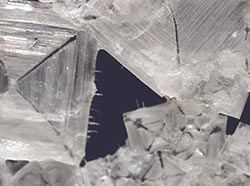
4. Check on it in a few hours to see a beaker full of Epsom salt crystals! Finally, pour off the remaining solution to examine them.
What Happened:
Epsom salt is just a common name for magnesium sulfate, a chemical you might already have at home! When you mix it with water, keep in mind that temperature matters: warm or hot water can hold more of it, while cooler water holds less.
If you cool the solution quickly, the crystals will start to form right away. That’s because the cooler water can’t keep as much of the salt dissolved, so the magnesium sulfate starts to come back together—and that’s when the crystals appear!
Crystals that grow this way tend to be small, thin, and form pretty quickly. If you leave them alone and don’t bump the container, they can last for months!
If you’re hoping to grow bigger, single crystals, check out the evaporation method in this project. It takes more time, but the results are worth it.