To get started with this leaf chromatography experiment, let’s first start with the basics of how leaves get their colors. Leaves contain different pigments, which give them their color. Green chlorophyll is the most common type of pigment, but there are also carotenoids (yellow, orange) and anthocyanins (red). Chlorophyll, which is essential for photosynthesis, usually hides the other pigments until autumn comes along and it begins to break down, revealing the reds, yellows, and other colors from the pigments that are left.
Getting Started with the Leaf Chromatography Experiment
Do this project to see the hidden colors in a green leaf, and then predict what color it will be in the fall! A great time to do this is at the end of summer, before the leaves begin to change. (Adult supervision recommended.)
What You Need:
- Green leaves from several different trees — trees with a dramatic color change, like maples, work best
- Beaker for each type of leaf (or glass jars)
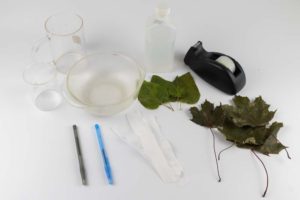
- Isopropyl (rubbing) alcohol
- Plastic wrap
- Chromatography or filter paper (you can use coffee filters)
- Pens or pencils
What You Do:
Keep leaves from different trees separate and follow the steps below for each set of leaves, so you can compare results for your leaf chromatography experiment.
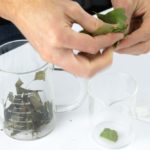
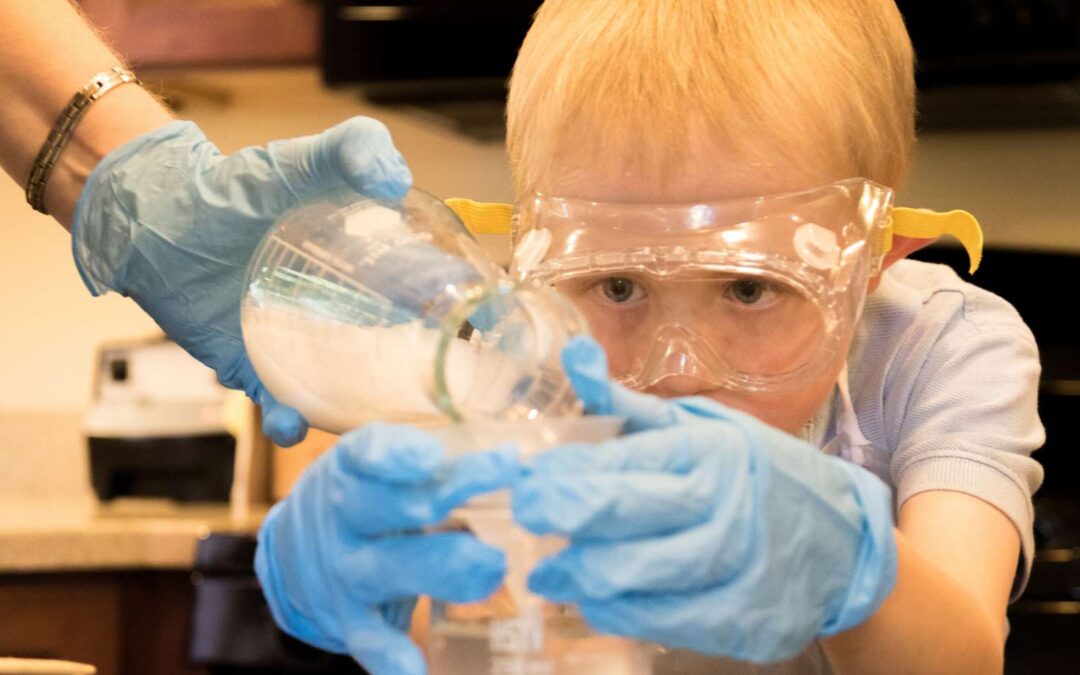
1. Tear the leaves into several pieces and place them in a beaker or glass jar, then add just enough rubbing alcohol to cover them. Then, cover the beaker with plastic wrap to keep the alcohol from evaporating.
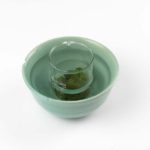
2. Place the beaker in a dish of hot tap water for about 30 minutes, until the alcohol turns green as it absorbs the pigments from the leaves.
3. Cut a strip of filter paper at least a half inch wide and tape it to a pencil. Finally, suspend the pencil across the beaker and let the strip just barely touch the alcohol and pigment mixture.
What Happened:
A bit of the mixture will travel slowly up the paper.
After about 30 to 90 minutes, you should be able to see the “green” color break up into several different colors as the different pigments begin to separate.
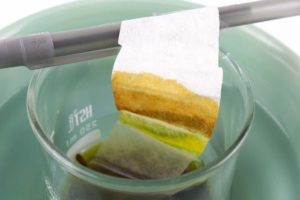
You’ll see different shades of green, and perhaps other colors as well. Which leaves had the most variety of pigments?
So, based on your leaf chromatography experiment, which trees’ leaves do you think will turn the brightest and least brightest colors this fall? Keep track of these trees through late fall and see if you were right!