Water bottle rocket experiments are a thrilling way to combine fun and science, launching creativity (and water!) into the sky. In this project, you will learn how air pressure can power a simple rocket made from everyday household items.
Water Bottle Rocket Science Project
What You Need:
- Empty 1-liter bottle
- Cork that will fit in the bottle’s opening
- Bicycle pump
- Ball inflation needle for pump
- Pencil
- Knife
- Cutting board
- Empty box
Instructions:
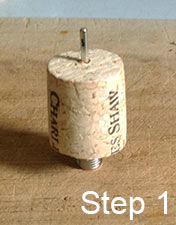
1. Poke the inflation needle through the cork. Ask an adult to cut the cork with a knife so it won’t extend past the hole near the tip of the needle, if needed.

2. Then, set the bottle upright on one side of the box, with the open end of the box towards you. Trace a square shape around the bottle. Have an adult cut out the hole. Finally, make sure the bottle can sit in the hole at an angle, as this will serve as the launch pad for your rocket.
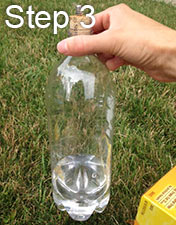
3. Fill the bottle about one-quarter full of water. Then, put the cork on (with the needle tip pointing into the bottle).
4. At this point, you will go outside and set up your launch pad (box) in an open area.
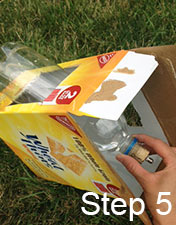
5. Put the bottle through the hole with the cork end towards the open end of the box. Keep the box and bottle tilted up slightly so the water won’t drip out through the needle’s hole!

6. Carefully secure the end of the bicycle pump to the nozzle end of the needle. Then, set it against the bottom of the box to keep it from popping off.
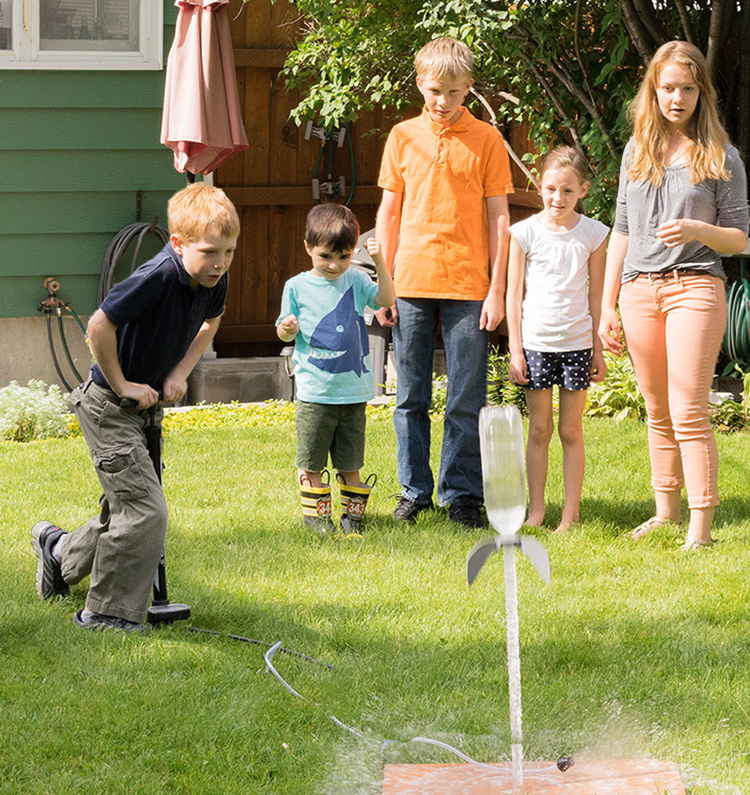
7. Then, stand behind the rocket as far as your pump’s hose will allow and begin pumping air into the bottle rocket. Warning: Ensure that anyone nearby is aware that you are about to launch a rocket and have them stand several feet behind you.
8. Finally, begin counting down as you pump air and watch what happens! Be aware that you may get a little wet during this water rocket launch.
What Happened:
Did your rocket launch successfully? If so, how far did it shoot up into the air? Additionally, did it travel far from the spot where you launched it?
This water bottle rocket worked in a way that’s similar to how a real rocket works, but instead of burning fuel, it used air pressure. When you pumped air into the bottle, it pushed against the end of the bottle and the water inside the bottle and built up pressure. If you had felt the bottle after one or two pumps, you would have noticed the bottle’s sides were very firm, the way an unopened bottle of soda is. After a while, the bottle couldn’t hold any more air, so it had to escape. As the air pressed against the bottle and the water inside, it then forced the water and cork down and the bottle up. Meanwhile, the cork acted as the rocket’s nozzle. Finally, the force from the pressurized air escaping through the nozzle caused the rocket to shoot up into the air!
Adapted from: http://kitchenpantryscientist.com/simple-water-rockets/comment-page-1/
Water Balloon Density Science Project
What You Need:
- Small balloon (or water balloon)
- Large metal pot or bowl
- Small bowl
- Hose
Instructions:
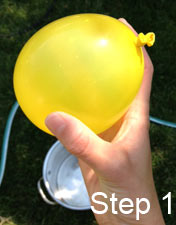
1. Fill your balloon with water and tie it closed, letting the air at the top out as you do.
2. Then, set the filled balloon in the small bowl to keep it from popping.
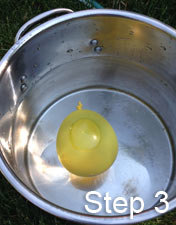
3. Fill the large pot halfway full of water from the hose and put the balloon in. Does it sink or float? (Note: The pot needs to be in spot that will get sun all day!)
4. Now take the balloon out and put it back in the small bowl, and stick it in the fridge to get the water inside really cold.
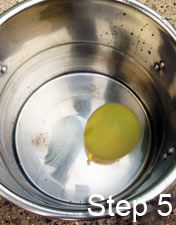
5. Leave the pot of water in the sun for the rest of the day. You want the water to warm up! Once the water feels warm to the touch, take the balloon out of the fridge and place it in the pot of water. Finally, observe—does it sink or float?
*Note: For best results, start this project in the morning on a hot, sunny day. Set the pot of water on concrete rather than grass to help it heat up faster. The water should be warm enough to complete the experiment by late afternoon.
What Happened:
The first time you put the balloon in the water it floated, because the rubber balloon was less dense than water, so it floated on top of the water, just like oil would. The water inside the balloon was the same temperature as the water in the pot. Since water at the same temperature has the same density, they behaved similarly. However, that all changed the second time around! The water that warmed up in the sun had a lower density than the water inside the balloon that was chilled in the fridge. The denser cold water sank to the bottom of the pot of warm water.
Adapted from: http://www.science-sparks.com/2013/05/14/water-balloons/
Looking for even more information on rockets and density? Read the science lesson to find out about Newton’s Third Law and how temperature changes affect density.