Homeschool science options fall into several categories: traditional curricula, literature-based programs, digital lessons, subscription programs, and stand-alone experiment kits. Each approaches science learning differently, from how concepts are introduced to how students experiment, record their thinking, and demonstrate what they understand.
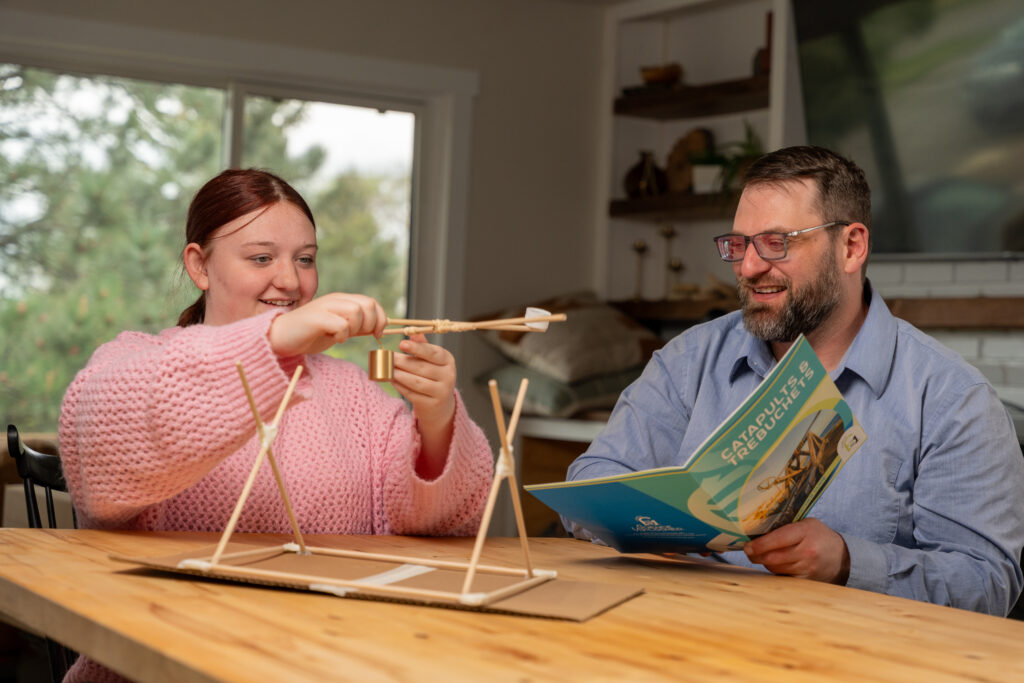
Science Unlocked® combines inquiry-first, phenomenon-based learning with hands-on investigations. It includes science materials, Student Workbooks, Teacher Guides, built-in assessment, and a defined learning sequence for grades K-12. Here is how that approach compares with other homeschool science options:
Science Unlocked vs. Traditional curricula (Apologia, REAL Science Odyssey)
Traditional homeschool science curricula often rely heavily on textbooks to deliver instruction, with experiments or lab activities incorporated alongside the reading. Families who go this route will need to purchase or gather the materials required for those activities separately.
Science Unlocked takes an inquiry-first, phenomenon-based approach. Instead of beginning with a textbook explanation, students encounter a scientific phenomenon, ask questions, make predictions, and use hands-on investigations to develop their understanding. Student Workbooks guide them through that process, while the materials needed for investigations (beyond common household items) are included with the curriculum.
Key Difference: Science Unlocked moves students from questions to hands-on investigations to understanding, making science an active, engaging experience rather than something kids simply read about in a textbook. The workbook and science materials are designed to work together, so families don’t have to rely on textbook instruction or source lab materials separately.
Science Unlocked vs. Literature-Based Programs (Sonlight, BookShark)
Literature-based science programs build instruction around a collection of books on specific science topics. Students learn primarily through reading, with experiments and activities used to support the concepts introduced through those texts.
Science Unlocked centers learning in the Student Workbook and hands-on investigations. Students ask questions, make predictions, record observations, and reflect on results as activities and skills build on one another throughout each module. The Teacher Guide supports parents with science background, step-by-step instructions, sample answers, and guidance for evaluating student responses.
Key Difference: Literature-based programs use books as the primary vehicle for science instruction. Science Unlocked builds understanding through connected workbook activities and hands-on investigations, with Teacher Guide support to help parents guide that learning seamlessly.
Science Unlocked vs. Digital Curricula (Mystery Science)
Digital science programs such as Mystery Science use online lessons, videos, and activities to introduce science concepts and guide students through learning. This format can make science instruction accessible and engaging, particularly for families who prefer digital resources.
Science Unlocked puts learning directly into the student’s hands. Students work with physical materials, make predictions, conduct investigations, record observations in their Student Workbooks, and use their results to develop an understanding of the science behind their observations.
Assessment is also built into that process. Think About It! Predict, Reflect, Show What You Know, and Claim-Evidence-Reasoning activities give students recurring opportunities to demonstrate what they understand, while Teacher Guides provide parents with sample answers and evaluation guidance.
Key Difference: Digital programs deliver much of the learning through a screen. Science Unlocked centers the student’s own physical investigation, then connects what they did and observed to written reflection and assessment.
Science Unlocked vs. Subscription-Based Programs (MEL Science, KiwiCo)
Subscription-based science programs such as MEL Science and KiwiCo deliver kits and activities over time. These give students opportunities to explore individual science topics, projects, and experiments as they arrive.
Science Unlocked is structured as a complete, full-year curriculum rather than a series of individual kits. Its modules follow a defined learning sequence. Each investigation contributes to the concepts and skills students develop throughout the year. Student Workbooks and recurring assessments also provide students with opportunities to record their thinking and demonstrate their understanding.
Key Difference: Subscription programs provide ongoing science activities and experiences. Science Unlocked connects its experiments to a full year of instruction, student work, and assessment within a defined learning sequence.
Science Unlocked vs. Stand-Alone Experiment Kits (Thames & Kosmos)
Stand-alone experiment kits, such as those from Thames & Kosmos, give students the materials and instructions to explore a particular science topic or complete a set of related experiments. They can add valuable science experiences to a student’s education. However, each kit is generally designed around a single topic or activity.
In Science Unlocked, hands-on investigations are part of a larger learning sequence. Students use each investigation to develop and apply science concepts. Then, they carry that understanding into the activities and modules that follow. The experiment is part of the learning process rather than the final destination.
That progression also continues beyond a single module. Concepts and science skills develop throughout the full-year curriculum and continue along the Science Unlocked K-12 pathway.
Key Difference: Stand-alone kits provide focused science experiences around individual topics. Science Unlocked connects hands-on investigations to ongoing instruction, so what students learn from one experience helps prepare them for what comes next.
Science Unlocked Stands Apart
No single feature here is exclusive to Science Unlocked. Other programs offer hands-on experiments, included materials, complete courses, assessments, or alignment with science standards.
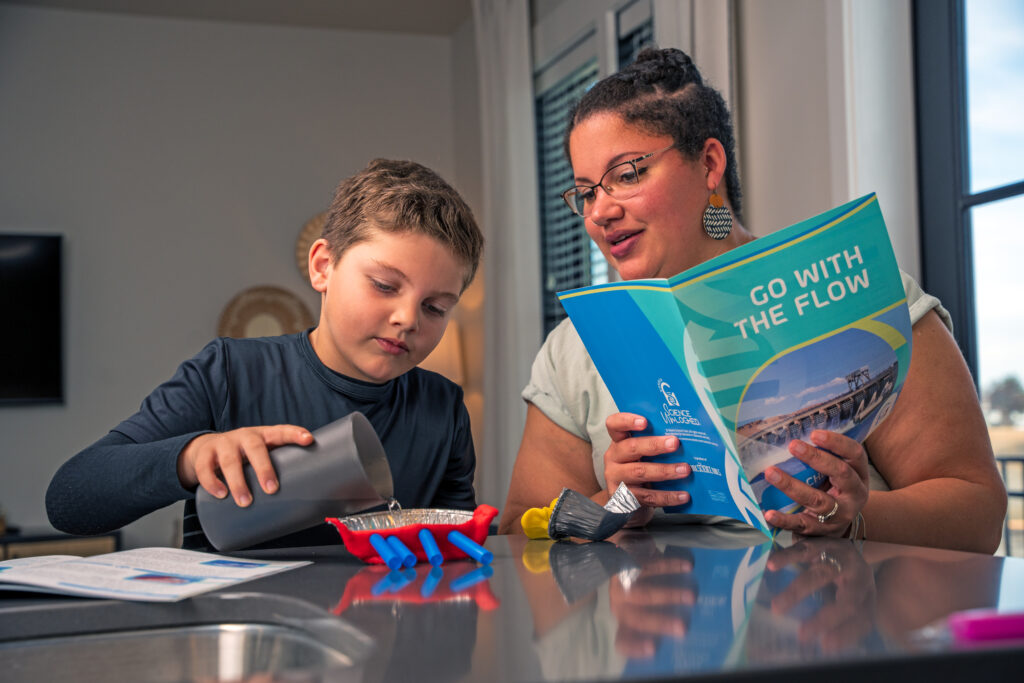
The distinction is how Science Unlocked brings those pieces together into one complete approach to science learning and compounds year after year:
- Inquiry-first, phenomenon-based learning that begins with questions and investigation
- Hands-on investigations with the required science materials included
- Student Workbooks that guide predictions, observations, reflection, and understanding
- Teacher Guides with science background, sample answers, and evaluation guidance
- Recurring, built-in assessment throughout each module
- A grade-specific K-12 pathway that builds science knowledge and skills from year to year
- Alignment with national science standards (NGSS)
At the high school level, Science Unlocked provides comprehensive standards coverage. High School Biology covers all 24 national high school life science expectations, Earth & Space Science covers all 19 earth and space science expectations, and Chemistry covers all 12 physical science standards for the course.
Science Unlocked brings instruction, investigation, student work, teaching support, assessment, and materials together in one curriculum. Families have a clear plan for what students will learn, the resources to teach it, and a pathway for where their science learning goes next.
Explore Science Unlocked to find the curriculum designed for your student’s grade.