Teaching Resources & Guides > Science Lessons > Clouds, Precipitation, & Weather Forecasting Science Lesson 

Clouds, Precipitation, & Weather Forecasting Science Lesson

To understand the daily weather, you should know what some of the basic clouds types are and what kind of weather they usually bring. Note that Cirro/Cirrus are high-altitude clouds, while alto are mid-range clouds. Here’s your weather forecasting science lesson!
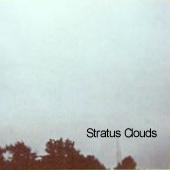
stratus

Stratus: low-altitude, densely foggy clouds that can result in a light drizzle of rain or an overcast sky.
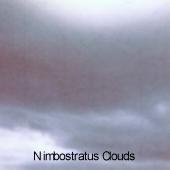
nimbostratus

Nimbostratus: rain and snow clouds. These are low-lying clouds that are distinguished by their darker color; they also often have visible sheets of rain that extend from them. ‘Nimbus’ means rain cloud. (Cumulonimbus clouds are thunderclouds.)
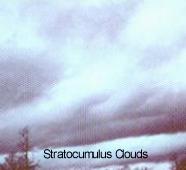
stratocumulus

Stratocumulus: sheets of gray, puffy clouds that usually foretell bad weather.
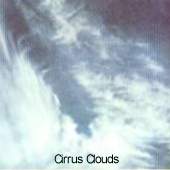
cirrus

Cirrus: high-altitude ice clouds (formed by ice crystals instead of water droplets) that appear as wisps. These often mean good weather for the immediate future.
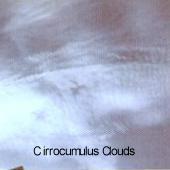
cirrocumulus

Cirrocumulus: high-altitude ice clouds. They look similar to lower altocumulus clouds: although they are in denser sheets and often have a lighter color, they have the same fish-scale or ripple look as altocumulus. They usually foretell precipitation and thunderstorms.

Barometric pressure is another way to forecast approaching weather. A low barometric pressure or falling barometric pressure shows a change in atmosphere that usually means a storm is coming.

A Cloud Chart is an excellent tool to learn to forecast the weather from observing the clouds. We sell a full-color chart that includes 35 cloud pictures with a description of the weather that is associated with each one.

Cloud pictures are the property of Cloud Chart, Inc. and are used with permission. Thanks for tuning into your weather forecasting science lesson! Check out more in Earth Science lessons.
Teaching Homeschool

Welcome! After you finish this article, we invite you to read other articles to assist you in teaching science at home on the Resource Center, which consists of hundreds of free science articles!

Shop for Science Supplies!

Home Science Tools offers a wide variety of science products and kits. Find affordable beakers, dissection supplies, chemicals, microscopes, and everything else you need to teach science for all ages!

Related Articles

Making Science Fun with Outdoor Toys for Kids

Making Science Fun with Outdoor Toys for Kids

Childhood is filled with questions, discoveries, and small moments that shape how the world is understood. Around the age of four, curiosity becomes more intentional. There is a growing interest in how things work, what things are made of, and why nature behaves the...

What Makes Science Instruction Actually Stick? 

What Makes Science Instruction Actually Stick? 

The Case for Hands-On, Phenomenon-Based Learning in K–12 Science  Home Science Tools | Summer of Success Series You already know the research on hands-on science exists. Chances are, you've cited it yourself in a curriculum proposal, a professional...

Guiding Thinking, Not Managing Chaos 

Guiding Thinking, Not Managing Chaos 

How One Extended Learning Program Transformed What Science Instruction Looks Like  Home Science Tools | Summer of Success Series  There is a version of after-school science that most programs know well: a facilitator who is doing their best, working from a...

When After-School Science Works: Lessons from the Field

When After-School Science Works: Lessons from the Field

Home Science Tools | Summer of Success Series Out-of-school time programs occupy a position in a student's educational life that is genuinely different from the regular school day — not supplementary to it, but distinct from it in ways that matter for how...

should I learn computer coding