Learning the right programming language is an important first step in your career plans. You’ll find more job opportunities by learning to code in a popular programming language. Programming is more than a STEM occupation.
Computer code runs our electronic world! Everything, from massive electric grids to tiny kitchen gadgets, is dependent on the commands written by a programmer. There’s no shortage of work for those who do this well.
Programming Language Applications
In the last century, thousands of programming languages have been created. Most of them were never really adopted. The truth is, a handful of programming languages have always dominated the marketplace. That’s the way it is today. Some languages are growing in usage, while others are shrinking.

Before choosing a programming language to study, you should know how and who presently uses it. That will give you a sense of the future. You can better plan your career path with this information. Of course, learning one programming language usually helps with learning a second, third, or fourth. Most students choose a basic language to start. Then, while mastering it, they might start learning a more complex one.
On-the-job training is a great perk for computer programmers! Popular programming languages aren’t static. They benefit from having many users who make continual improvements. This keeps the language relevant for new applications. Niche or less common, programming languages also require maintenance. But, because their user base is small, it’s not always possible to stay up-to-date. Before long, neglect makes theses languages unworkable. Programmers stop using them.
Best Programming Languages
Computer systems must often be interoperable. That is, they must be able to mix different programming languages and ensure that command instructions are followed. Connecting two languages, called compiling, usually requires a conversion to binary code (0,1). This is time-consuming! (Source code, a program’s original code, always exists in a single language.) That’s why programmers and technology officers prefer to run programs using one language. The following languages are widely used in computer programs. Each of them has strong benefits. And, they all have a history of making steady improvements.
JavaScript
JavaScript is known as the programming language of the internet:
It was created by Brendan Eich in 1995 as a “scripting” language. That is, its programs are written in plain text. They can be included inside a web page’s HTML (High Text Markup Language). JavaScript is used to add interactive functions to a web page. Web designers rely on web developers to use JavaScript to bring their creative ideas (graphics, layout, video) to life.
Companies use JavaScript to create forms (e.g., credit card information), to load data from a server, and to create animation. Professional web developers say it’s easy to learn basic JavaScript. Mastering the nuances of it takes more effort. An entire ecosystem of web tools and software programs has grown up around JavaScript. That’s a good sign that JavaScript will be relevant for years to come!
Java
Java has no relationship to JavaScript. It’s both a software and a programming language. Java was developed in 1990 to build on the C++ language. It became so popular, that it spun off.
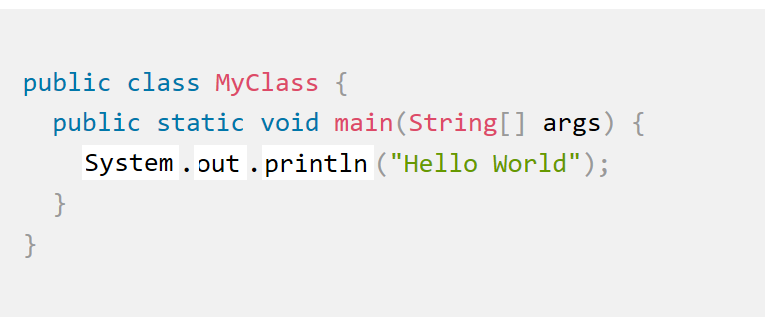
Java is an object-oriented language (OOL). OOL allows programmers to build software in chunks rather than large amounts of sequential code. It’s often used to develop programs for Java software. Many industries, including manufacturing, automotive, insurance, and government, use Java.
Python
Python, like JavaScript, is a script-based language. It is considered high-level because it reads like plain English. Programmers use Python to run security tests, find documents, and automate tasks.
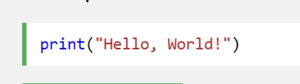
YouTube, Pinterest, and Instagram are written in Python. They use it because it allows for quick code changes. As with JavaScript, a whole software ecosystem has grown up around the language.
Learning considerations
It’s easy to get started with these three programming languages. Because certain applications depend on JavaScript, Java, and Python to run, it’s likely that you have all three installed on your computer. JavaScript and Python are free and open-source (which means you have legal permission to modify the source code as you see fit).
Java is mostly free and open source. The two biggest considerations for learning a programming language? Time and interest. There are dozens of free and low-cost online schools that let you learn at your own pace. Traditional colleges and universities usually offer programming classes, too. Your skill in programming could lead to a highly successful career. But learning is not as dependent on age as it once was.
Kids as young as age four can learn important coding principles. A few helpful kits include:
- ElecFreaks Micro:Bit Starter Kit
- ElecFreaks Tinker Kit
- ElecFreaks Micro:Bit Basic Kit
- Micro:Bit Starter Kit Bundle
Like other hands-on activities, programming helps kids develop problem-solving skills.
They learn logic and reason. They learn how to organize their thinking, which turns them into better “regular” writers.