Below you’ll find a list of high school science fair projects. To begin with, choose a topic that interests you, then begin your preliminary research.

High school science fair projects require a high level of original thought and development. Consider these ideas as springboards to help develop your own original project. To participate in an upper-level competition, your project should be relevant to current science and technology. The project should also present a benefit to society.
High School Science Fair Project Resources
For tips on performing your experiment and presenting your project, see our free science fair guide.
To begin brainstorming, explore our Science Fair category for more project ideas and helpful kits.
Ideas for High School Science Fair Projects
Life Science
- Compare the effect of antibiotics on gram-positive and gram-negative bacteria. (Grow your own cultures with agar & petri dishes. For a sample procedure and more project ideas, see our bacteria science project guide.)
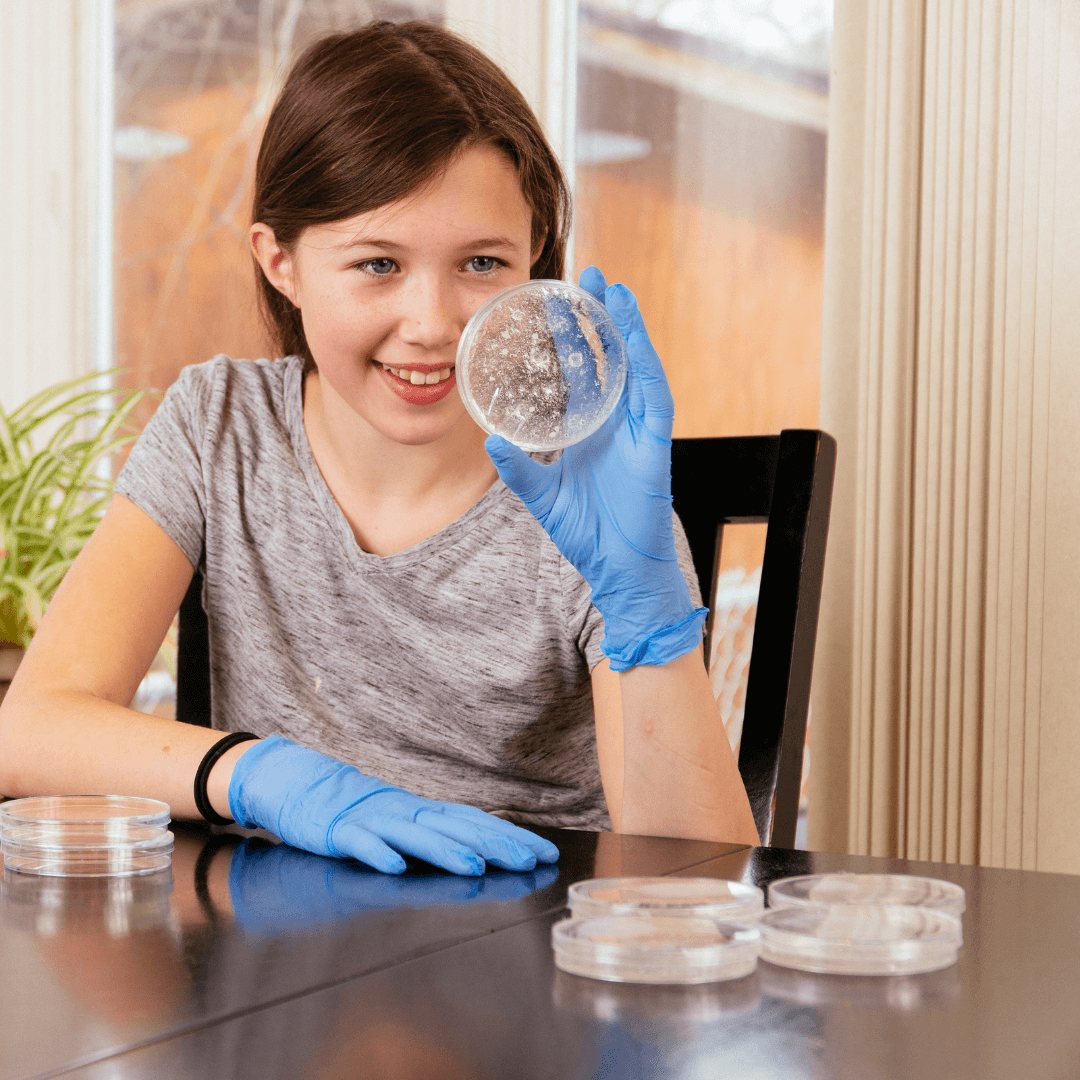
- Run a bioassay to test for toxicity in water or soil.
- Test the effect of ultraviolet radiation on bacteria growth.
- Do different types of bread grow different types of mold? Does temperature or light affect mold growth?
- Experiment with plant genetics (plant hybrids, cross-breeding).
- Test factors like smoke or pollution that might affect transpiration rates for plants.
- Investigate the effects of increased oxygen or carbon dioxide concentration on plant germination.
- Find out the differences in properties and effects of organic vs. chemical fertilizers.
Earth Science
- Explore methods of erosion prevention, test effects of different soil composition on erosion (e.g. how does more clay compare to more sand?).
- Experiment with methods of flood management and containment.
- Investigate the effects of sunspots on weather patterns.
- Work with methods for forecasting weather.
- Test the concentration and effect of minerals and pH in soil and water samples. (Use water test strips and a soil analyzer.)
- Determine chemical makeup of rain in your area; test possible hazardous effects.
Physical Science

- Study acoustic models and methods of noise control. (A sound measurement kit/ might be helpful.)
- Experiment with the effect of storage temperatures on batteries.
- Develop improvements in battery chargers; try methods of using solar cells to recharge batteries.
- Compare the bending strength and durability of different building materials.
- Build a potato-powered battery.
- Experiment with building materials that are fire-preventative.
- Design industrial uses of magnets; test the effects of magnetic and electromagnetic fields on living organisms such as brine shrimp.
- Design a project in advanced robotic programming.
- Build a sensor-moving advanced Bristlebot robot.
Chemistry
- Test the effects of the pH level of a solution on the corrosion of iron and copper; explore different methods of corrosion prevention.
- Experiment with types, effectiveness, and the impact on the nutritional value of preservatives in food.

- Compare the properties and effects of artificial sweetener vs. sugar or other natural sweeteners. (For this and the following tests, you might consider the Chemistry of Food kit.)
- Test the chemical properties and physiological impact of saturated, unsaturated, and trans fats.
- Use indophenol to test the effect of different cooking methods on the depletion of vitamin C in food.
- Investigate the role of enzymes and yeast in the fermentation or cheese-making process.
- Experiment with different methods of water filtration/purification (such as solar distillation).
- Analyze the by-products of gasoline; compare the efficiency of various octane levels.
- Conduct an orange juice titration demonstration
Environmental Science
- Compare or develop methods of hydrogen production and storage for use in fuel cells.
- Investigate methods of improving home insulation.
- Experiment with expanded uses of solar energy.
- Test methods for cleaning up and neutralizing the effect of oil in salt water with this oil spill cleanup kit.
- Work with methods of processing/recycling non-biodegradable items; experiment with decomposition aids.
- Experiment with design and function of wind turbines or water wheels.
- Test for harmful effects of pesticides; test or develop natural/organic alternatives; test the effectiveness of common pesticides such as DEET.
- Which type and color of roofing material provides the most energy efficiency?
Additional Information for High School Science Fair Projects
For more in-depth high school science fair project ideas, we recommend the Science Buddies website.